Friday, May 16
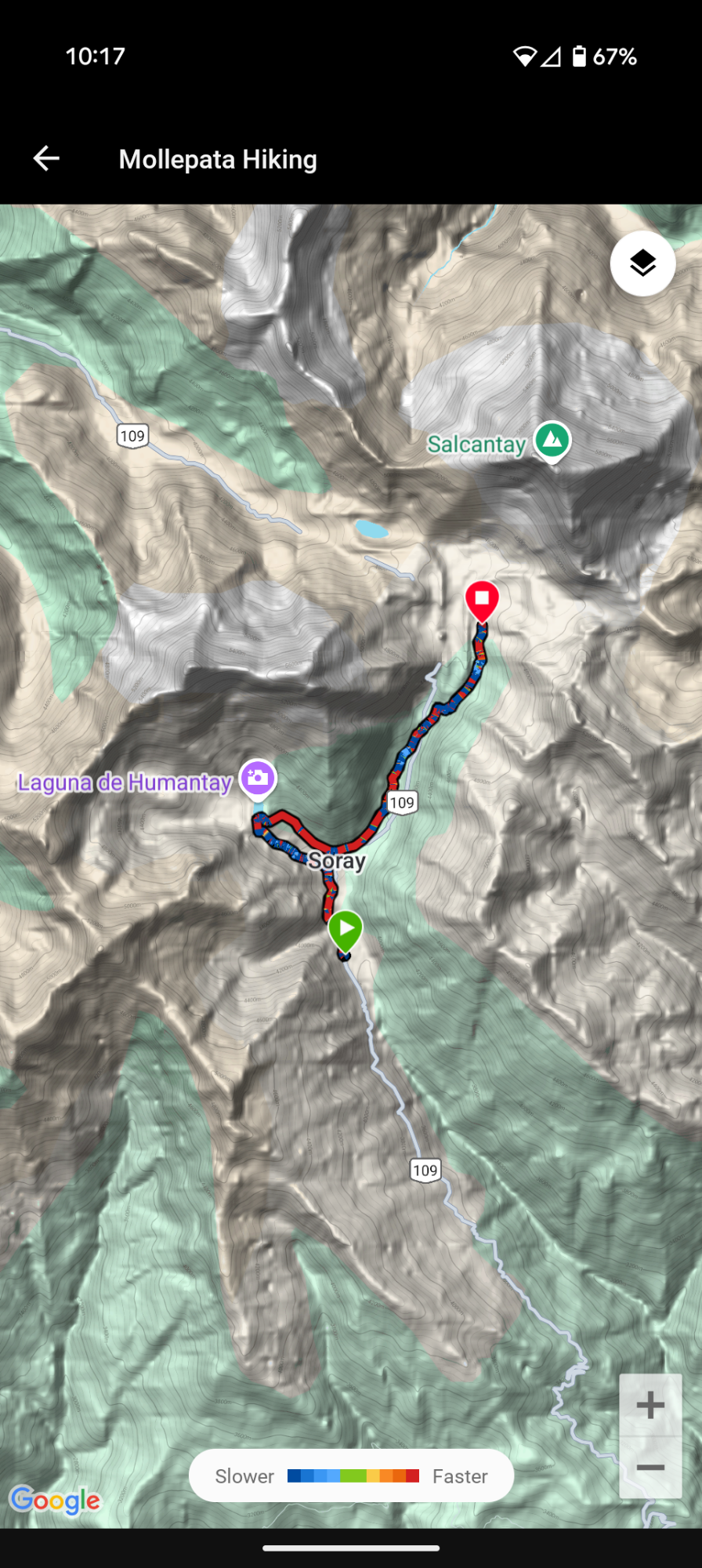
Start: Soraypampa via Cuzco 12,361′ (3,850m)
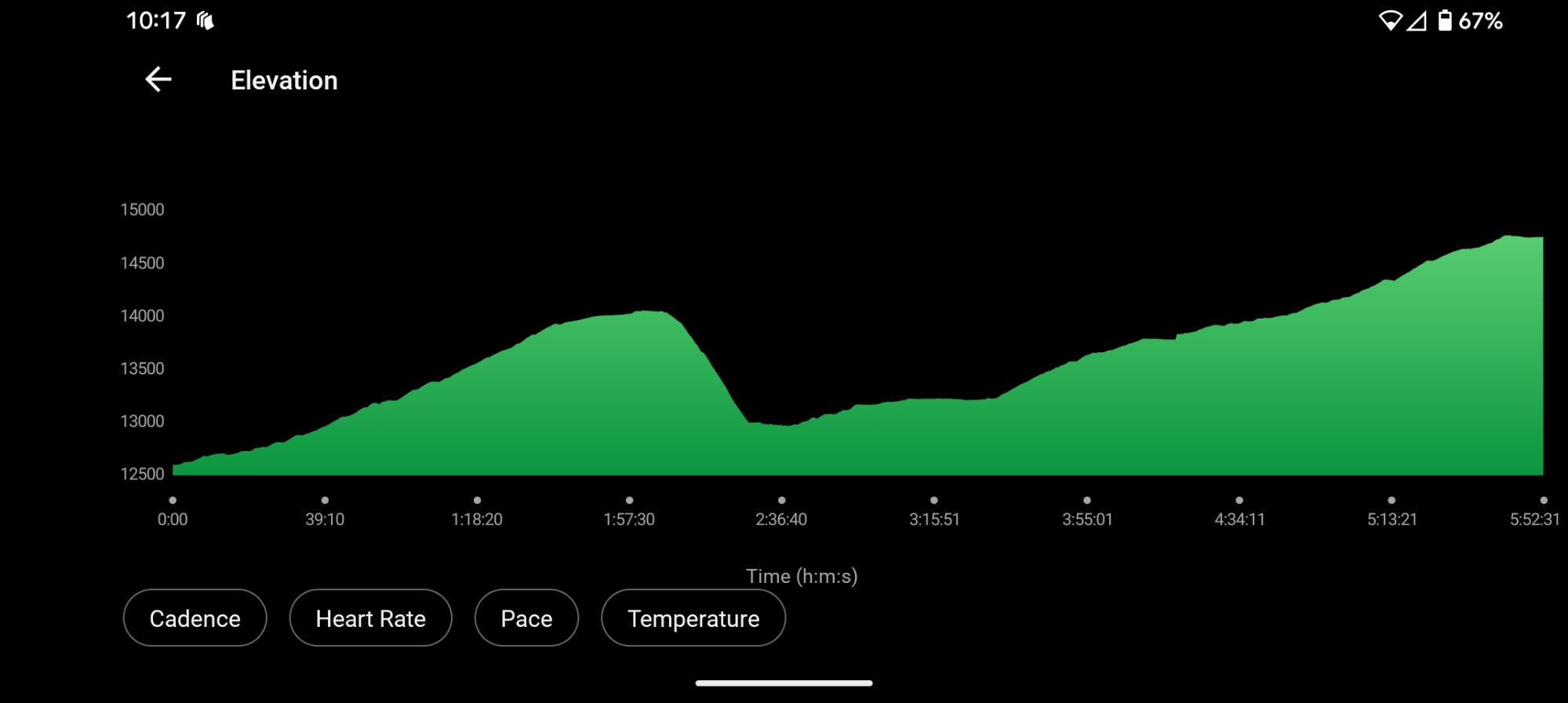
Stop: Ichupata 13.55274 S, 72.553491 W 14,768′ (4,502m)
Acclimated to 4,429′ and O2@85%
5.85 miles
3,248′ ascent
1,145′ descent
I awake at 3:30 am, far earlier than body and mind are ready. I take my last shower for 5 days and pull the final threads of my shit together. Just after 4 am I head down to the hotel lobby and it is bustling with activity. Apparently, I am not the only tourist up for an early pick-up. I check my luggage, pay my two day tab of $120 and kindly ask them to add my cheese to their refrigerator.
Elizabeth and crew arrive and we depart at 4:30 am. It’s a giant van for just me, Elizabeth, the driver and one porter. The streets of Cuzco are like grand central with all the white tourist vans speeding around. We pass a corner with tons of people standing at it. Perhaps a lapse in communication, we pass the corner before coming to an abrupt stop. Elizabeth jumps out and shouts for Joel. Joel runs towards us, arms full of plastic bags of food and jumps in. We continue on in the dark of the morning. Snores soon emerge from the back of the van while I struggle to keep my eyes open.
Elizabeth and the driver exchange constant banter in Quechua. The only way I know it’s Quechua is that it’s completely unrecognizable to me. Despite my extremely limited Spanish skills, I can comprehend quite a bit. The driver’s window is down enough that the cold air is blowing on me. I dig into my pack and pull out my Appalachian Gear alpaca hoodie made from 100% Peruvian alpaca. I’m still borderline cold as my eyes keep flashing closed. Close to 6 am the sky begins to brighten.
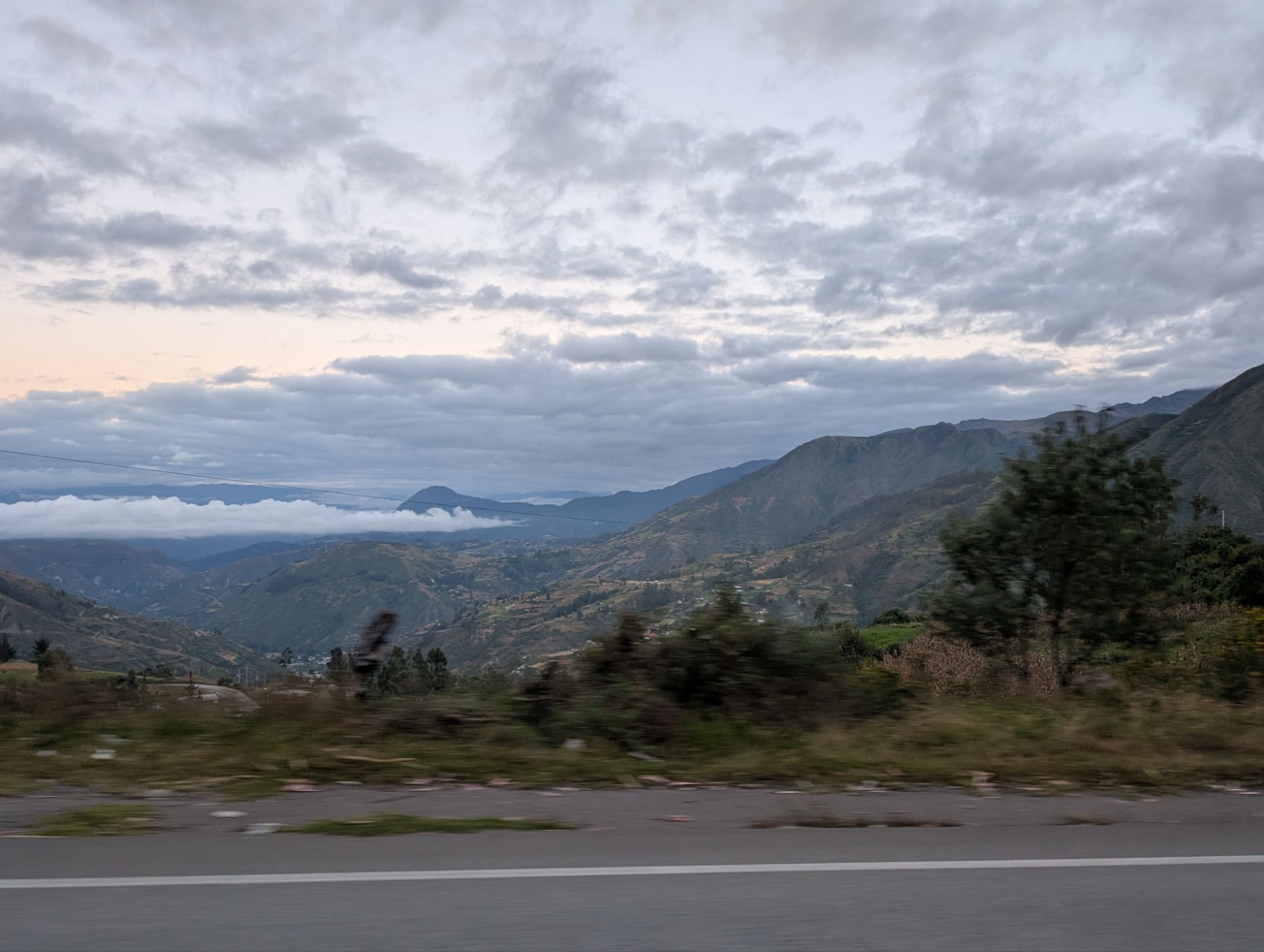

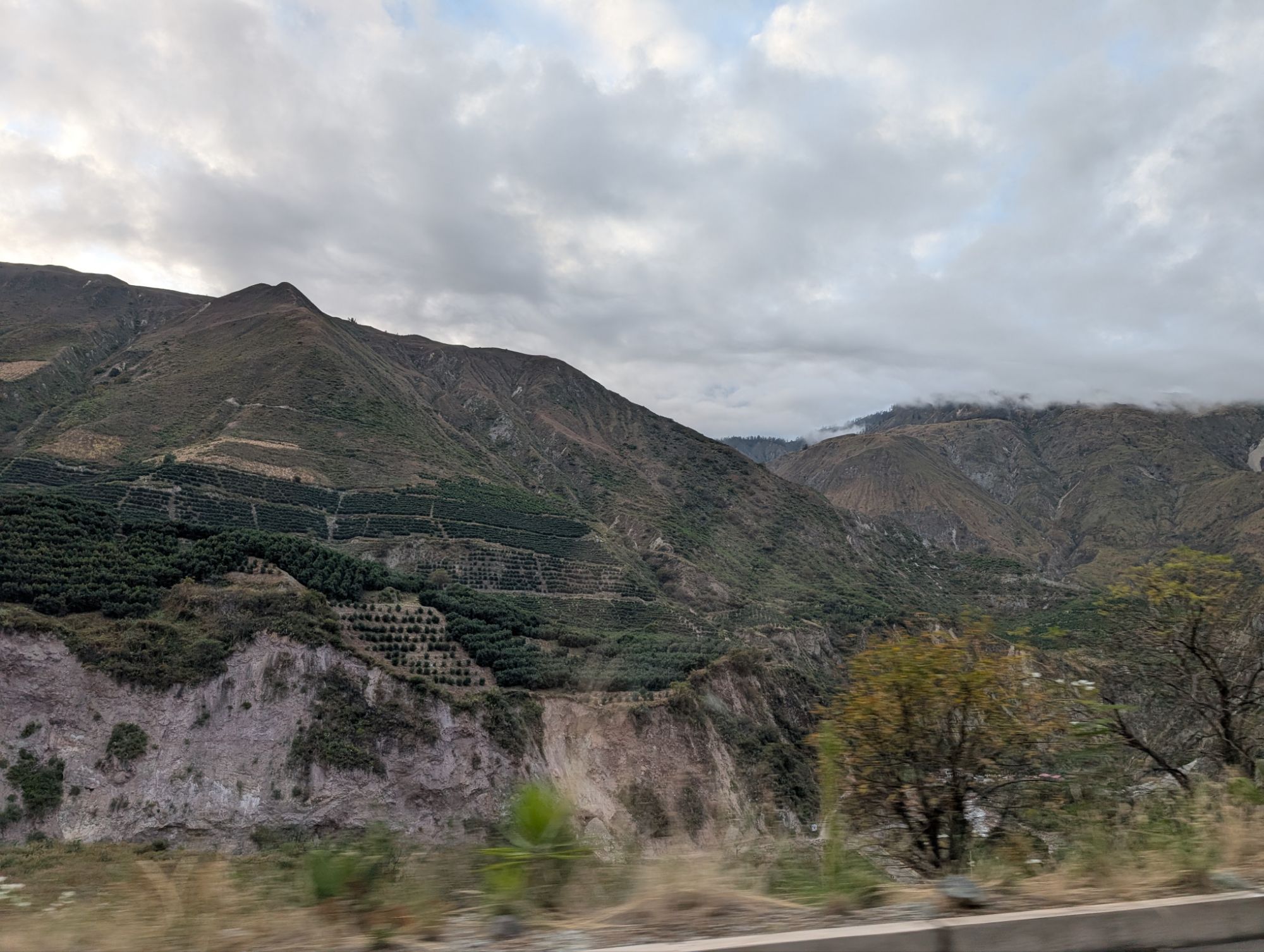
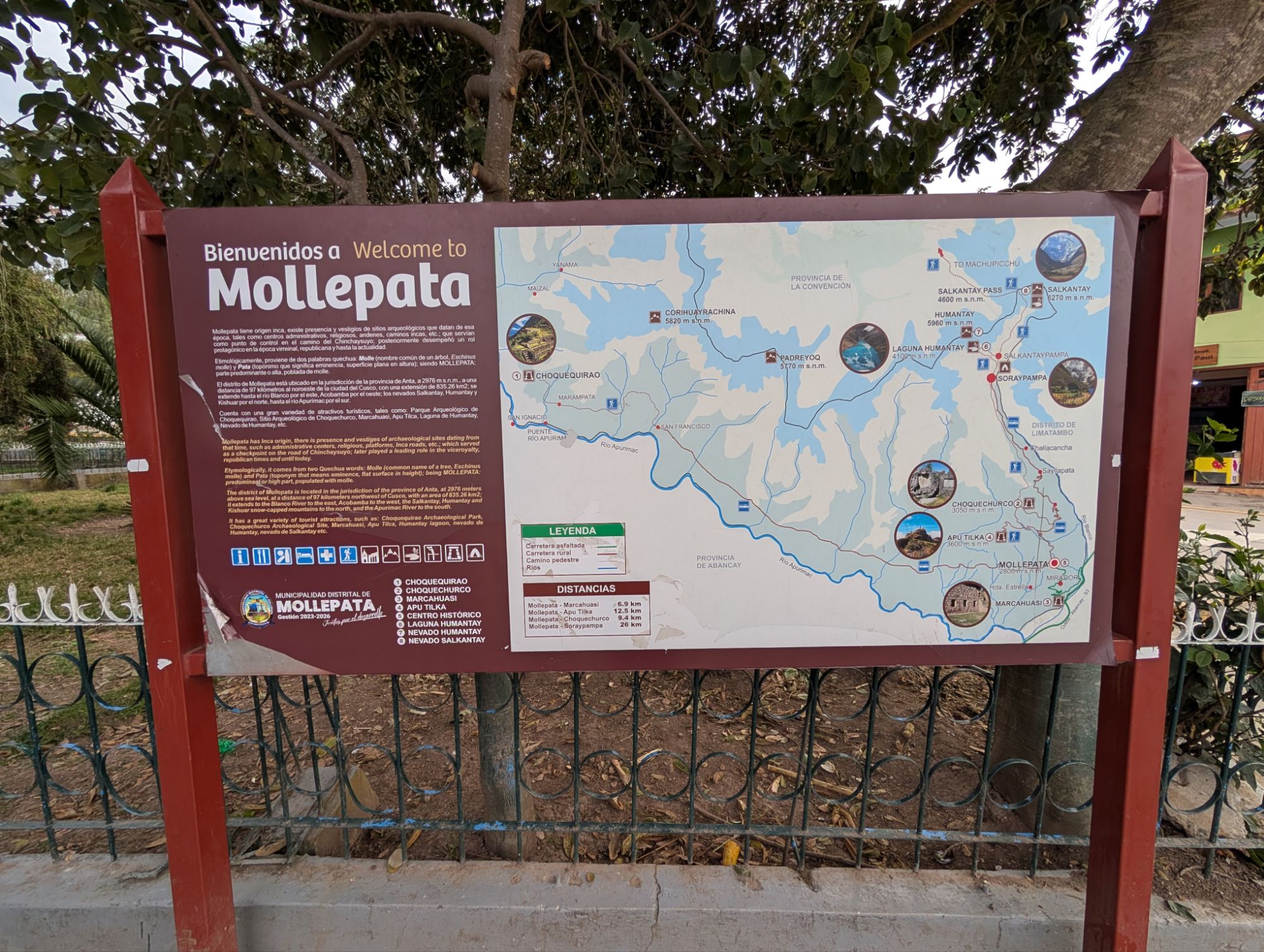
About 7 am we stop briefly in Mollepata for a bathroom and a few last groceries near the center square. A pack of dogs run through the plaza deep into a fight. Dust flies as one dogs gets rolled hard. They exit just as fast as they entered with howls echoing off every side of the square. Our van climbs and climbs around dusty blind corners, past bizarre outcrops of eucalyptus and perfectly terraced hills.

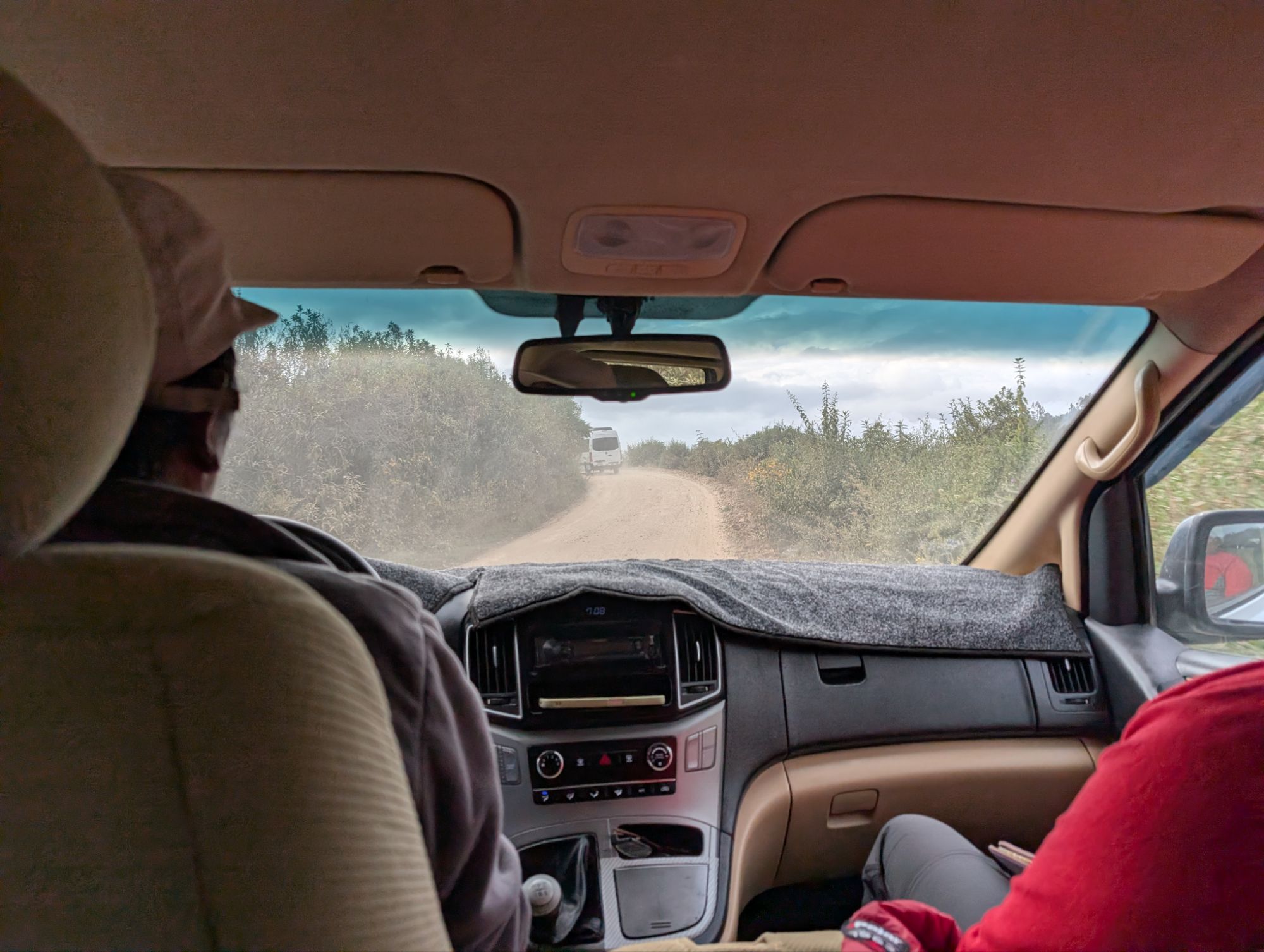
We drive until we reach a sea of white vans at the end of the road. We start piling gear out onto the ground. I give the driver a tip and a few items from by bag lunch that I can’t eat. Turns out that it’s the end because the road washed out a few months ago. There’s a thin level trail for people and the animal trail dips down into the canyon. Elizabeth and crew call out and search for Oscar, our horseman. ¿Dónde está Óscar? Vans are unloading gear as fast as they can to make room for the next. There’s tons of people and commotion, mostly tourists here for a day hike to Humantay Lake. As we gather ourselves, the groups of tourists stream by us. At just over 12,000 ft., some people are visibly having a tough time. I already met the cook Joel yesterday and I meet our new porter Juvenal as we stand waiting. We all grab as much of our gear as we can and shuttle it across the washout. With a fuel can wedged between his head and shoulder, Juvenal makes two trips.
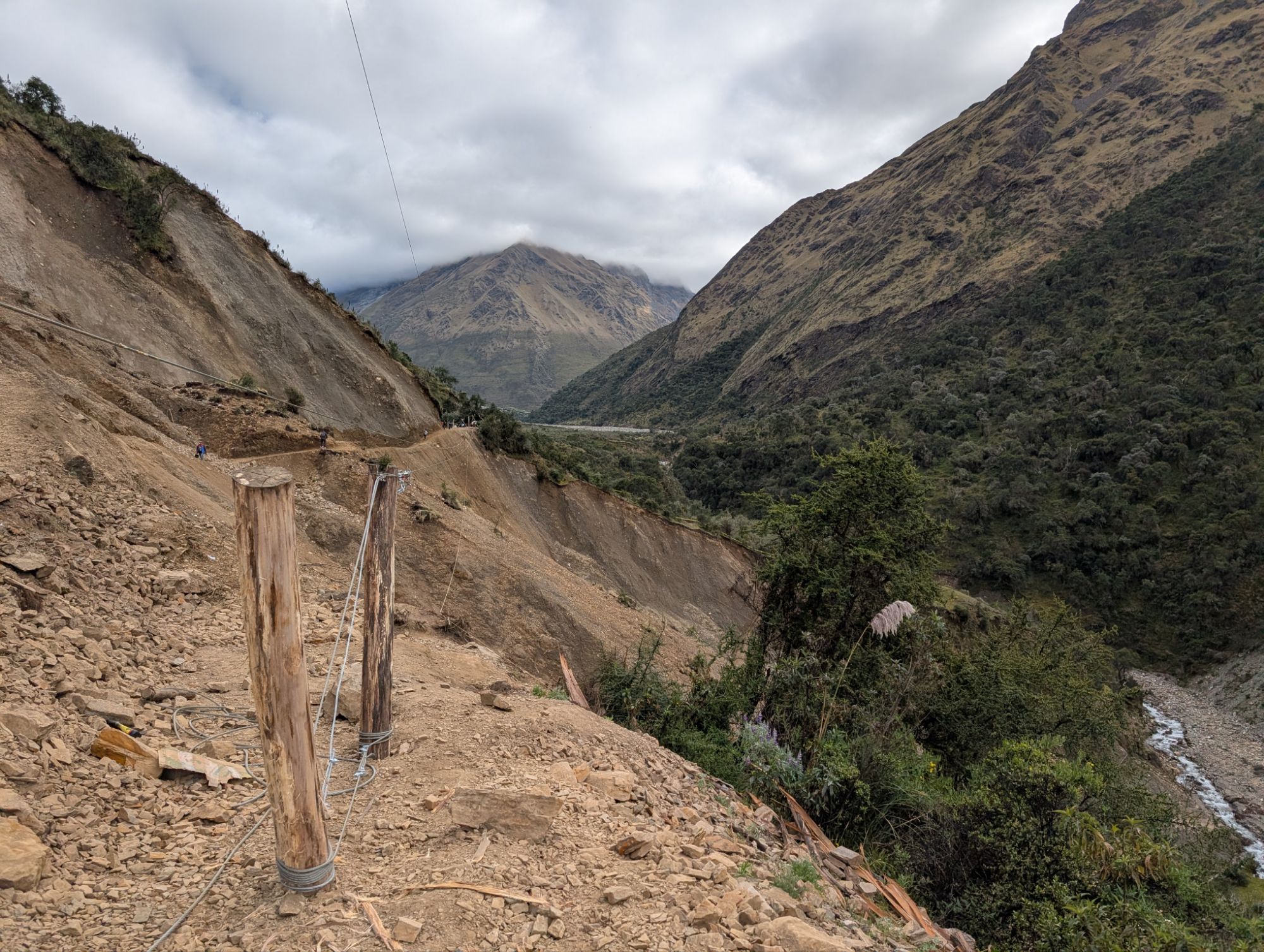
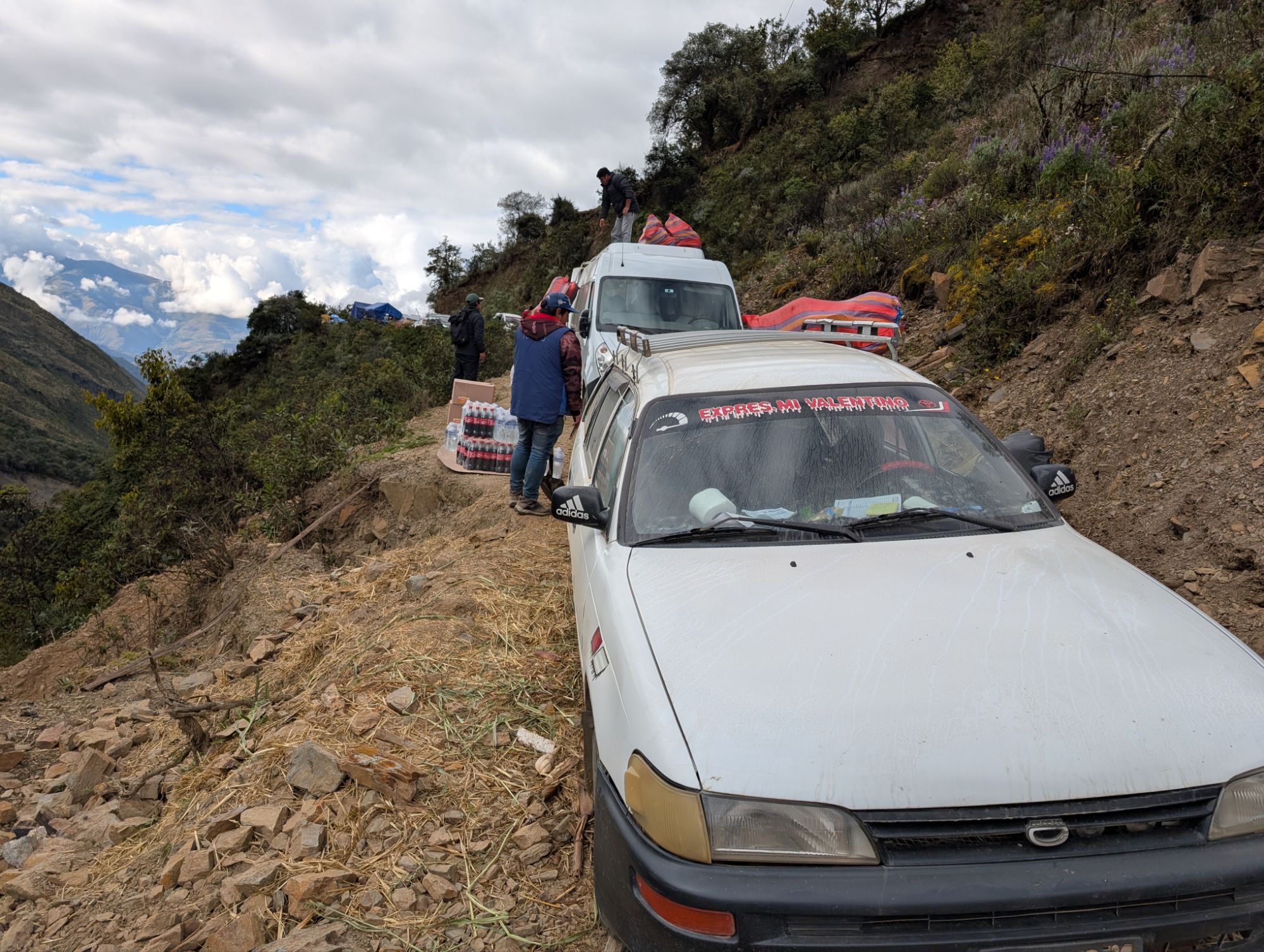
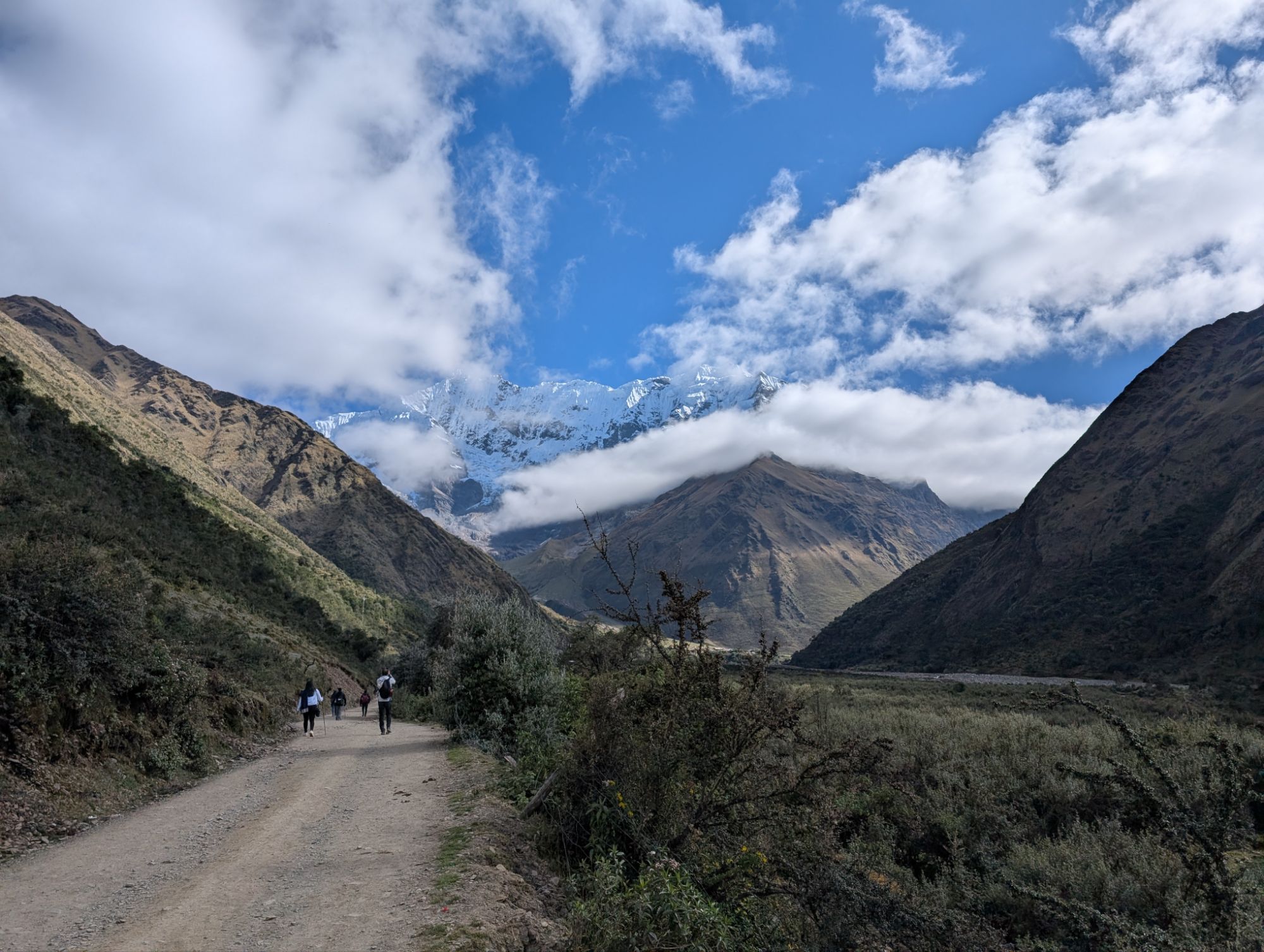
We hike at least a half mile before veering off the main road into a yard/open pasture area. The Mountain Gods Peru team launches into full action to prepare breakfast. They set up a table and chairs and prepare oatmeal, coffee, scrambled eggs, toasted bread with all the fixings, tomatoes (for Elizabeth). Oscar and his horses arrive and he starts preparing them to carry all the gear. As I make my final preparations for hiking, I find the baño where I pay 2 soles or .56 cents USD.
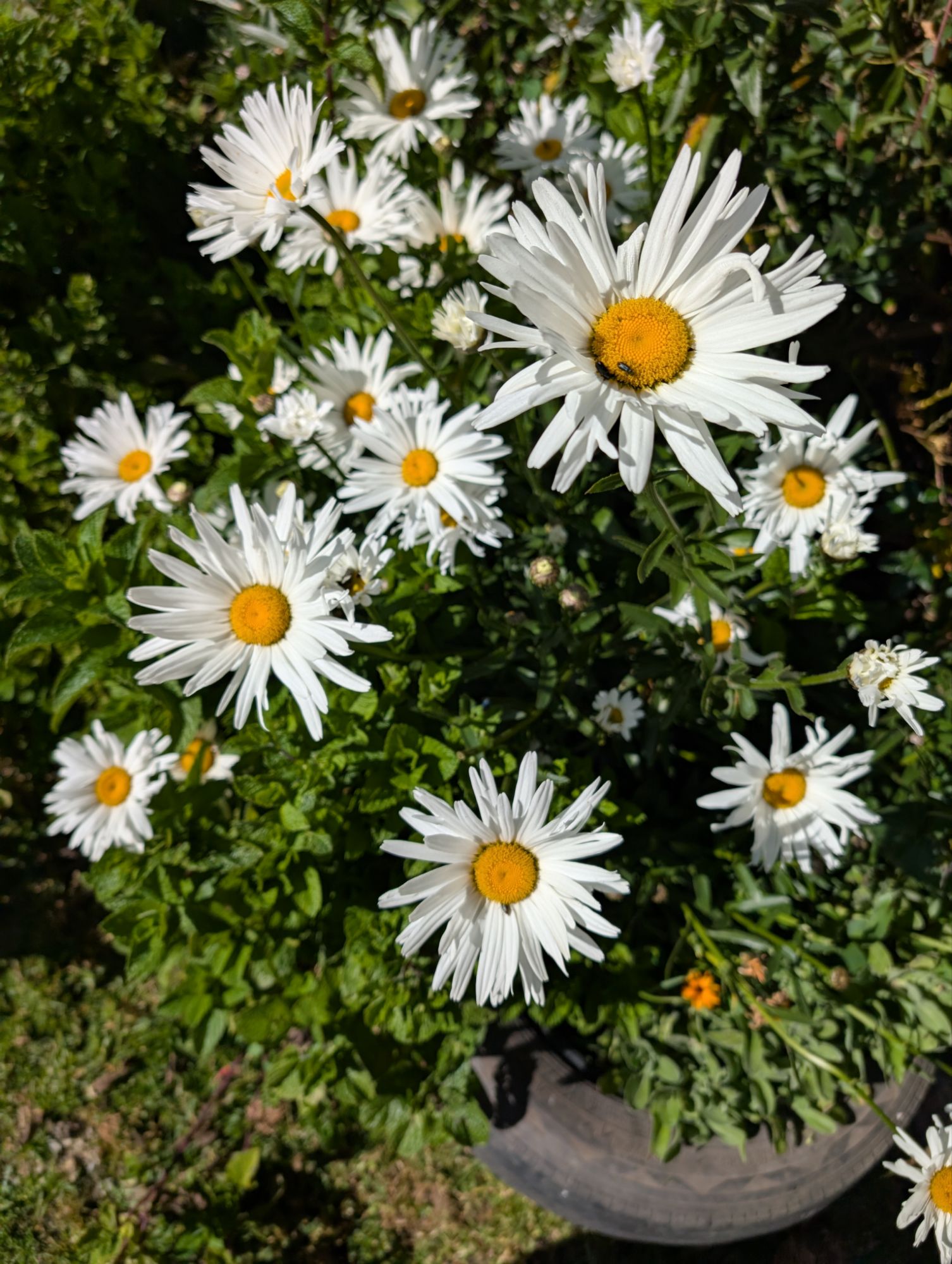
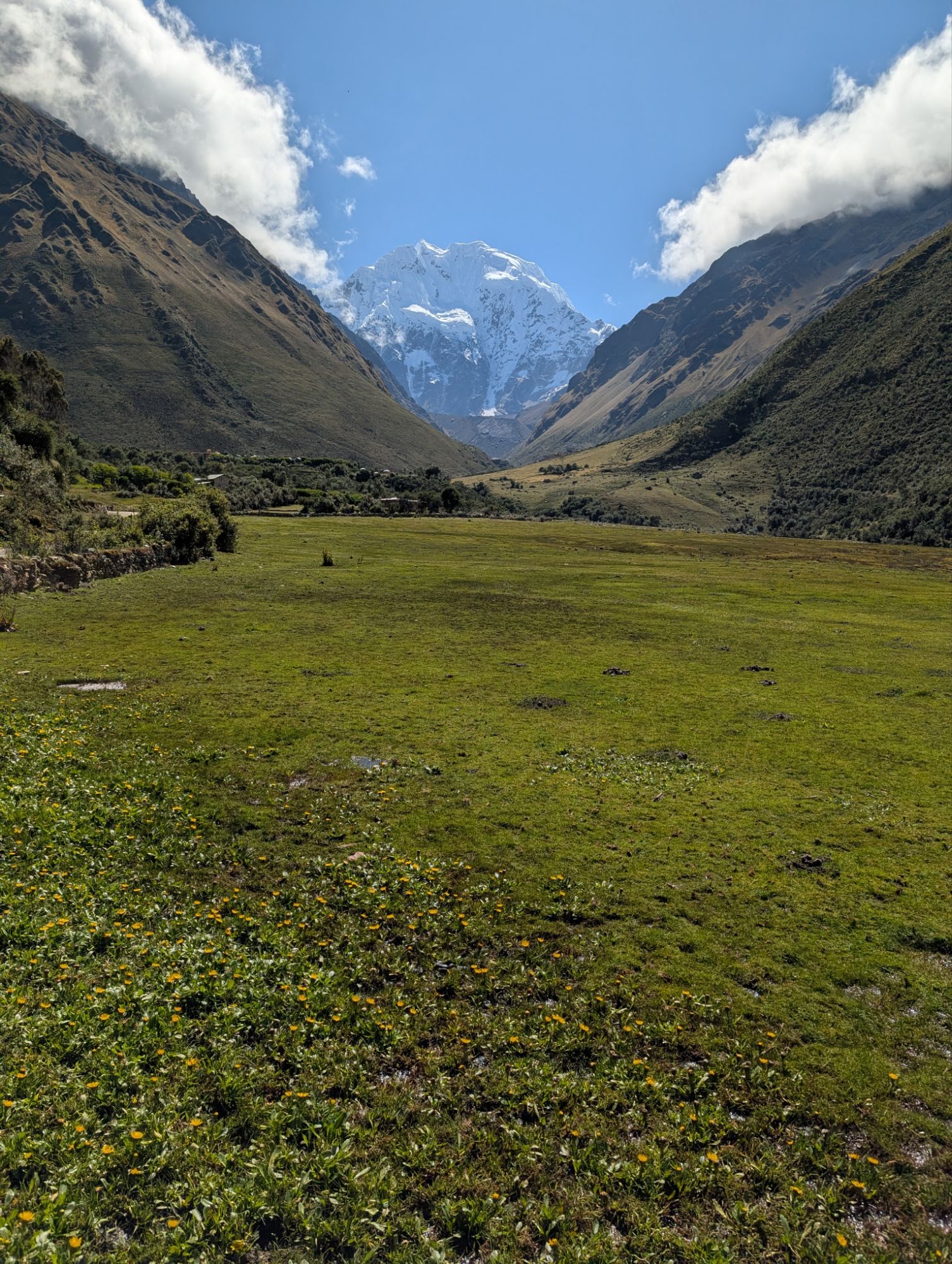
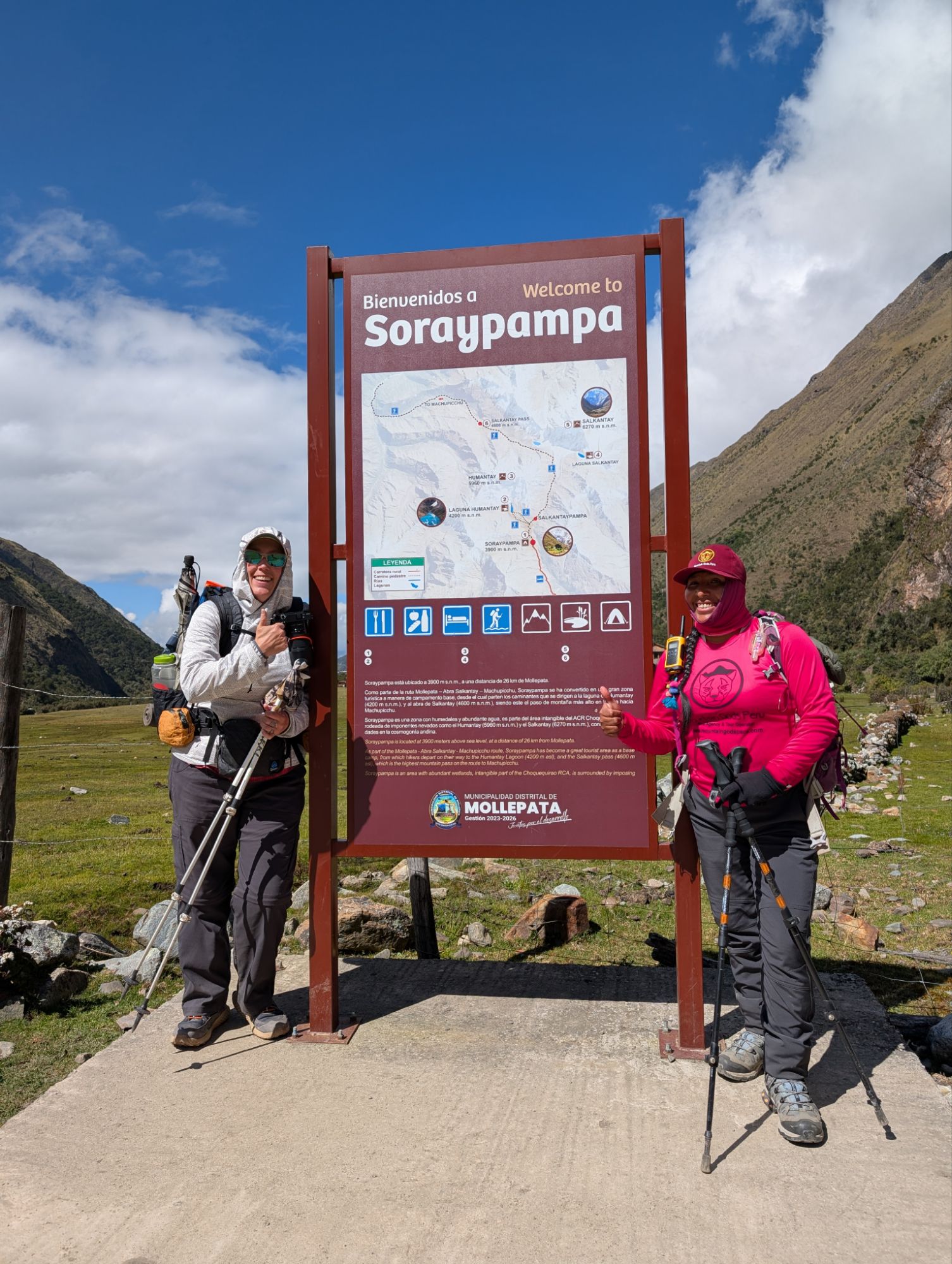
Head guide Elizabeth and I start hiking just minutes after 10 am. She advises me not to have my pole straps around my hands but I tell her that I probably won’t be able to change my hiking routine that I’ve used for 16 years. Elizabeth says that this is the recommendation so that if I fall, I hopefully won’t break my wrists or other parts of my arms. I tell her that if I fall I will change how I hold my poles.
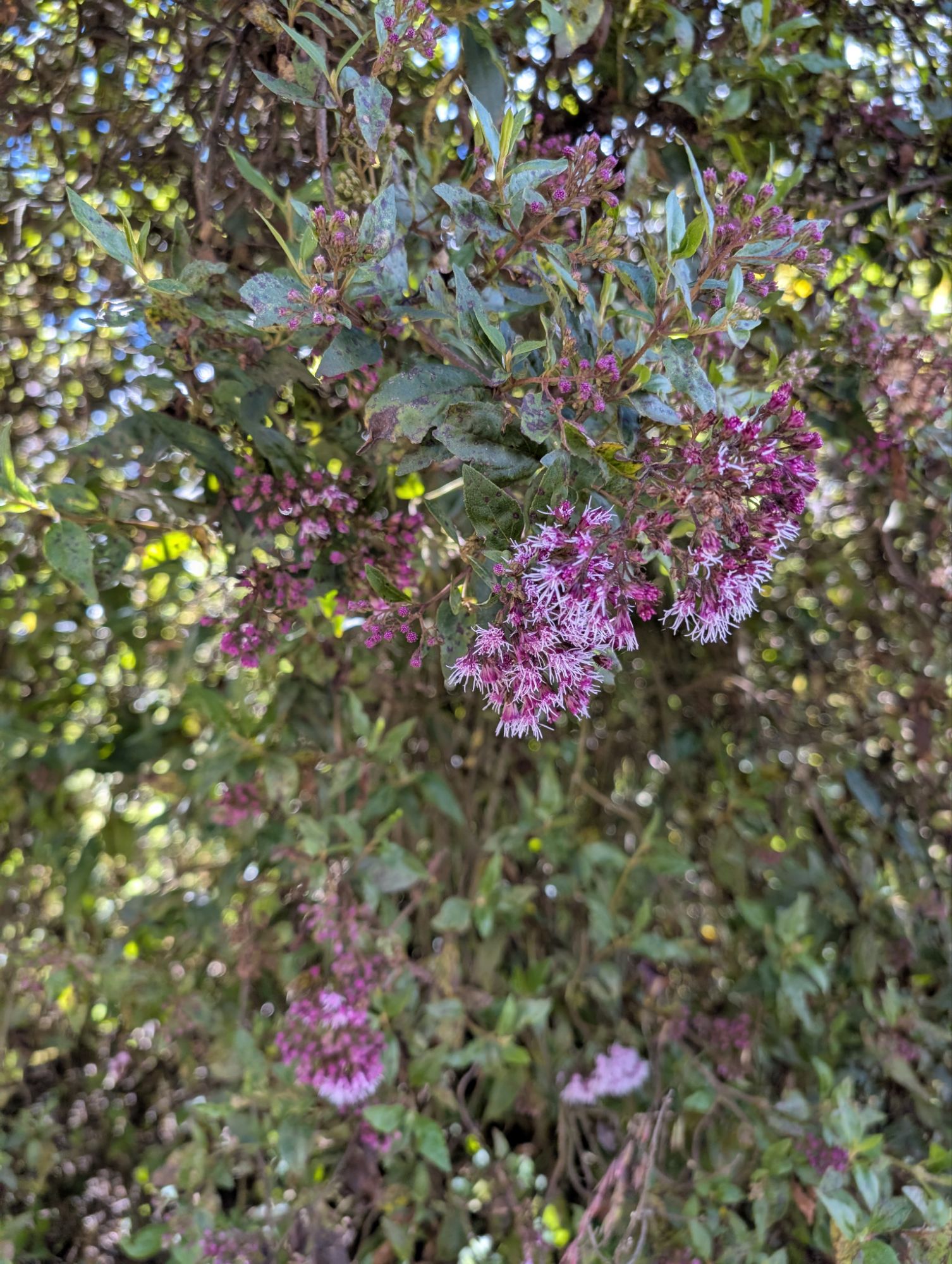

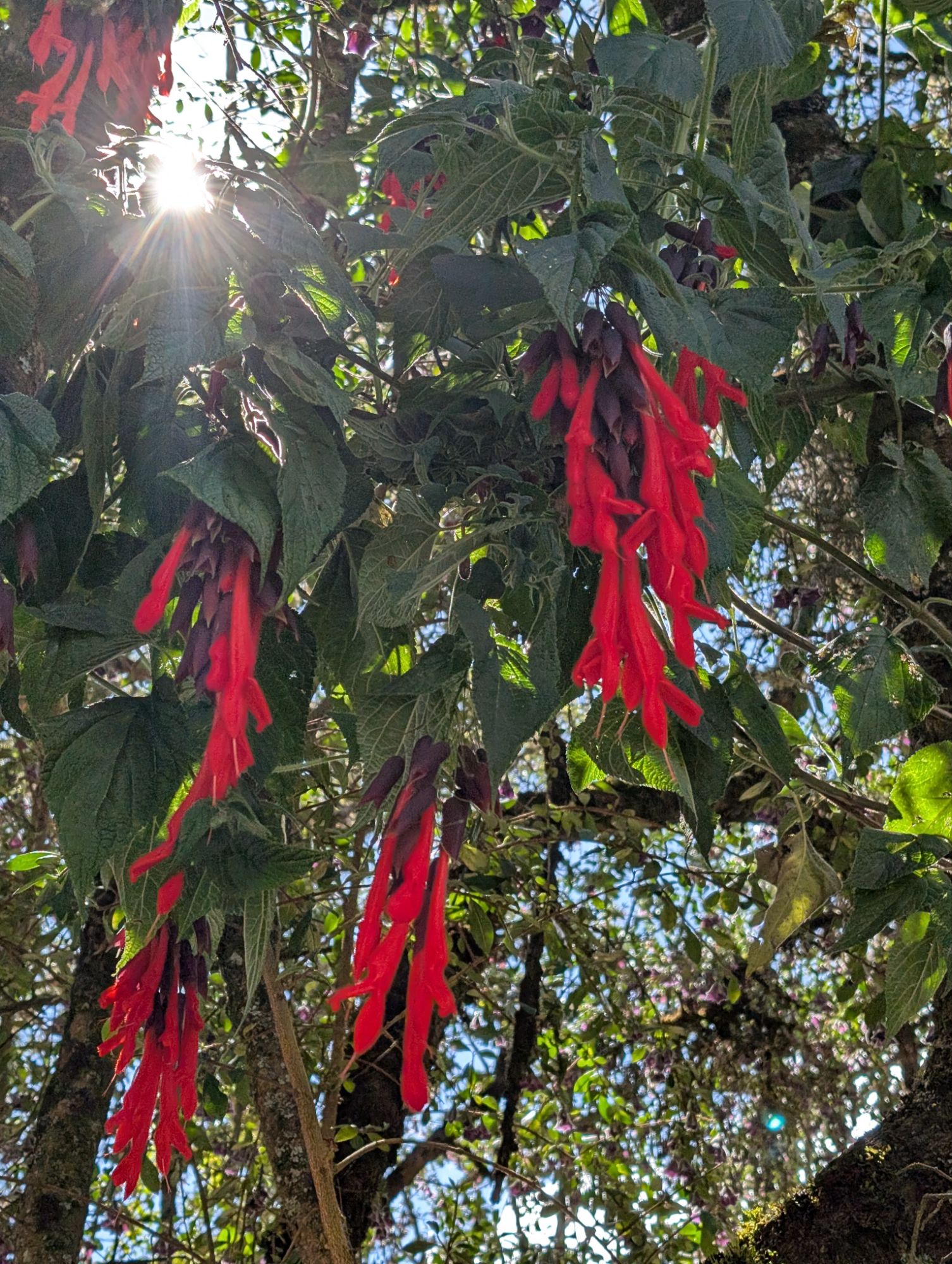
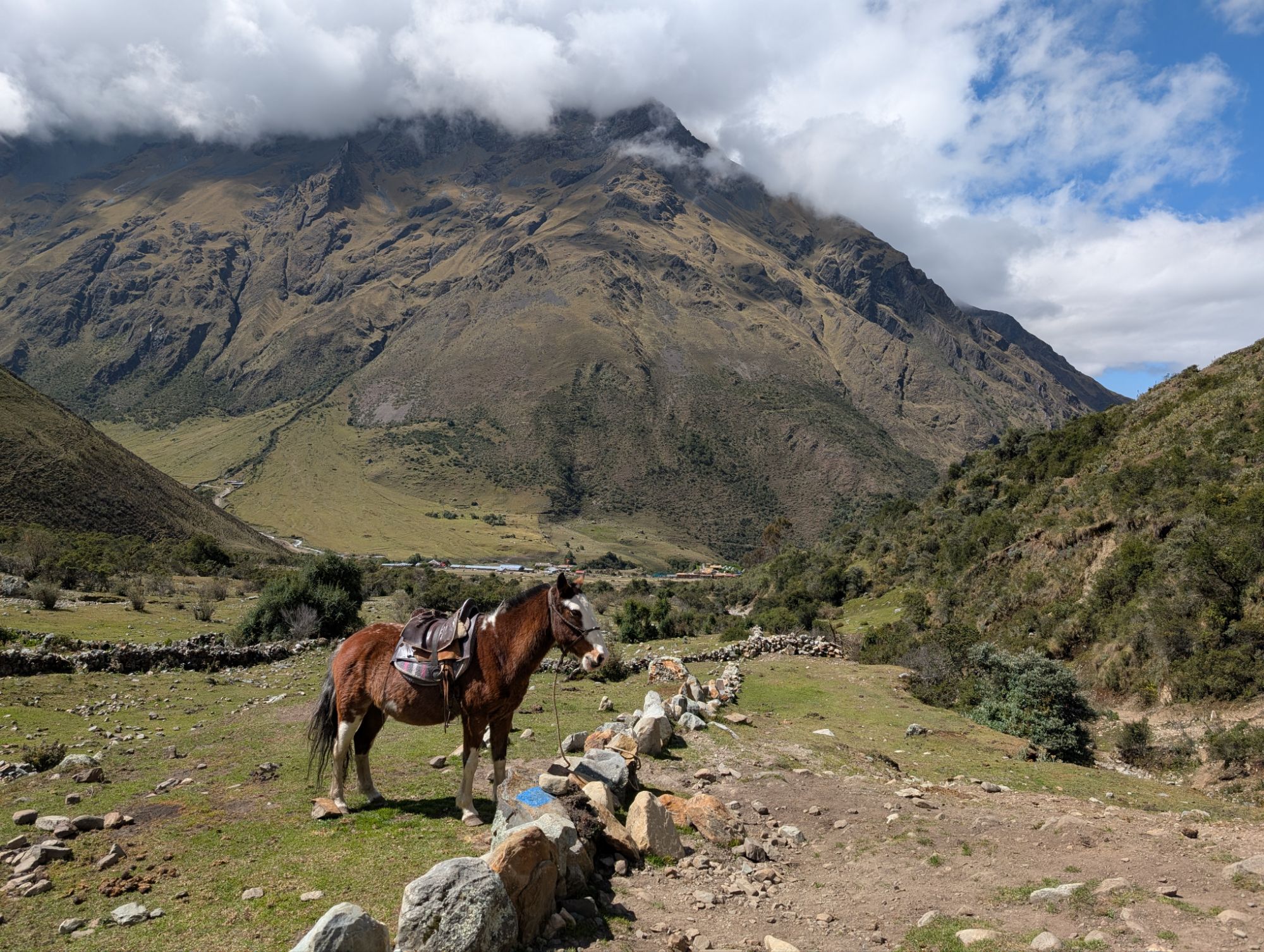
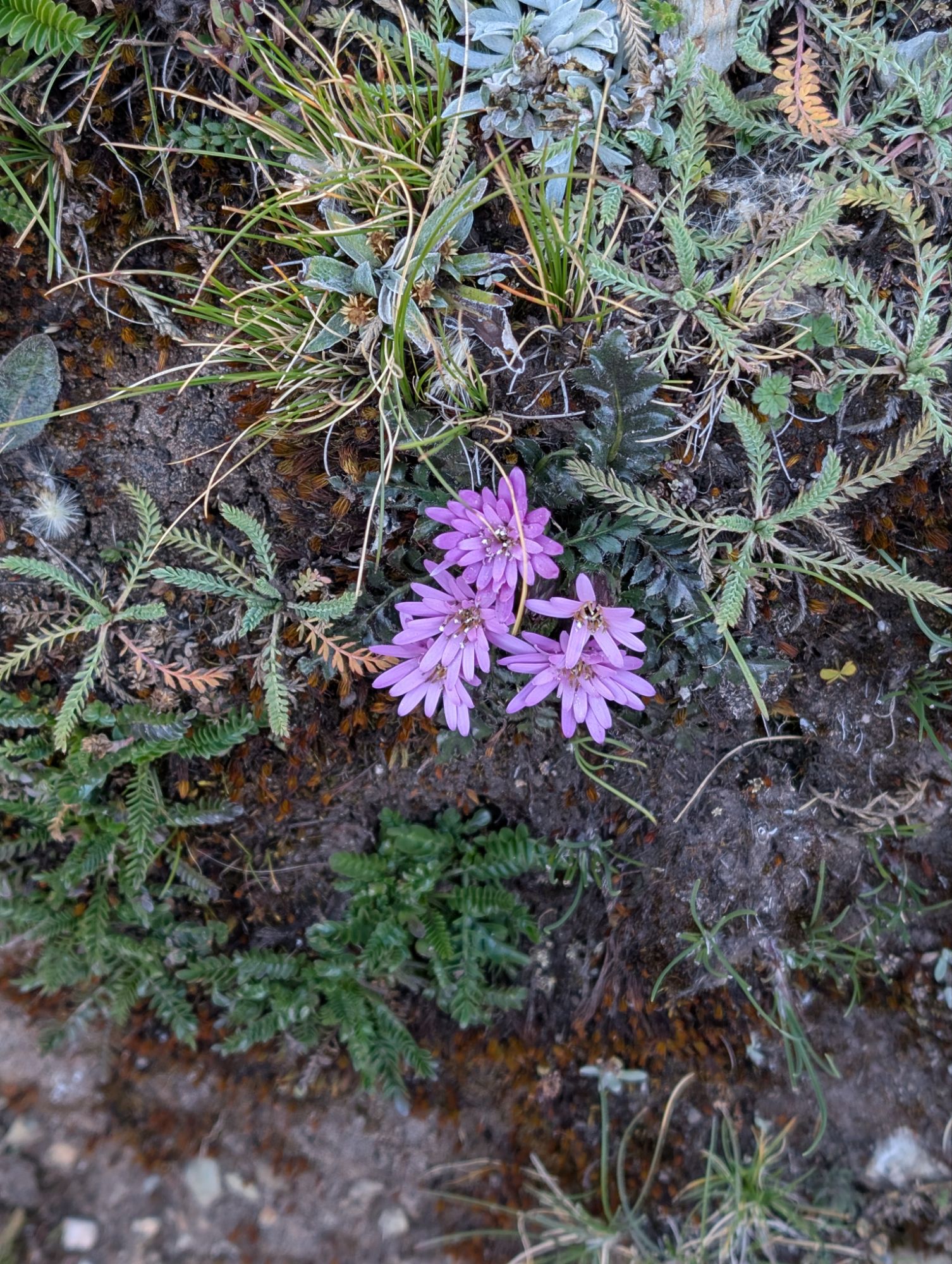
The road is fairly level until we reach the sign for Soraypampa. Then it’s time to climb to Humantay Lake. The sun is beating down hard and I am sweating bullets under my steamy sun hood. I’m happy to stop and take breaks not only to catch my breath but to see all the glorious flowers. Despite its limited Peruvian database, the Merlin app helps me identify a Rufous-collared Sparrow. We climb for just over an hour, crossing a labyrinth of trails, before cresting the ridge at Humantay Lake. A sea of people crowd the horizon and my senses are flooded with the chatter of a cocktail party.
The edges of Laguna de Humantay, sitting at an elevation of 13,780 ft., are crowded with dudes posing with their shirts off. LOL, nothing like a shirt off to frame your accomplishment. We do the requisite photos and fend off the tourists glancing by. Elizabeth does not hesitate to command people out of the picture and to take our picture too!

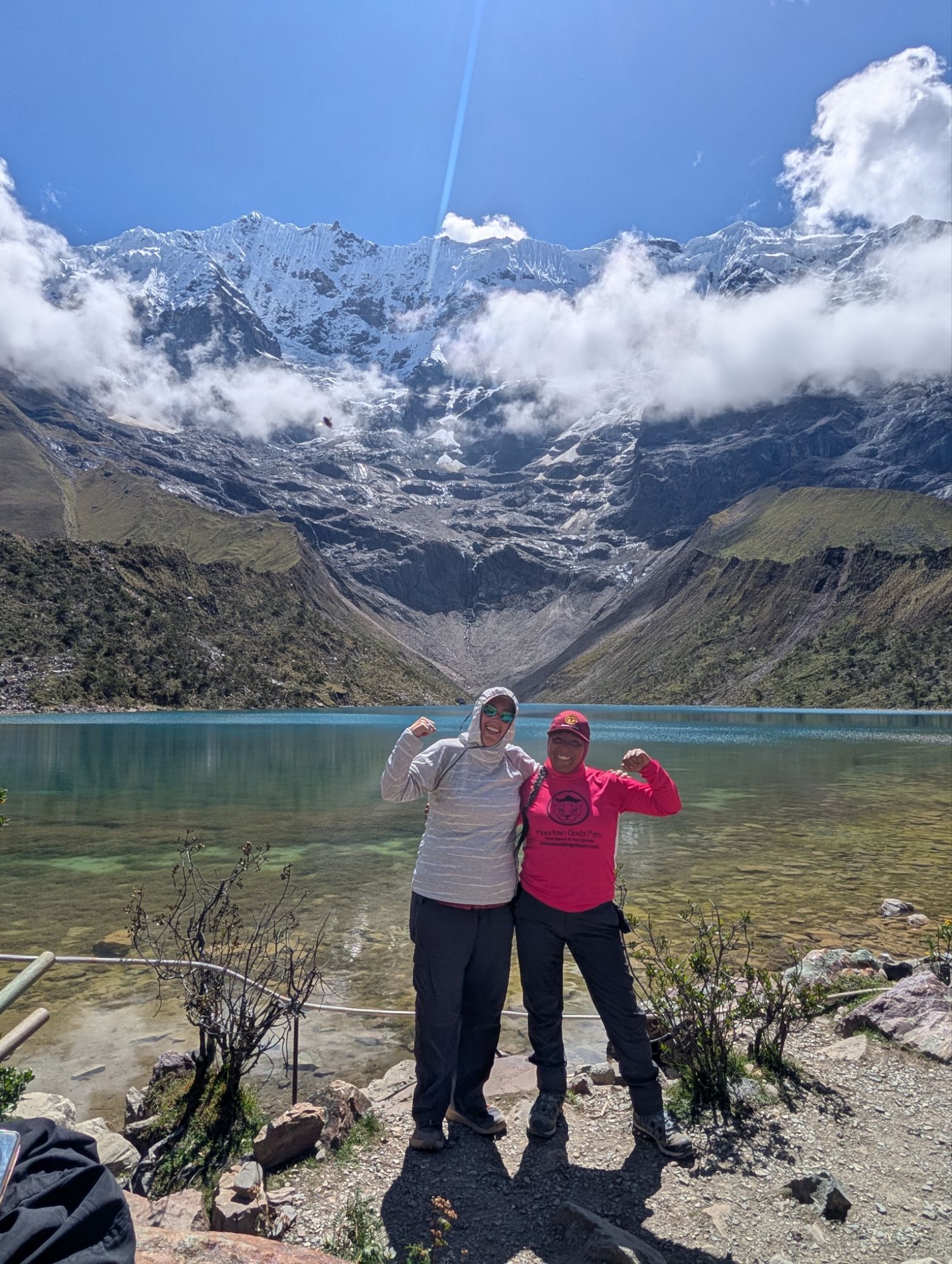
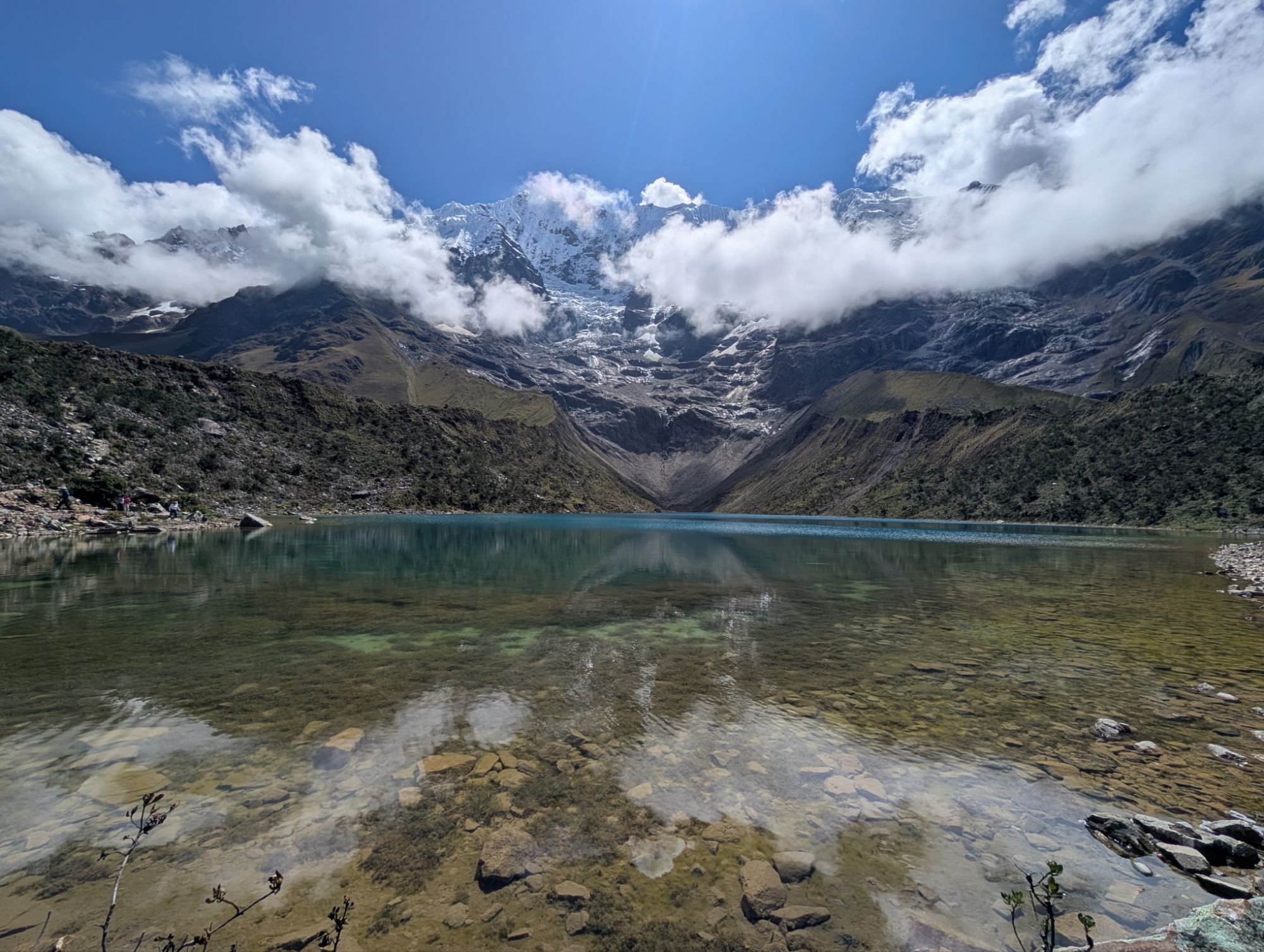
The clouds hang high around Montana Humantay as the sun continues to bear down. We climb up to a rocky ledge and the vivid glacial lake color pops.

Within 20 minutes of arriving we are on our way, seemingly on some secret exit with no tourists. We make tracks down through the talus before hitting another labyrinth of trails. Elizabeth sets a fast tempo and I keep up with her. Definitely easier to trot downhill than make your muscles slow you against gravity. We funnel down as we merge with the masses slowly descending. We speed down, zipping in and out of the lines in front of us. Near the bottom, we veer off to the left and start climbing up the next canyon. What took us about an hour to climb only takes about 20 minutes to descend.
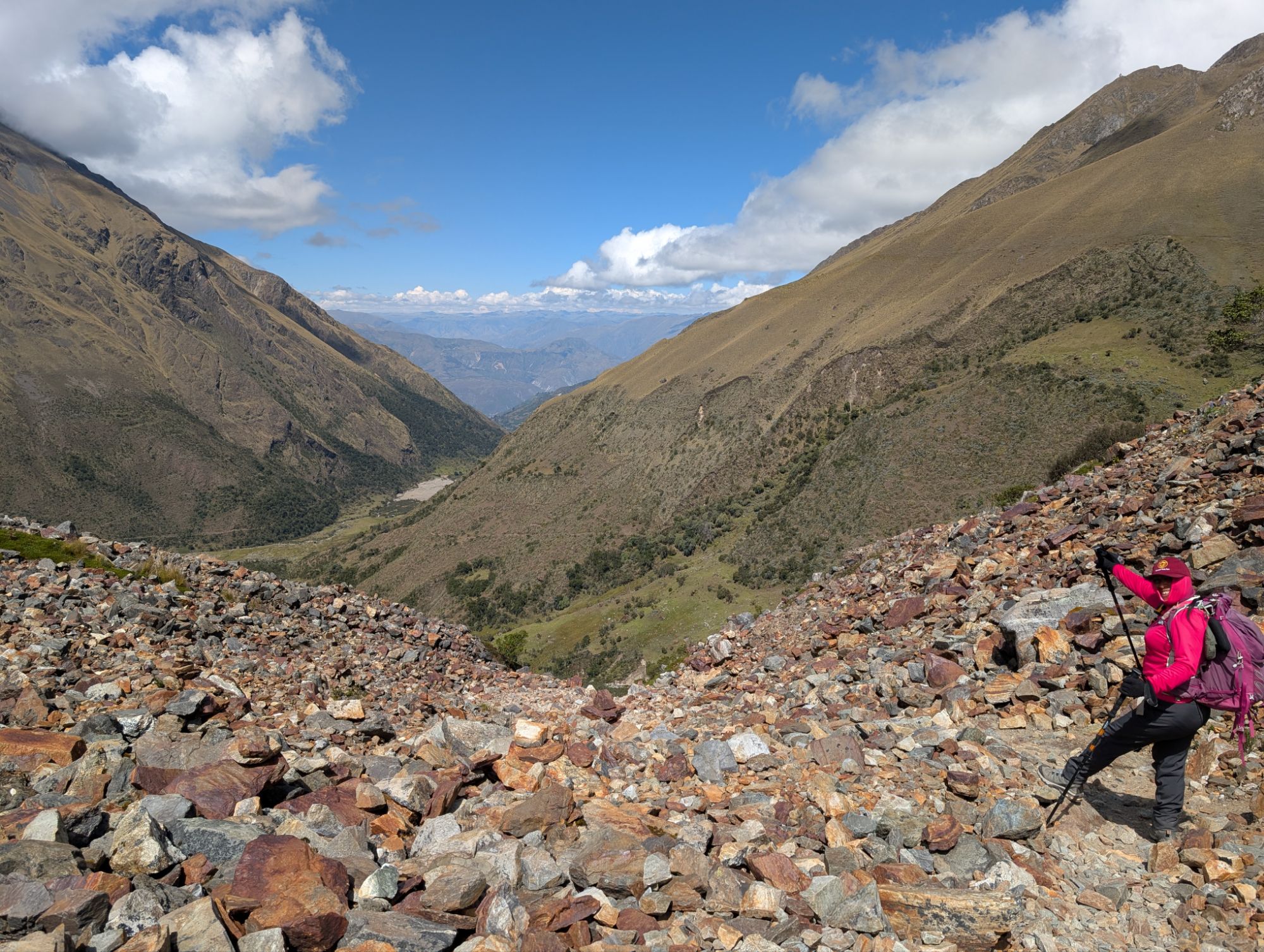


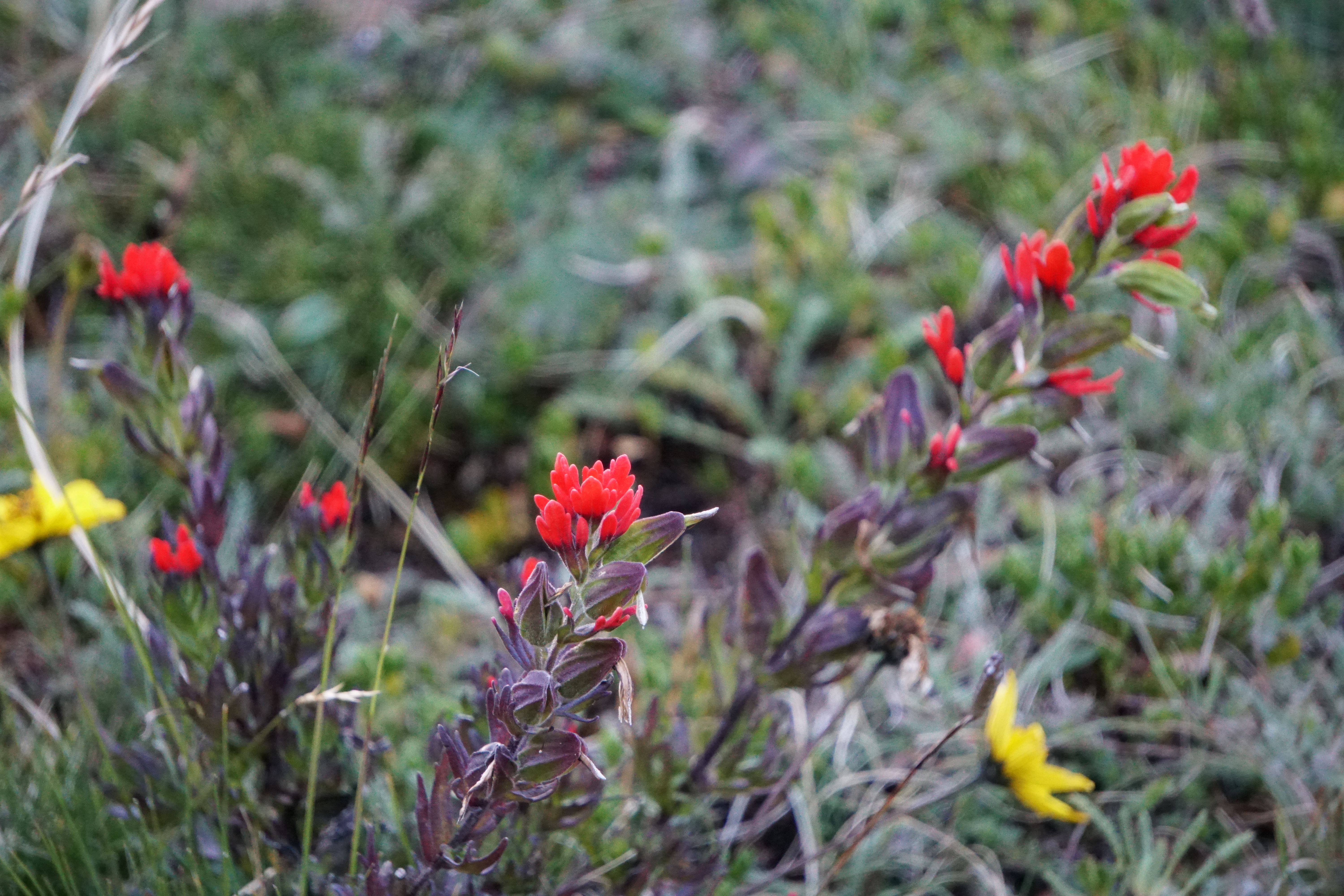
We point ourselves directly at Apu Salkantay and start climbing. I move upward very slowly, although steadily, while admiring flowers and views in all directions. We pass a grazing group of horses and llamas. We ascend for about 1.5 hours before arriving at out lunch spot at 2:15 pm.
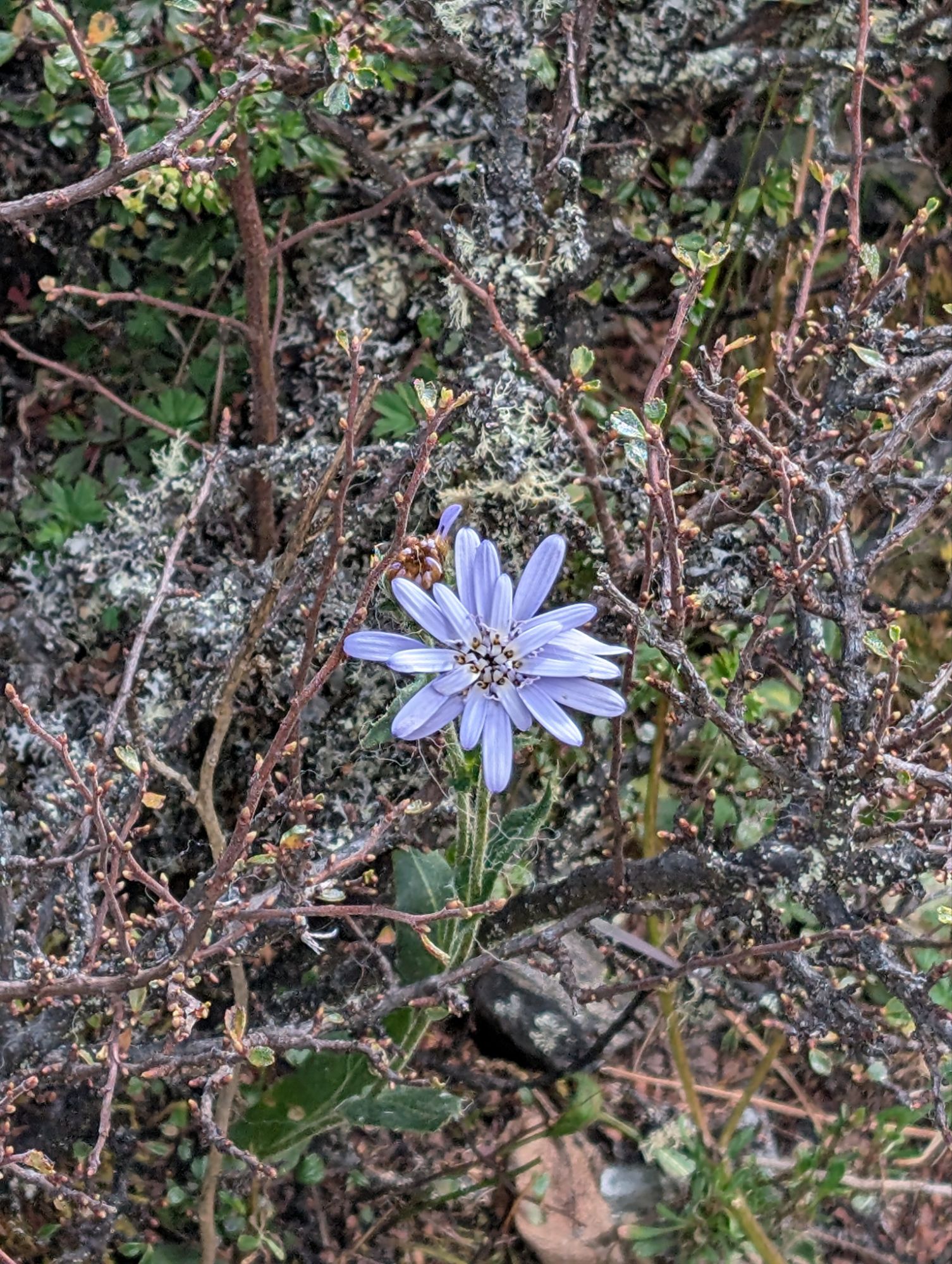

Don’t forget to turn around and look how far you’ve trekked!


Oscar approaches us at about 2 pm and offers me a ride or to take my gear. Not only do I not need the assistance but getting on a horse seems like a good way to hurt myself. Instead of me, Oscar’s girlfriend rides the horse back to camp. It’s just another 15 minutes before we arrive at the terminus of one of Salkantay’s moraines for lunch.

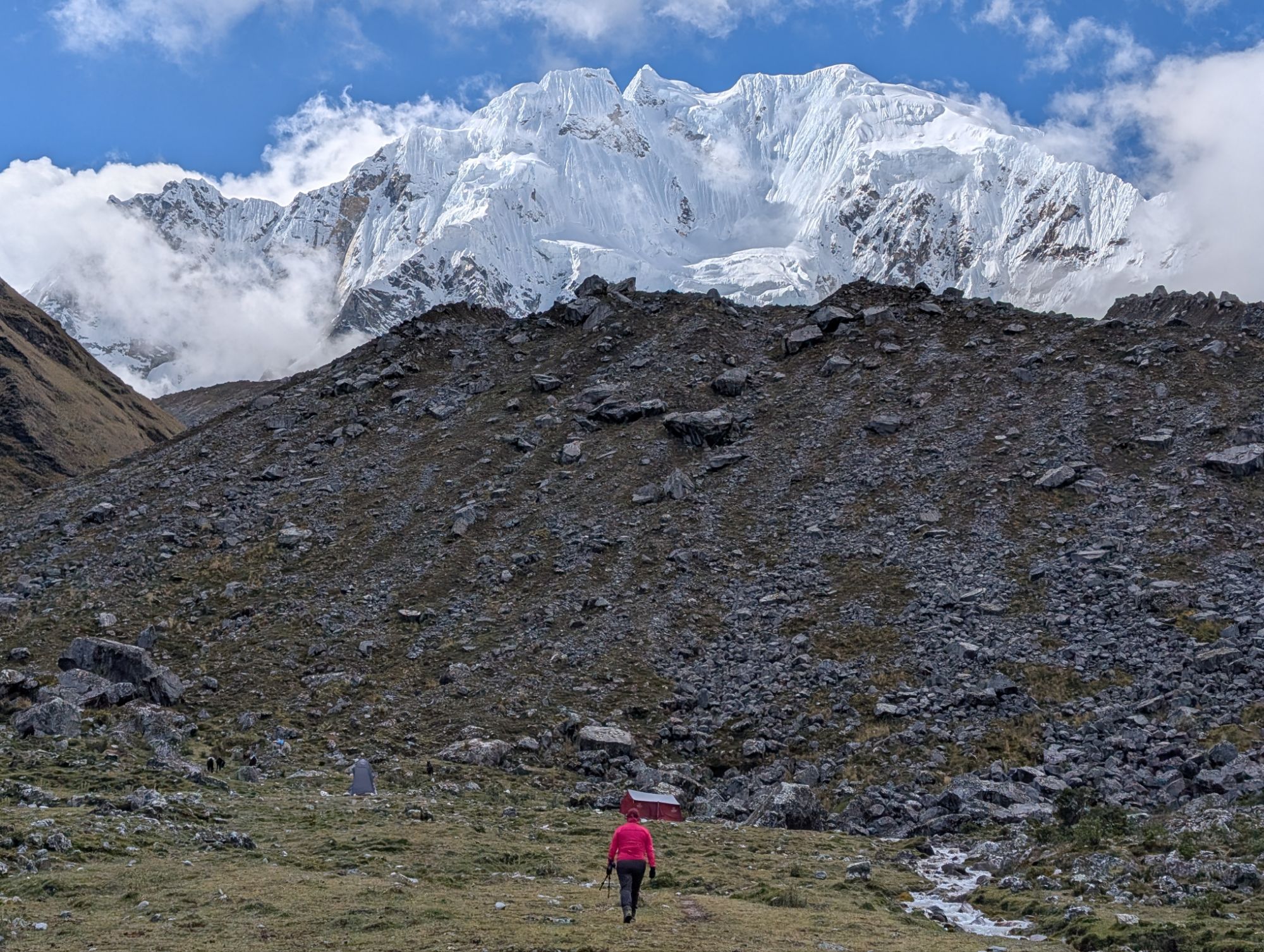
After a quick stop at the luxurious toilet tent, I wash my hands in a bowl of warmed water. I’m served a blue beverage that has me asking a lot of questions. It’s made from corn! No joke! Chicha morada (look for it in the pitcher on the table), made from purple corn, dates back to the Incas and is used for rituals and celebrations. Full of heritage and deep meaning, I sip chicha morada in the shadow of Apu Salkantay contemplating the meaning of many things. It’s almost like a red pill blue pill moment where the truth will be revealed to me.
By 2:30 pm a massive spread of food fills the table. I know the pictures look strange but the tint is from the red dinning/cooking tent in which we are sitting. Zoom in on the above picture to see it just above Elizabeth’s head. We start off with piping hot scrumptious pumpkin soup that goes down quick. I use a small piece of toasted bread to wipe the bowl clean. I joke with the crew that it wasn’t any good. Then comes rice, corn, cheese, chicken, veggie platter, and potato wedges. Your eyes are not deceiving you. This is food for two people and yes, the corn has massive kernels. Peru has over 4000 varieties of potatoes and hundreds of varieties of corn. The taste of these massive corn kernels is wonderfully sweet. We are seriously missing out with the few corn varieties available to us in the States. We do our best with the massive spread of food but have to send some back to the kitchen. Luckily the crew will add it to their meal to help us out.


Our lunch break is about one hour and I eat as much food as I dare, knowing that I still have climbing ahead of me. It’s so hard for me to climb on a full stomach. Add in the elevation for an extra challenge. We’re at about 13,800 ft. and there’s nothing but up. Despite adding my alpaca layer during lunch, I’m sweaty enough that I have become chilled. I hesitantly replace my alpaca layer with my patagonia wind jacket trying to gauge the balance between needed warmth and sweat. At 3:30 pm we continue our ascent and leave behind the crew to quickly pack up all the gear again.

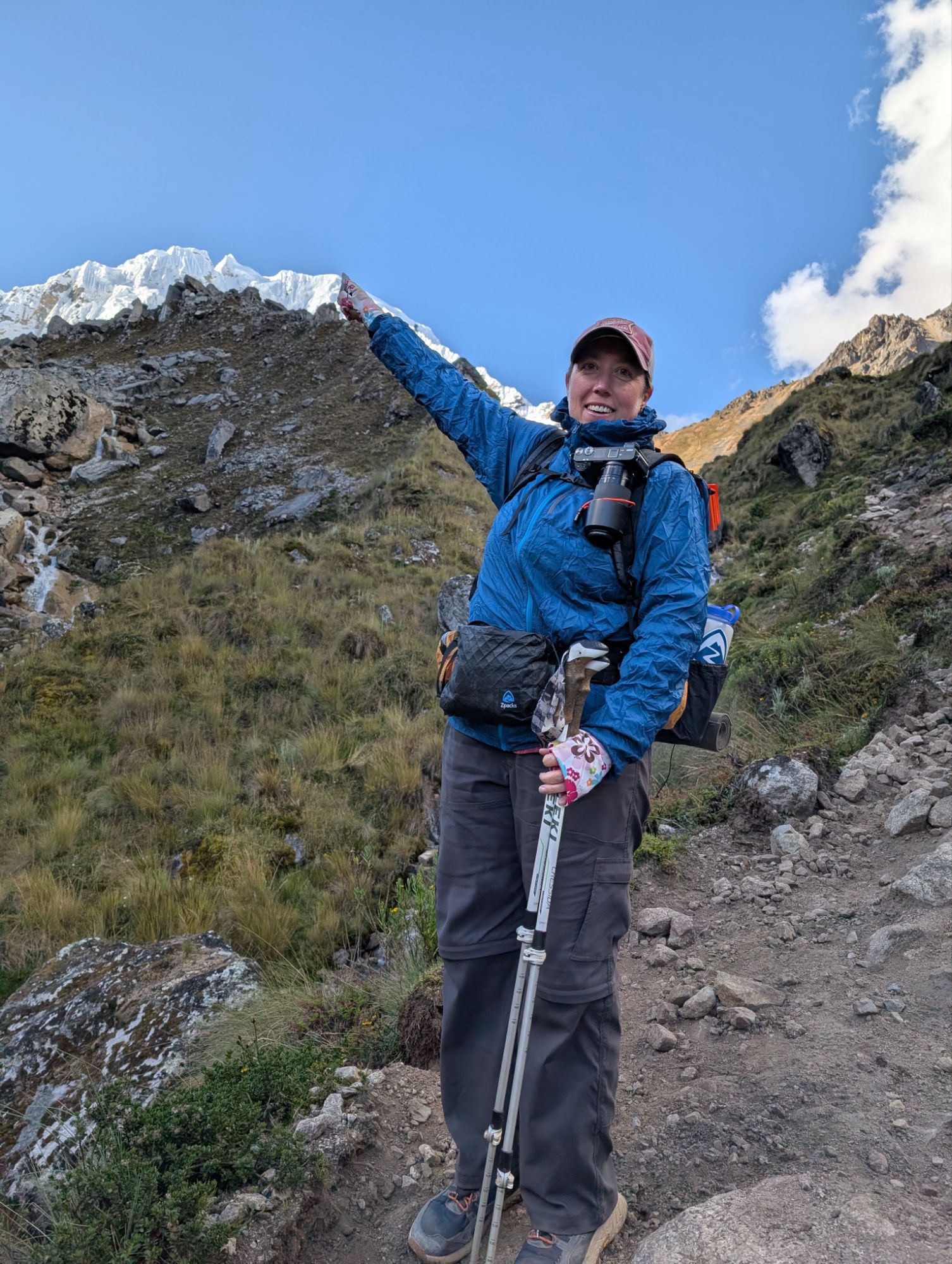


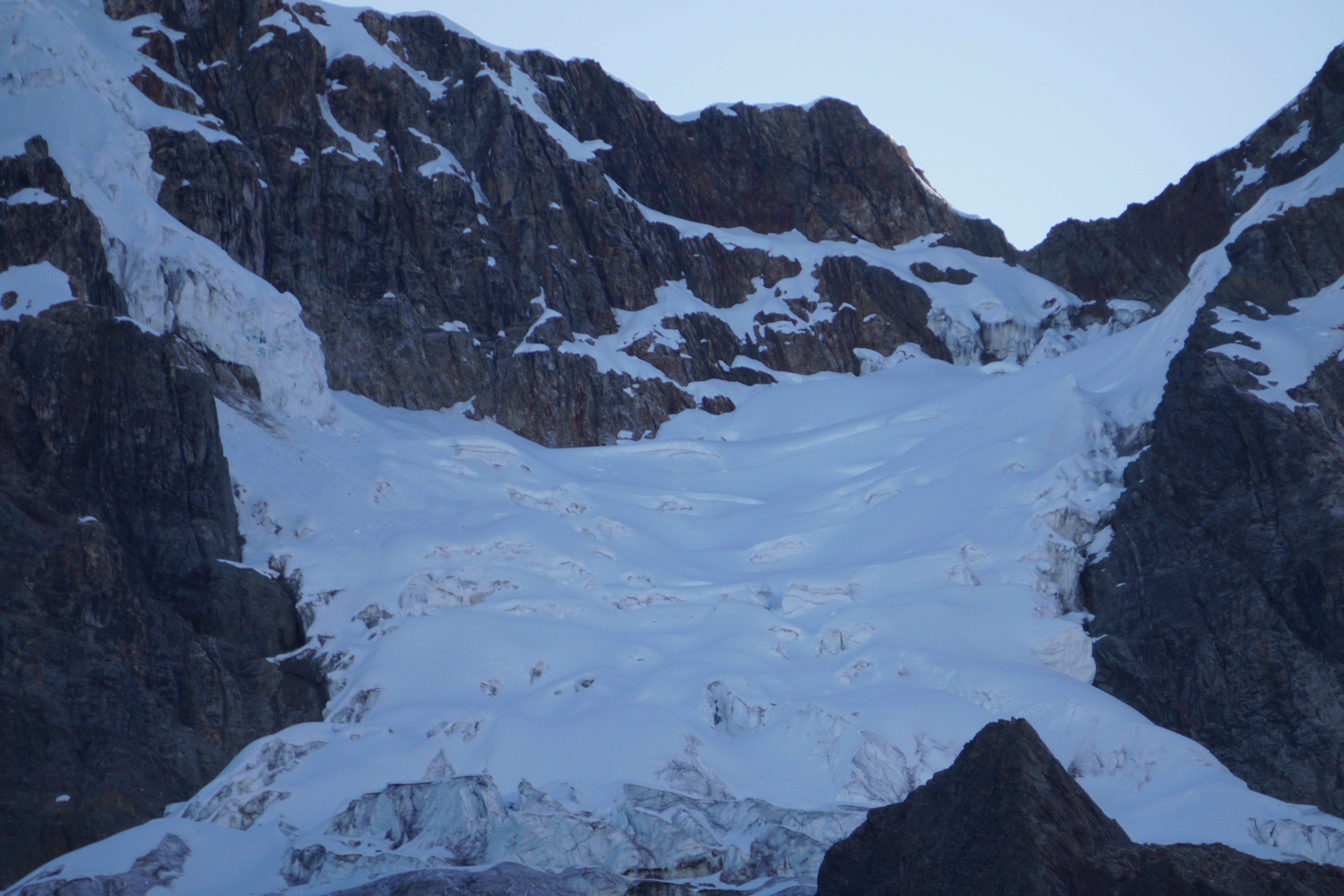
Progress feels desperately slow as the elevation weighs on me and we take lots of photo ops with Apu Salkantay. Clouds pass by briefly as we climb up along the right side of a lateral moraine. Only a half hour later, the whole team zips by making quick tracks.


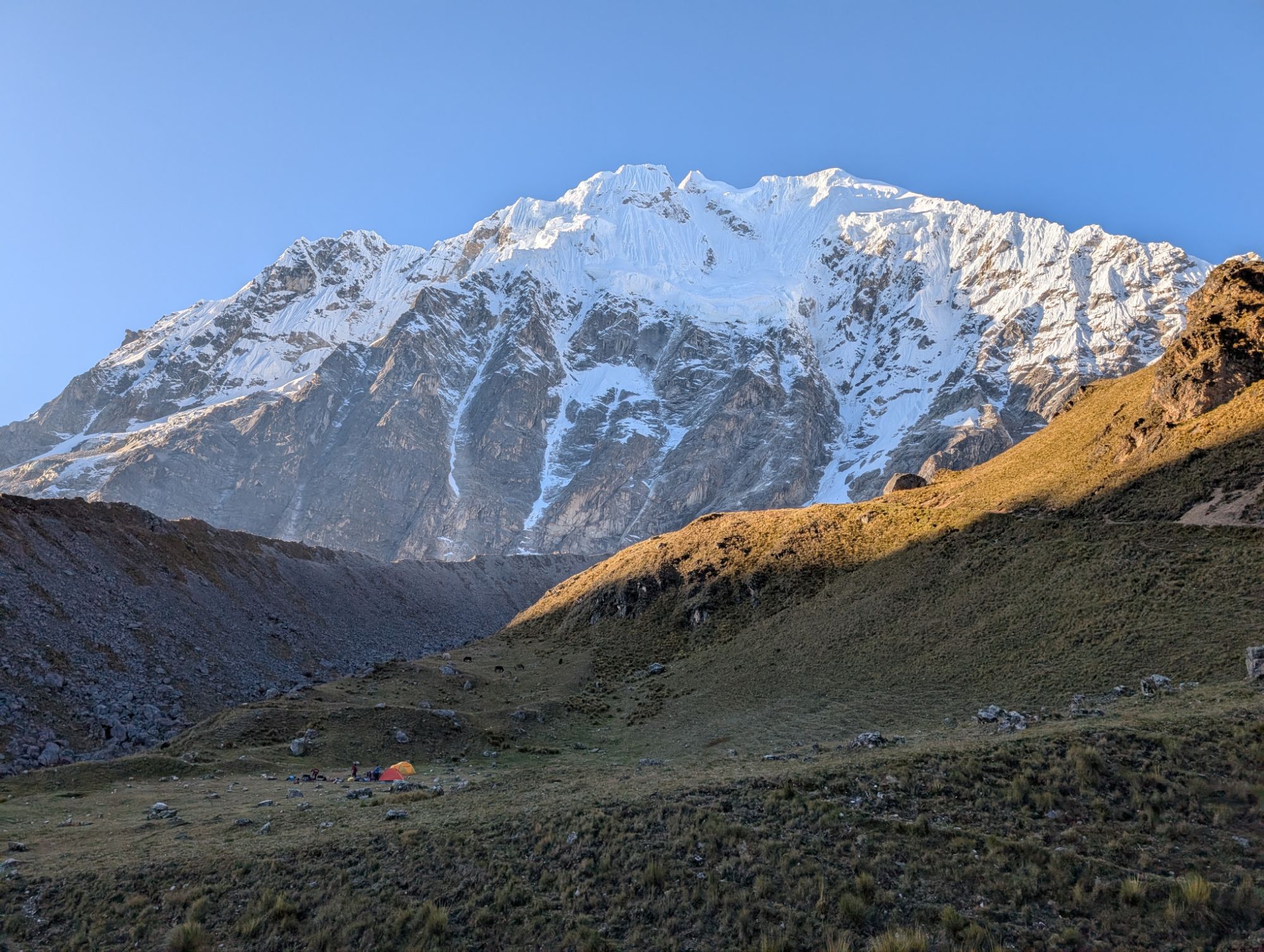
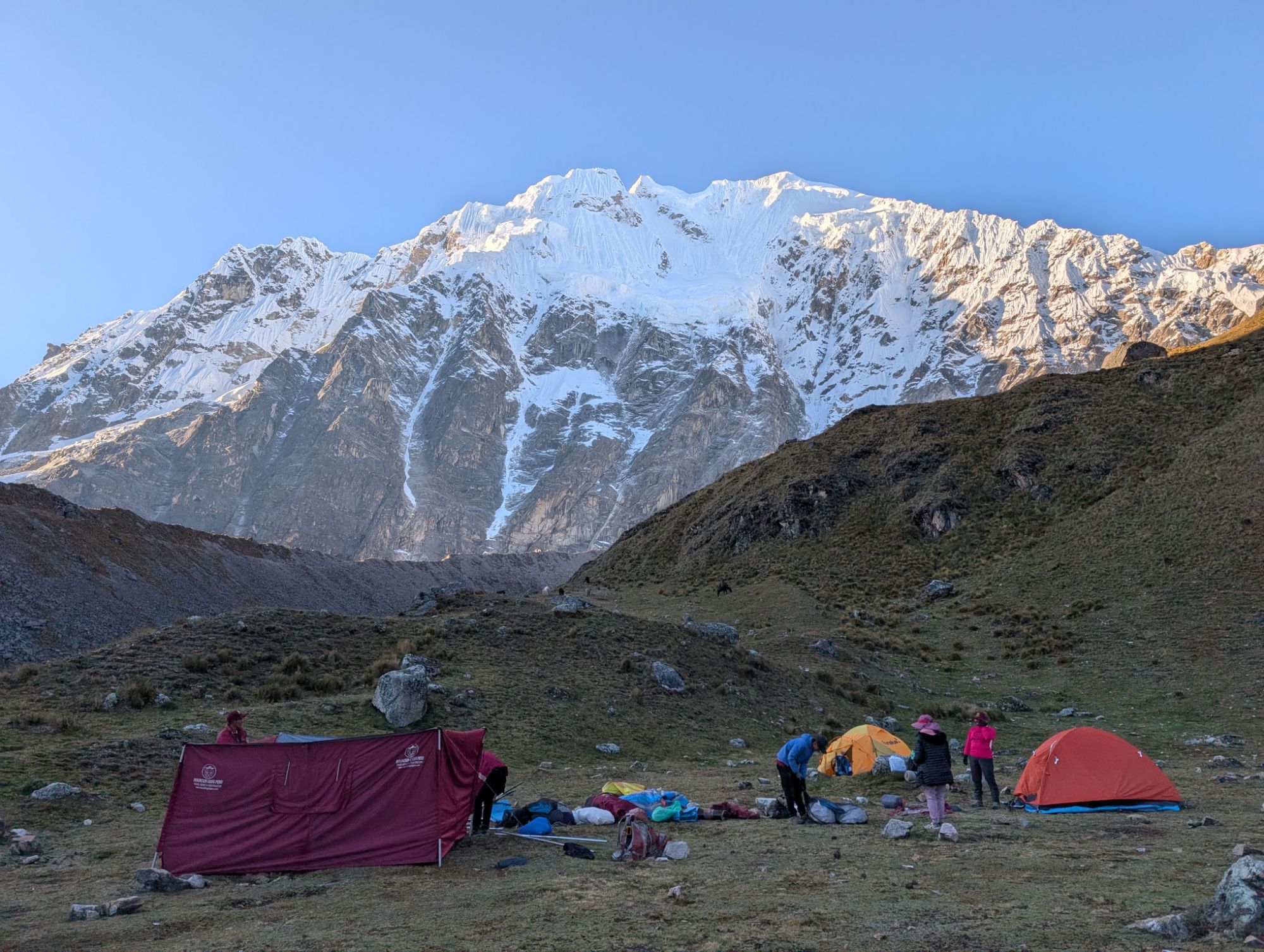

The effort seems immense. Time ticks by far slower than my breaths. And yet, it’s about 4:45 pm when Elizabeth and I arrive at camp which has been set up in quick fashion. I know that I need to immediately change out of my damp clothes but I don’t want to miss a moment of the setting sun and the perfect light on the mountains.


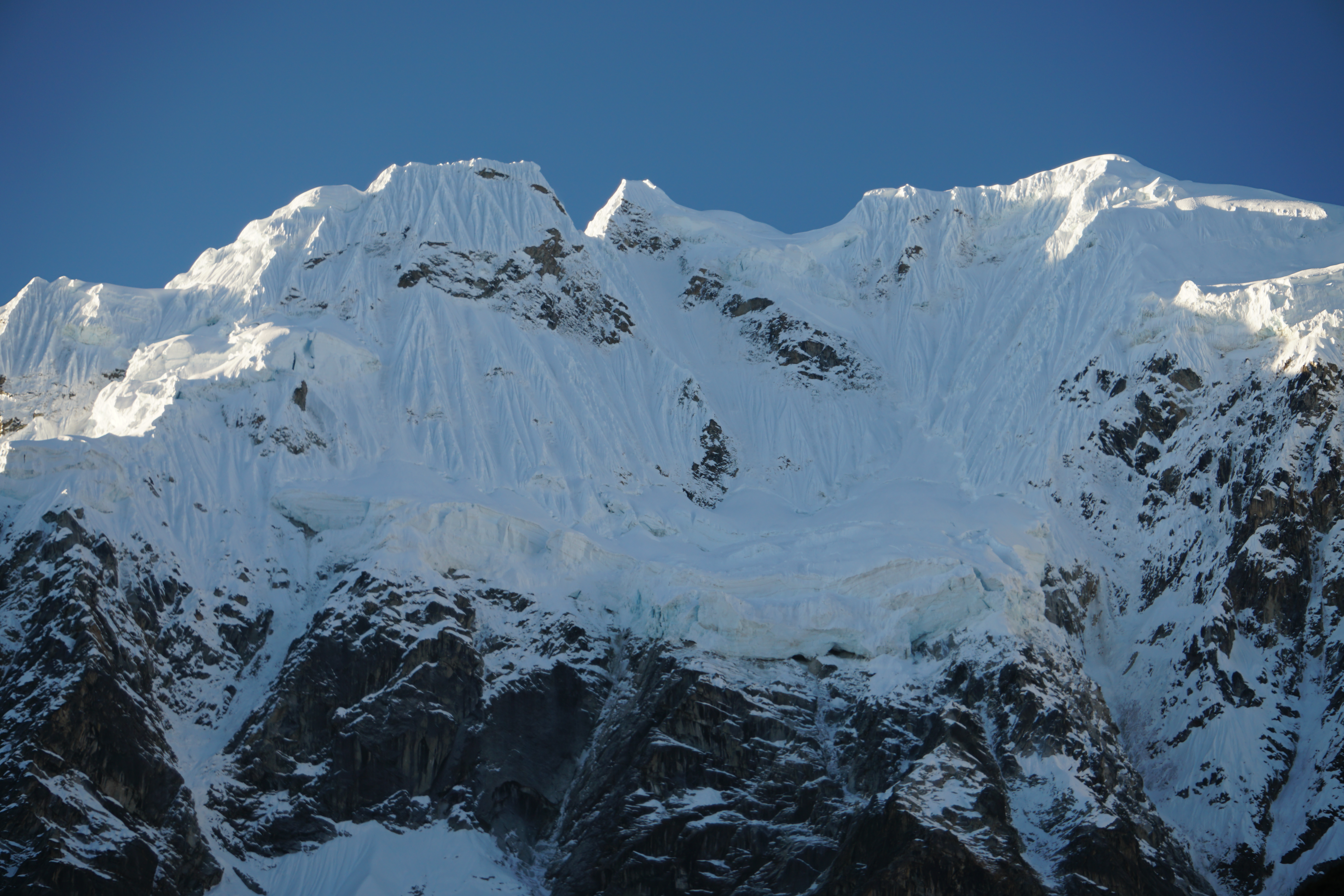
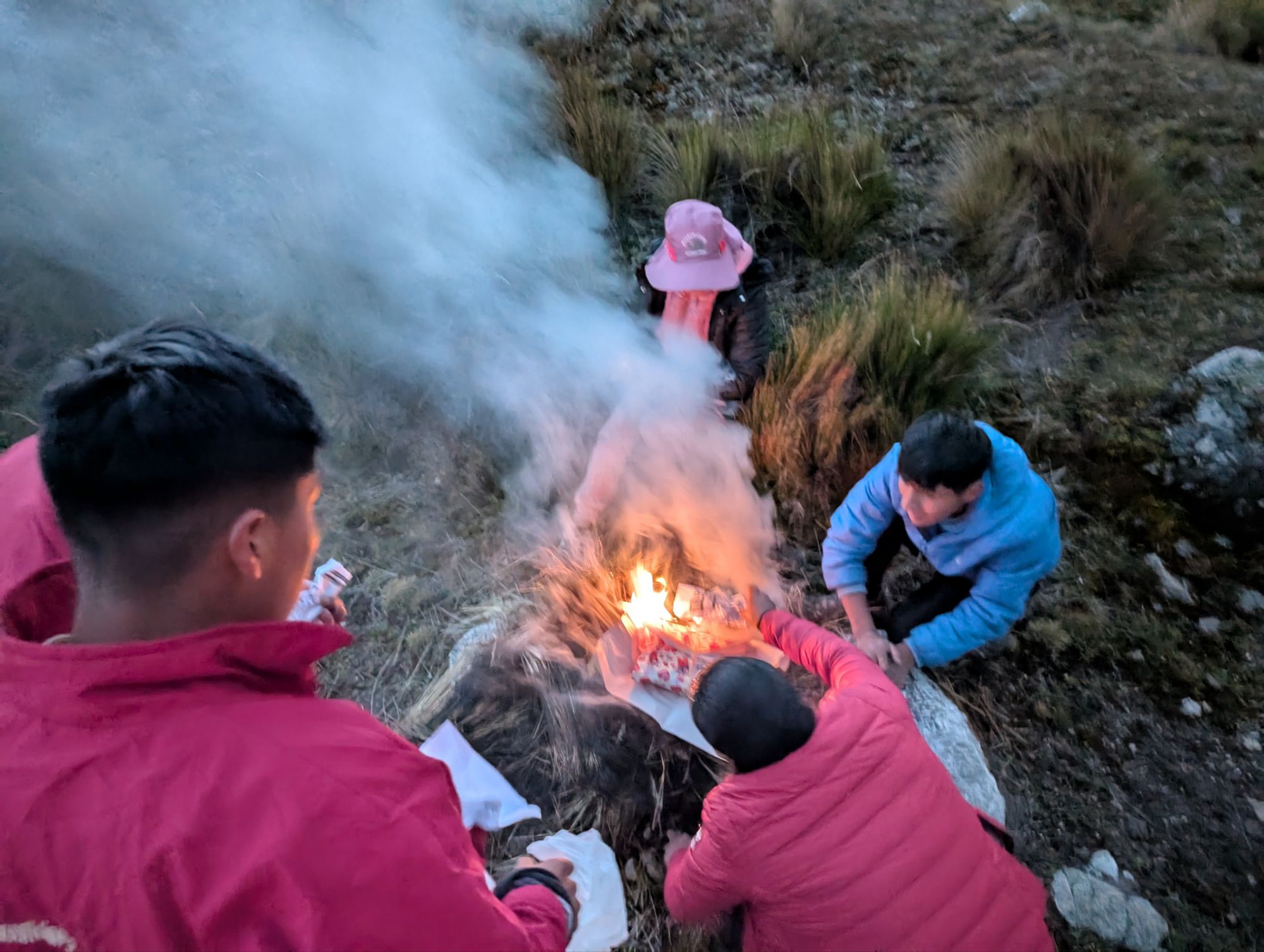
The camp is a bustle of energy as tents go up and food preparation starts. Darkness descends on us quickly as Elizabeth starts to prepare the offering ceremony or haywarikuy to Pachamama (Earth Mother) and Apu Salkantay. She lays out the paper and starts sprinkling packets in a circle. She instructs me to find perfect and unbroken coca leaves and gather them into groups of three. Joel joins us and assists Elizabeth by handing her each new packet of grains, seeds, cookies, herbs which she sprinkles in a circle. The items represent old and new elements of life. The process is elaborate and precise. Just off to our side, Oscar and his girlfriend gather grass. At first I think that it’s for the horses but then I understand that they are building a fire. Once the packets are all dispersed in the circle, everyone takes their three coca leaves and rubs animal fat around the point where the three leaves touch. We each take turns holding our three leaves and raising them towards Apu Salkantay and thinking a silent prayer or blessing. The groups of coca leaves are then tucked around the edges of the offering circle. Elizabeth folds the paper closed and ties it with a string.
Elizabeth carefully moves the offering over to the fire and places it in the center. Burning grass is placed on top and along the sides of the offering. The left over paper from the packets is also added. It glows brightly and I can feel the heat as Elizabeth speaks in Quechua. All our prayers and offerings and blessings and intentions are carried and communicated to Earth Mother Pachamama. May we all have a safe and blessed trek and honor our connection to all things.



I use my headlamp to get back to my tent. I’m so chilled and cold but darn it, it was worth it to not miss the last beams of the day. At 14,768 feet, the cold air presses in on me hard as I change into my base layers, plus fleece pants, alpaca hoodie and down jacket. Within a half hour, I head over to the kitchen/dining tent to find cookies, popped popcorn and hot chocolate for happy hour. Then they serve a massive dinner which I happily devour.

 Journey Return
One thought on “Salkantay Day 1: Sweaty Humantay Lake, Chilled Terminal Moraine Lunch And A Pachamama Offering Ceremony”
Comments are closed.