Wednesday, July 16
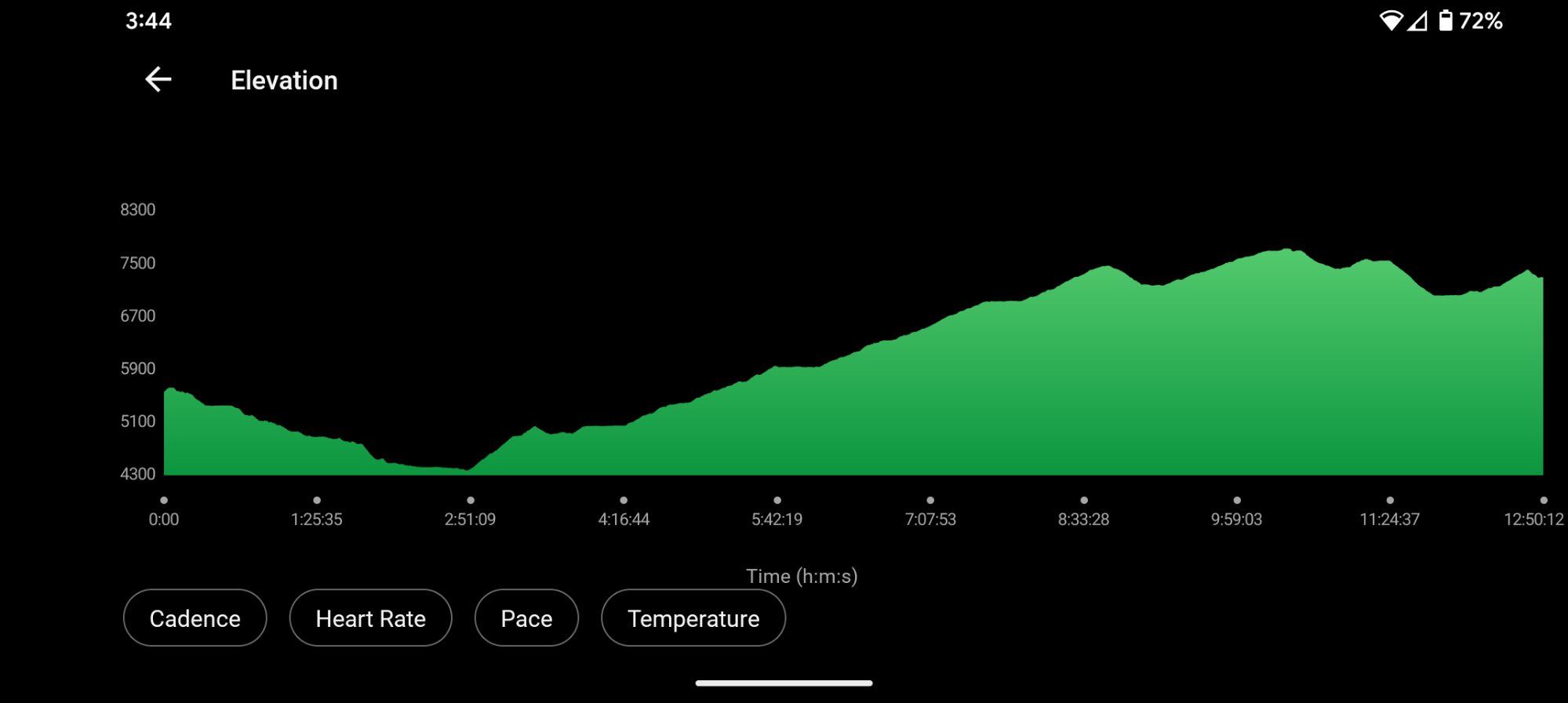
Start: Emerald Lake (5568′)
Stop: Little Echo Lake (7296′)
Trinity Alps Wilderness
Shasta-Trinity National Forest
Unceded land of the Wintu, Hupa, Yurok, Karuk and Chimariko peoples
18.04 miles
4686′ ascent
2954′ descent
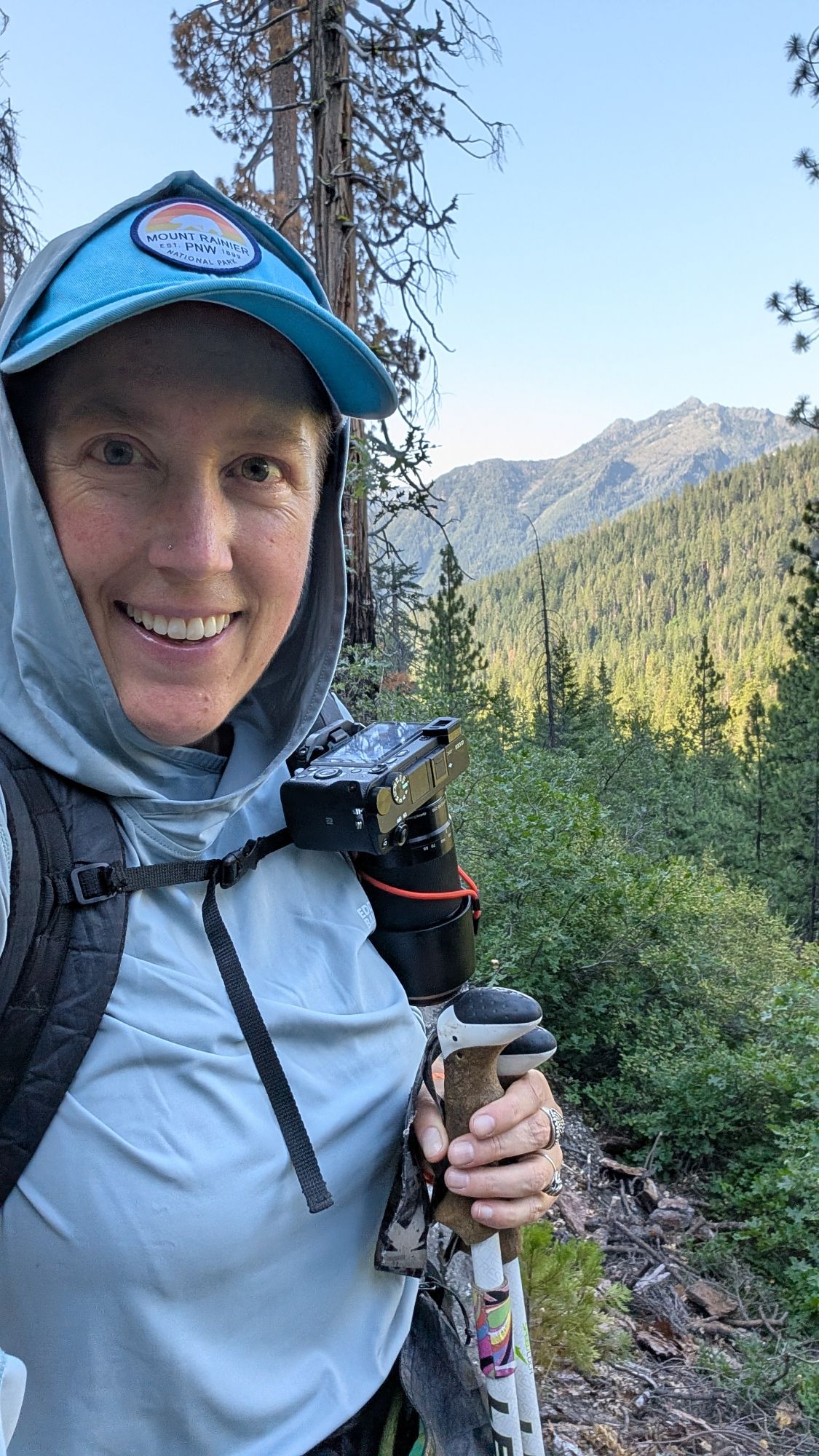
Is that an Olive-sided Flycatcher or a Western Wood-Peewee singing me to sleep? Or are they both here? I manage to fall asleep but it doesn’t last long when I’m awoken by scuffling in my campsite. I rustle around and make some noise, listening carefully until I fall back asleep. Some time later, I awake to more noise. I make some loud flopping noises with my sleeping pad and quilt and a deer scrambles away from my tent. I guess I fall back asleep until I hear branches crunching on the hillside above me. I make some more loud noises and listen closely. Things go silent and I fall back asleep. I awake again and the quarter moon is shining brightly. I roll over, close my eyes and try to block out the light. My alarm goes off at 5 am and I snooze it for 10 minutes. I reluctantly rustle to life and get changed into my hiking clothes. I decide to get crazy and wear my hooded sun shirt. I remember the guy I saw yesterday with his shirt wrapped around his head and maybe that same idea can work for me too.


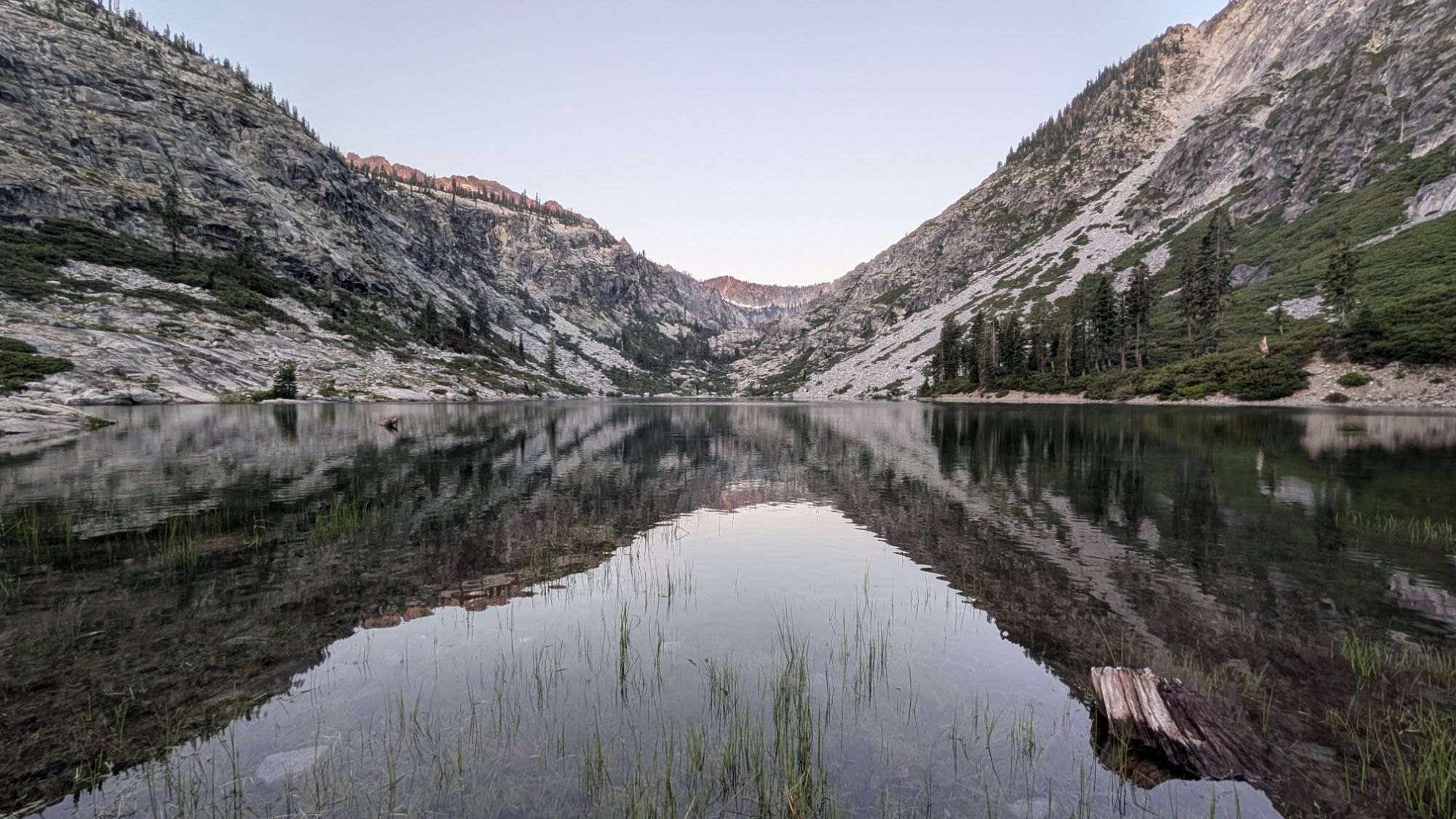
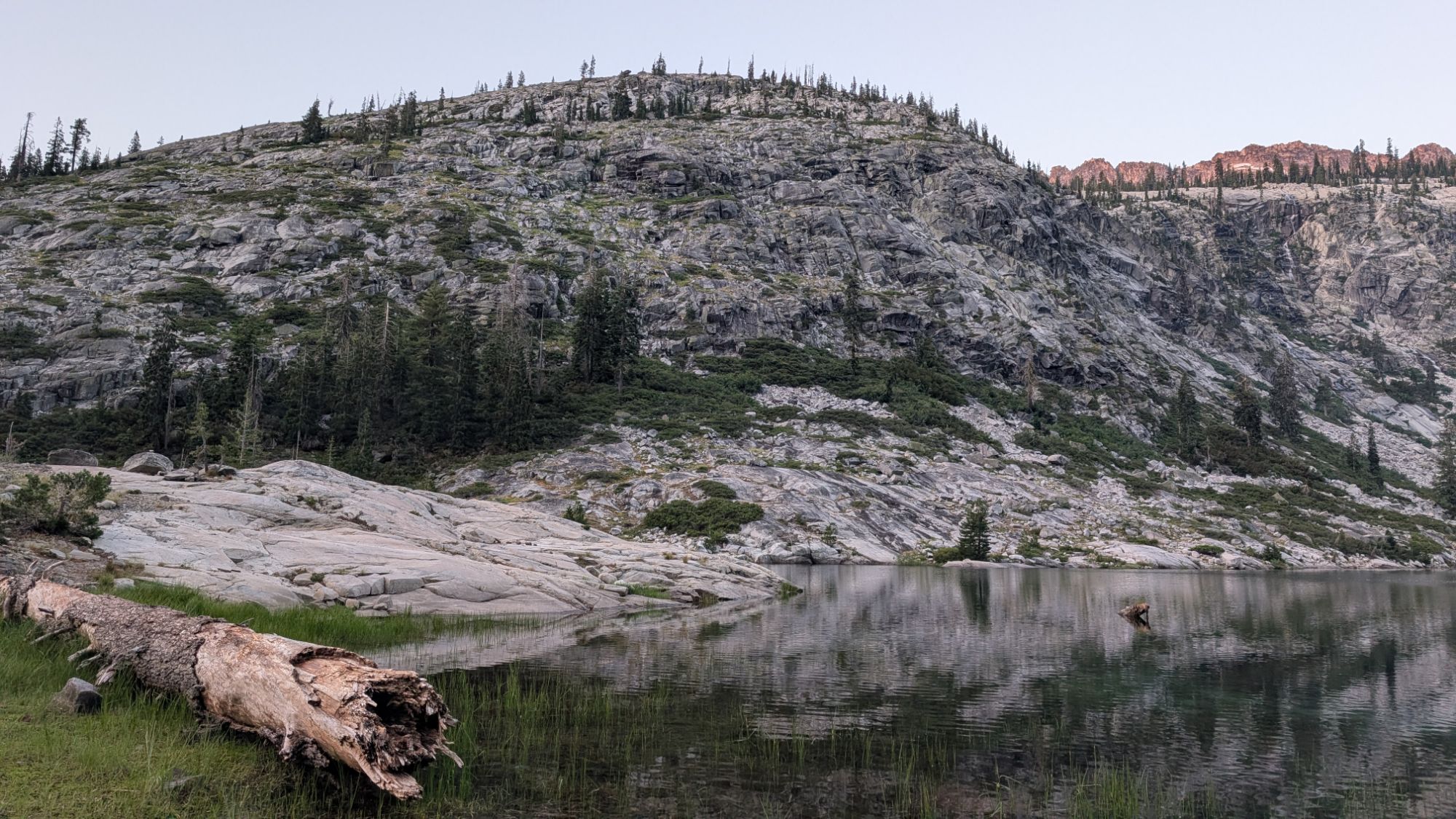
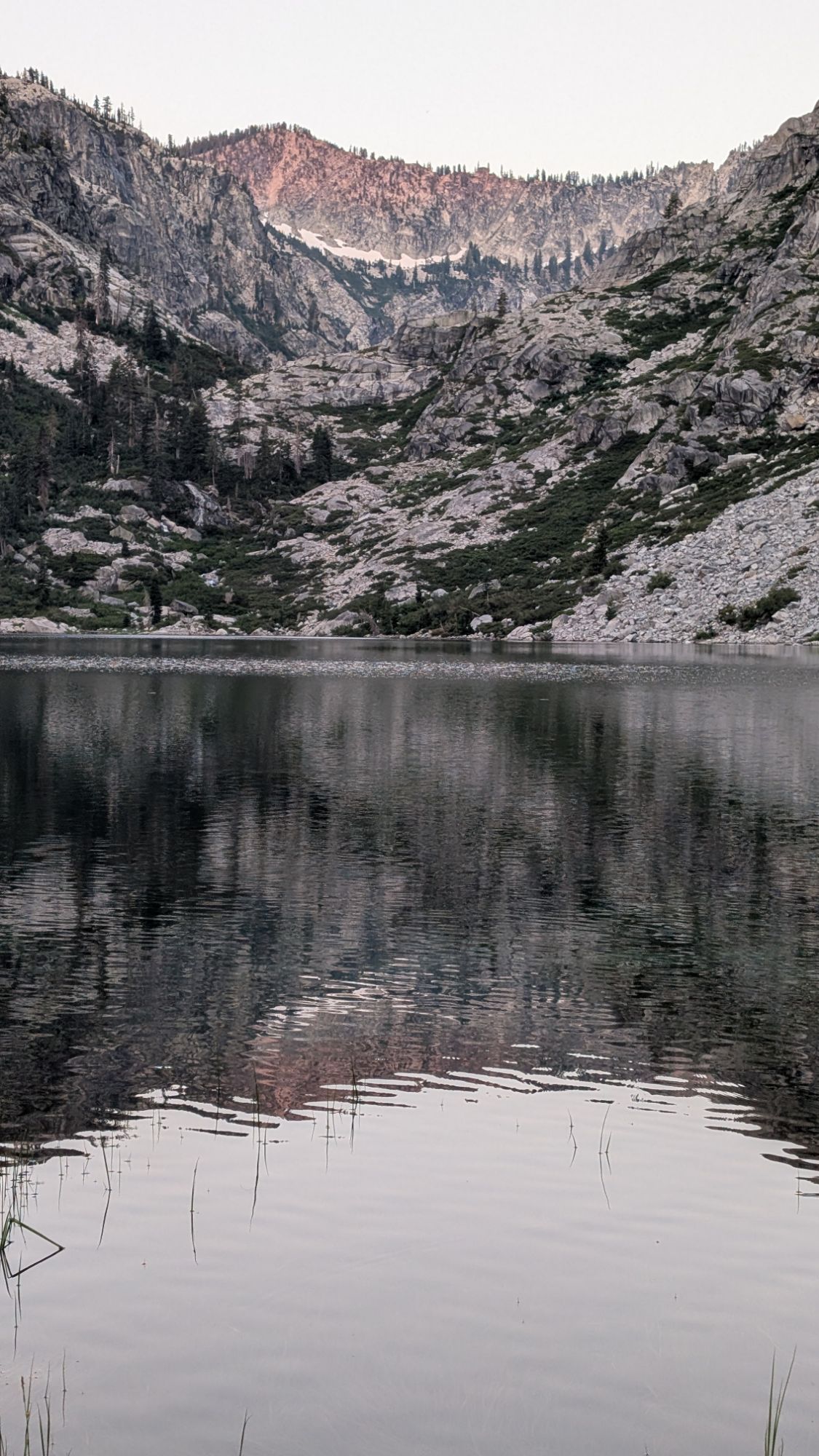
I start hiking just before 6 am, and push back through the exfoliating brush. I circle around to the outlet side of Emerald Lake and startle a fawn who bolts out from under a large rock. I say “it’s ok, it’s ok” as it rushes off into the morning. The lake water is calm and making some nice reflections.
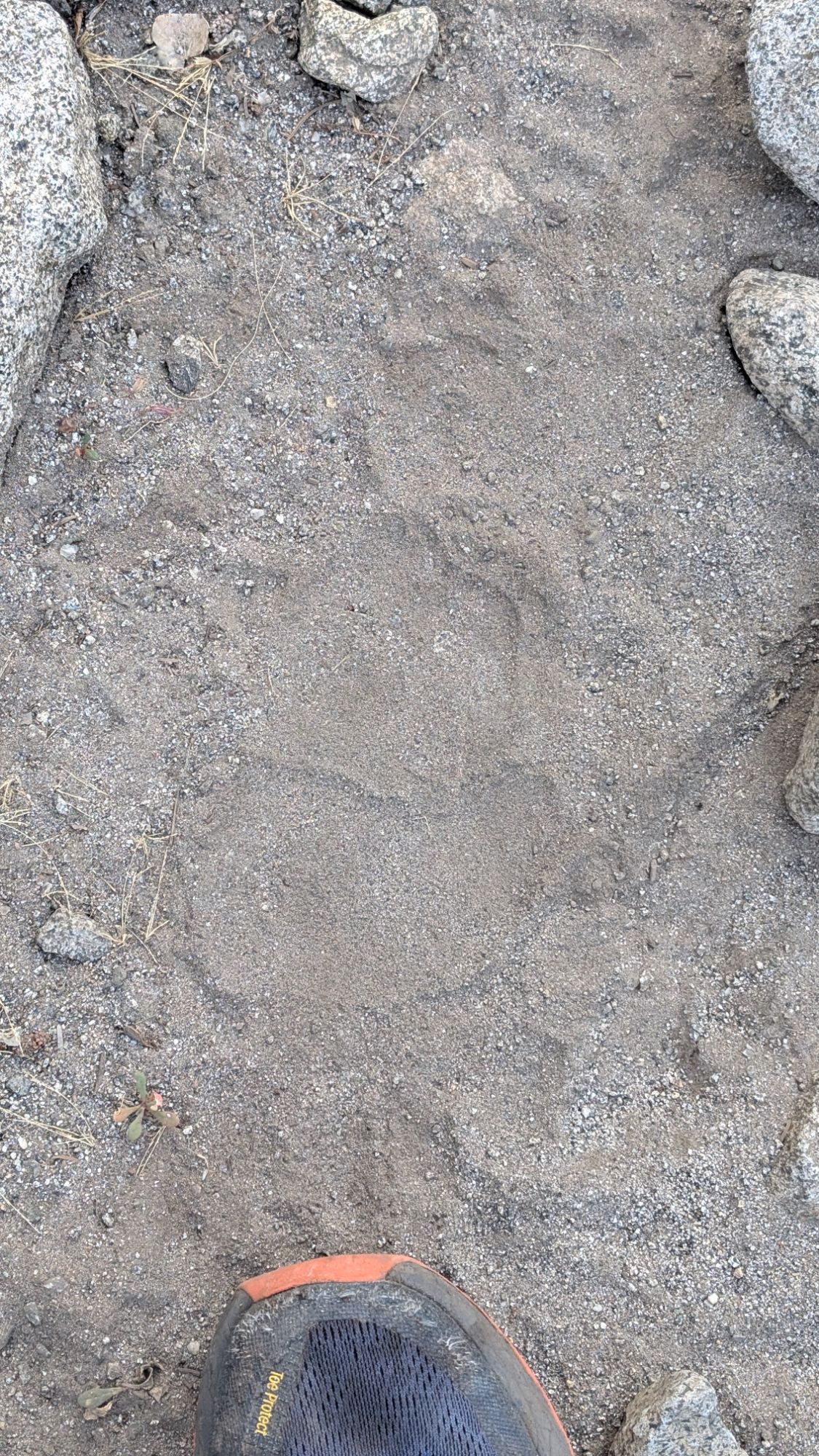
I’m only 10 minutes down the trail when I find a giant pile of fresh bear scat. I start keeping a close eye on the trail and find some bear prints. They aren’t super obvious but the flattened trail from the big pads of their feet is distinct to me. I’m sure it was just deer crunching around my campsite last night but….

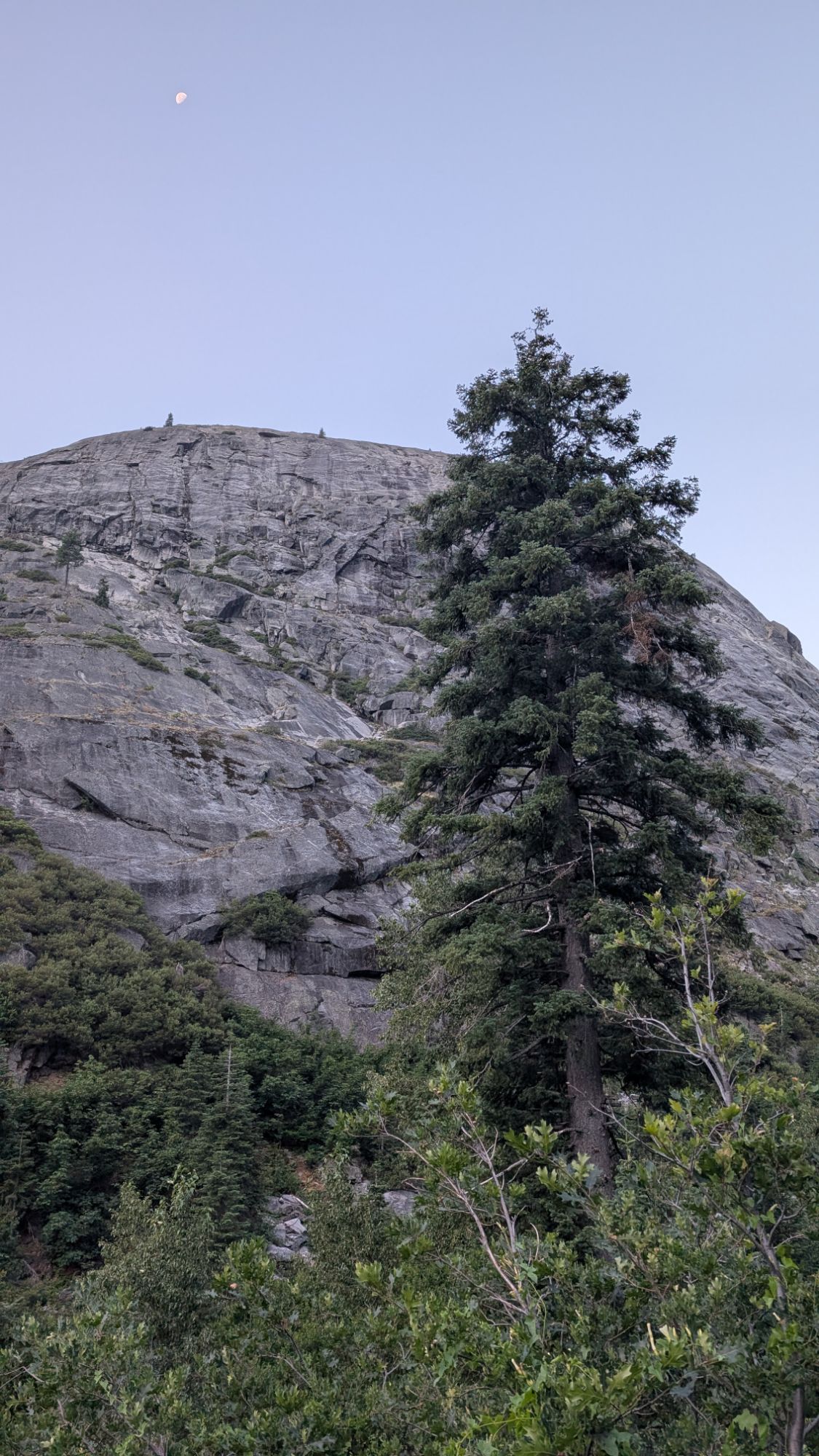

Even at 6 am, it’s not cool as I descend down Stuart Fork. The rising sun turns the surrounding peaks orange. The flies start to swarm and I gratefully pull the hood of my shirt over my head. I stop again at my favorite ice cold spring gushing across the trail and collect fresh water. I take a standing break while I eat a Bobo’s bar and sip some cold mocha. I glance at my watch as I start hiking again, and I haven’t even gone one mile in my first hour of hiking.
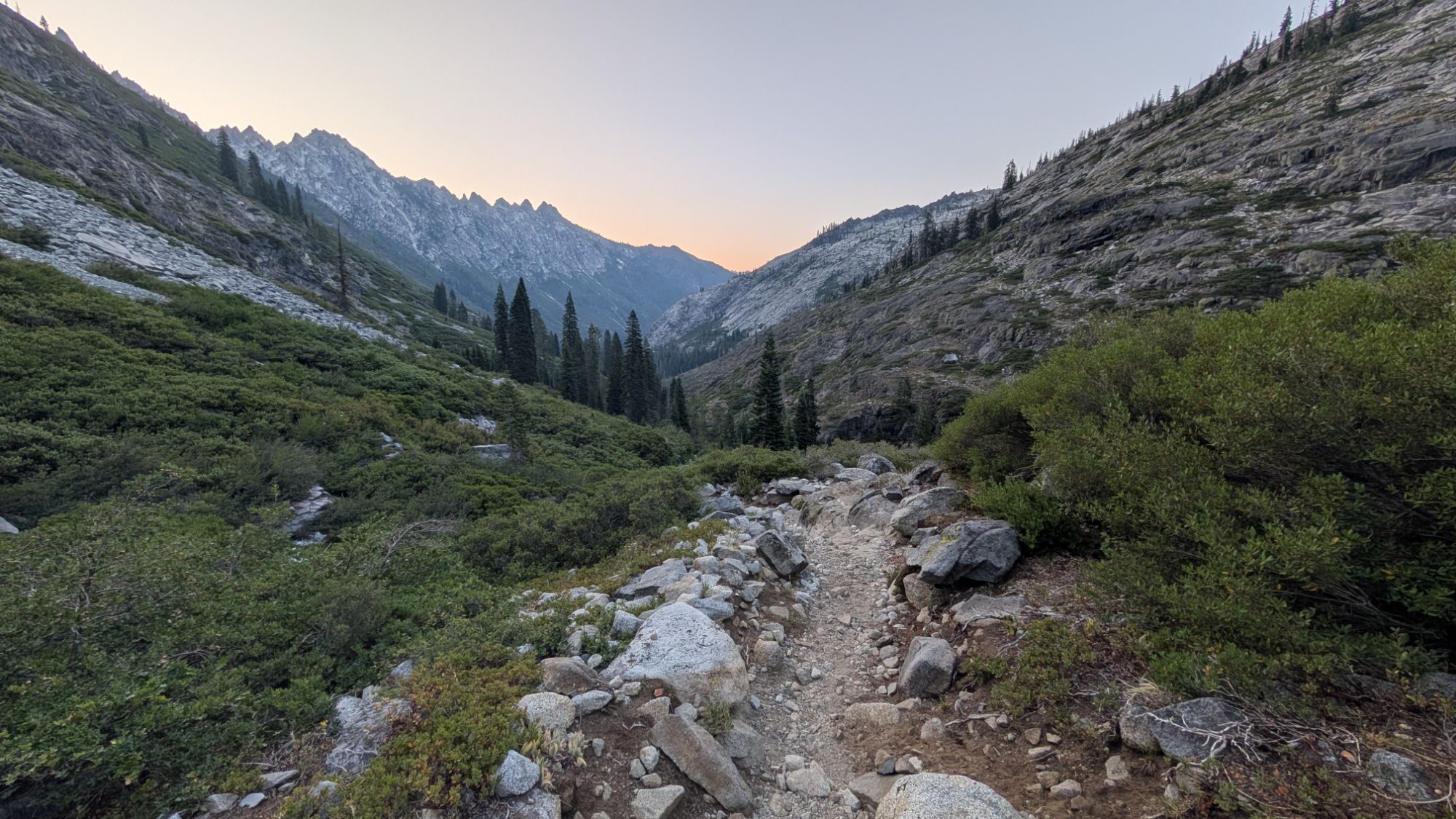
Morning Glory, goldenrod, cow parsnip, sneezeweed.


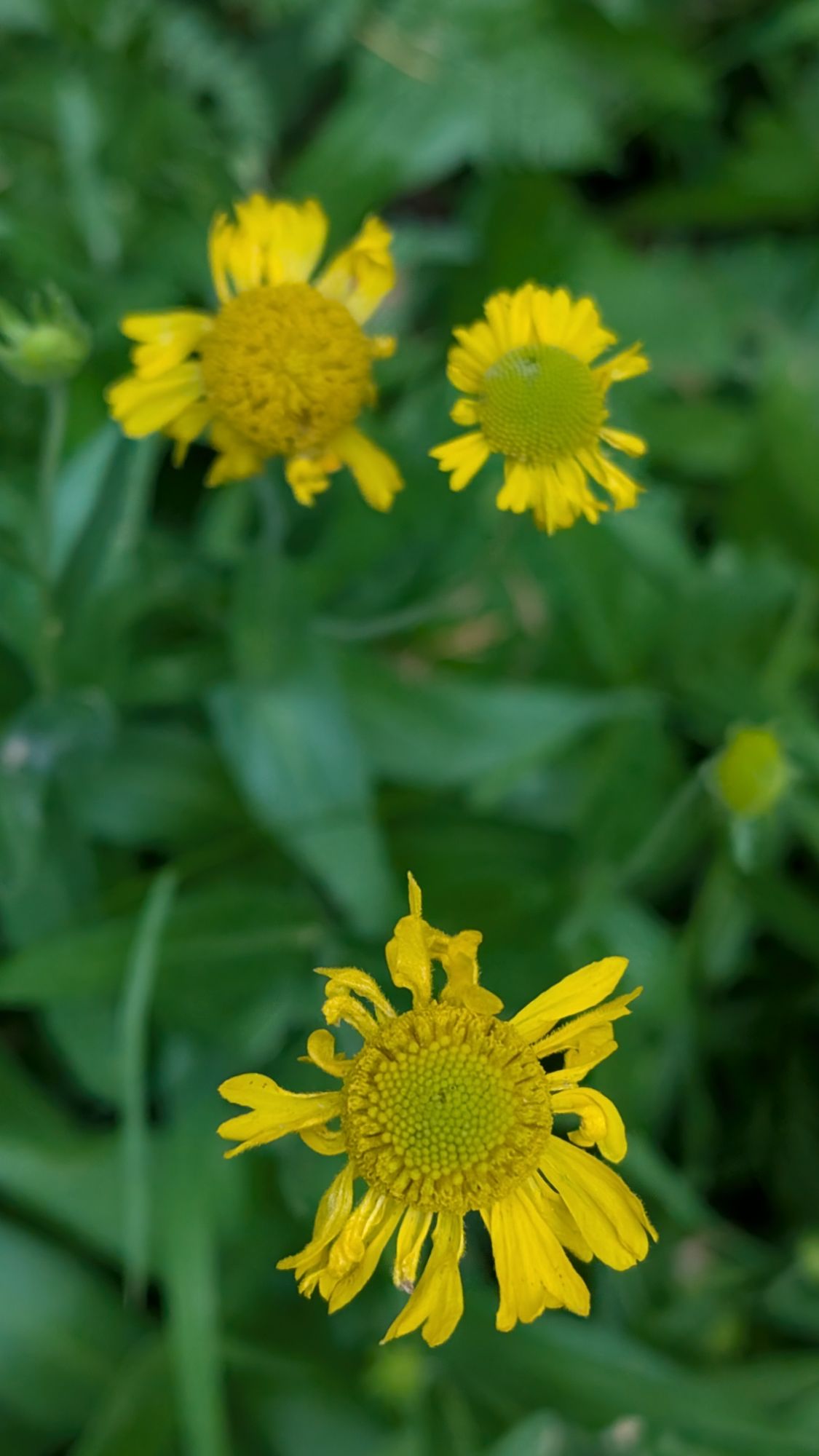
After leaving my favorite ice cold spring, I make quick tracks. I pass back through the flower paradise which is now silent because the insects are still sleeping. I emerge back into the quiet of Morris Meadows. The morning reverie is crushed by my loud and sudden screaming. I hop and shout and spaz so severely that I launch my mocha out of the back mesh pocket of my backpack. The first instinct is to investigate but then common sense kicks in and I grab my bottle and make a speedy exit. For half a second I wonder if I hit a stinging nettle, but the pain is undoubtedly an insect friend that has gotten an uncharacteristically early start to the morning. I was trying to wait until the Deer Creek Trail junction to stop for a pee and break but now I’m not going to make it. I set my pack down at the trail’s edge and just happen to notice that there’s a group headed in my direction. I have just enough time to pee and sit down with a snack before a mom and two boys walk by. She greets me but it’s brief. The older boy in the rear has hiking boots hanging off the back of his pack and is hiking in crocs. Ouch! Thanks to the ice cold spring, I lay my water bottle against the welt on my left leg and it feels better.
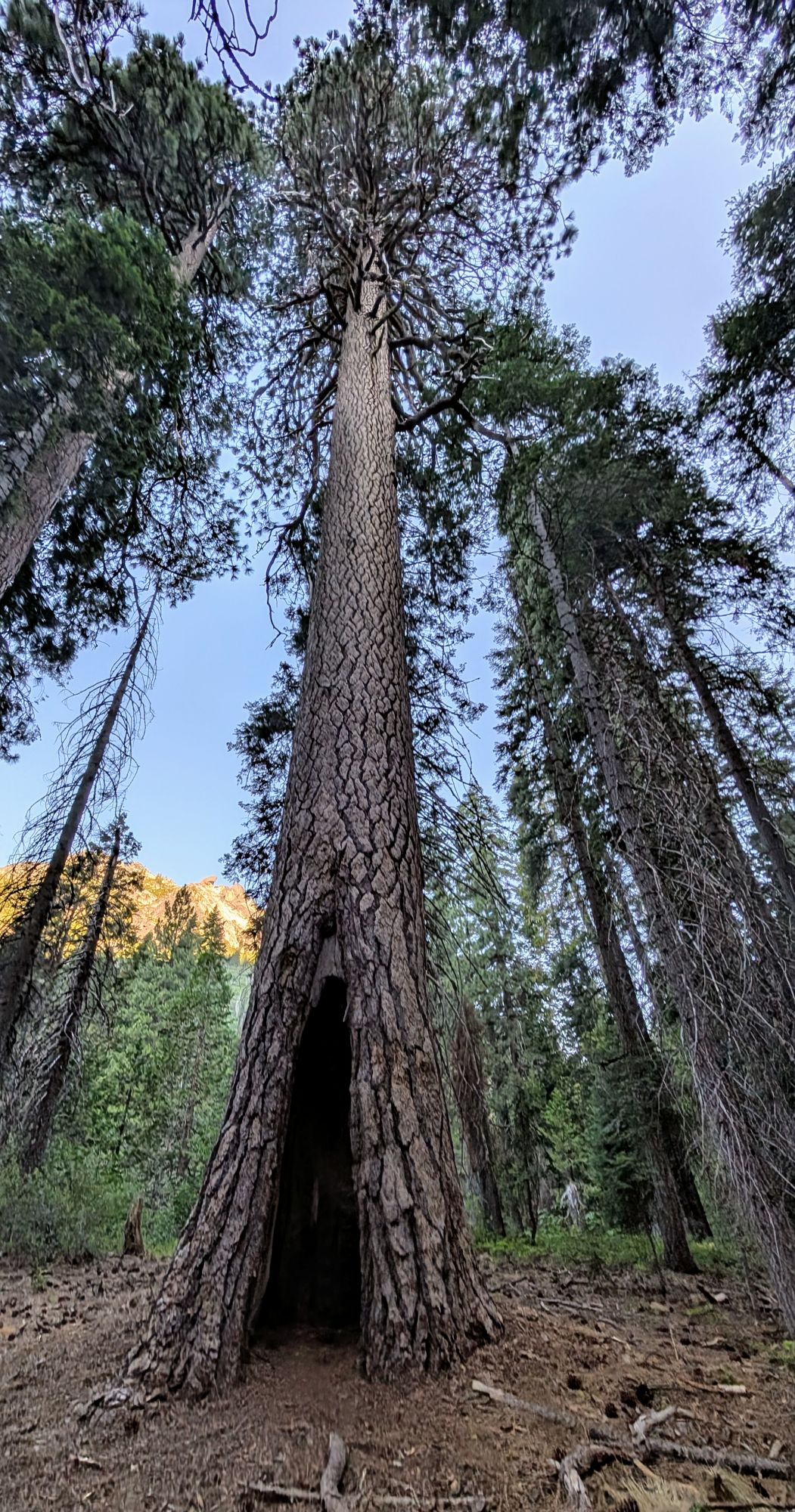
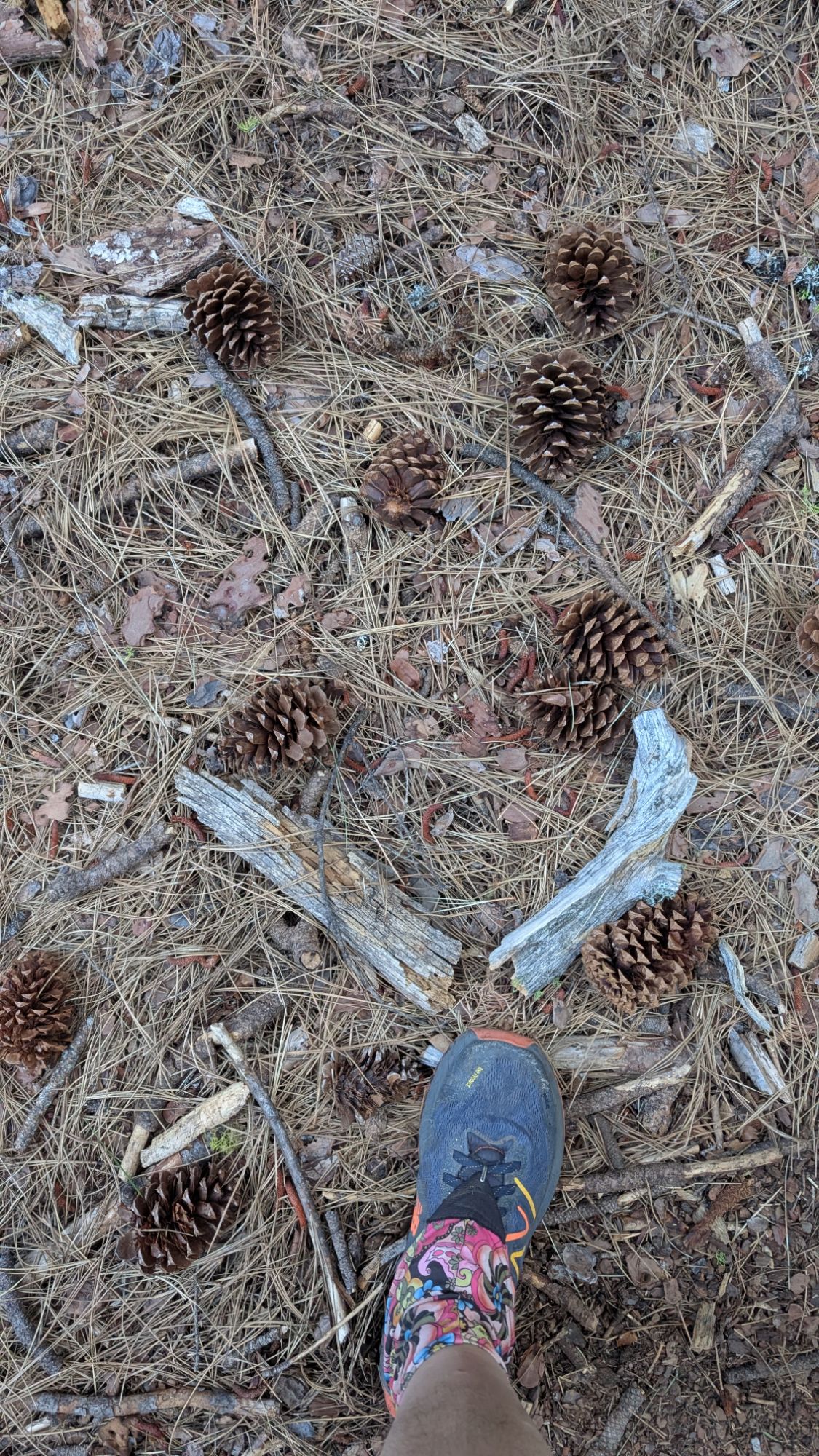
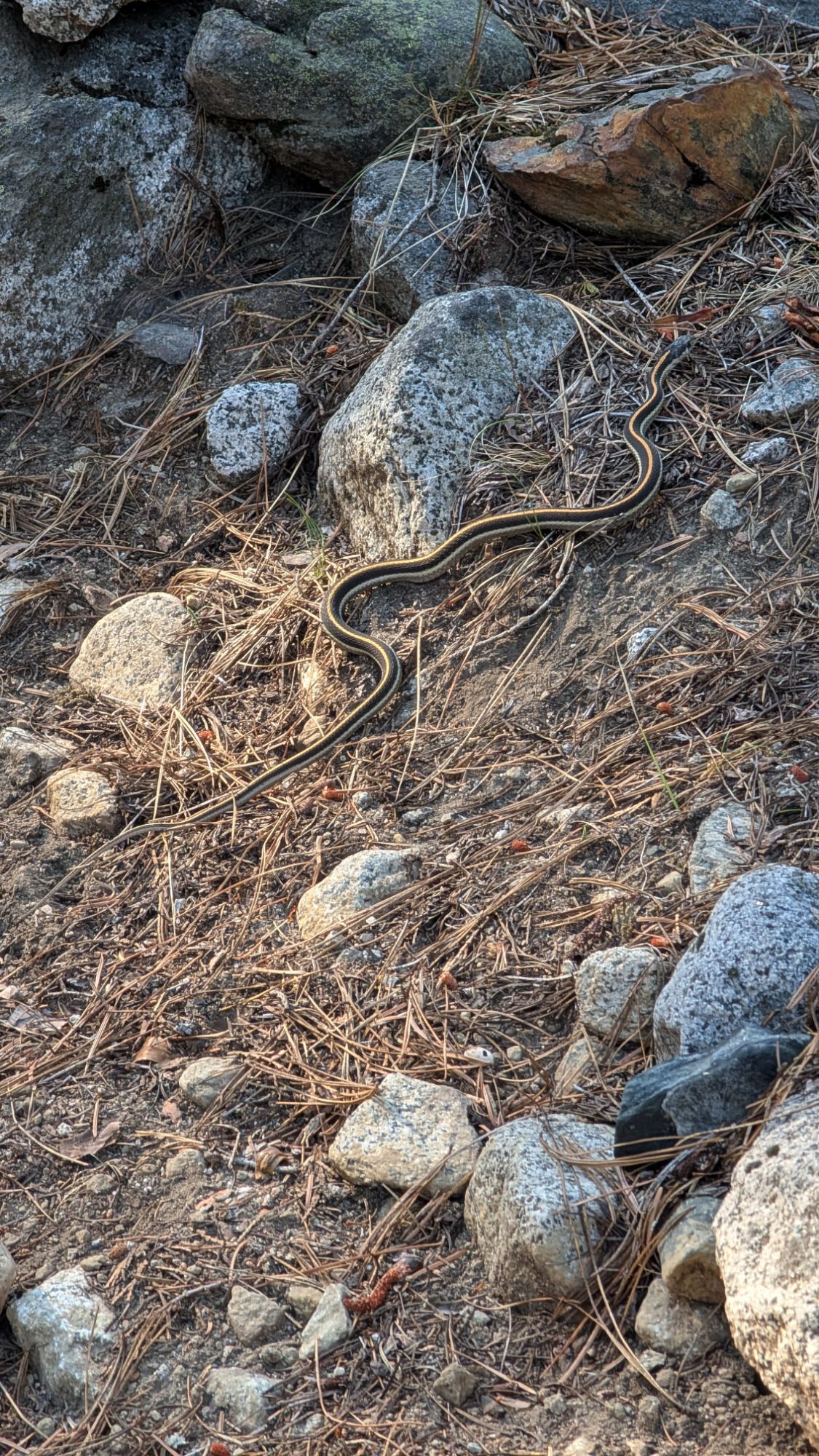
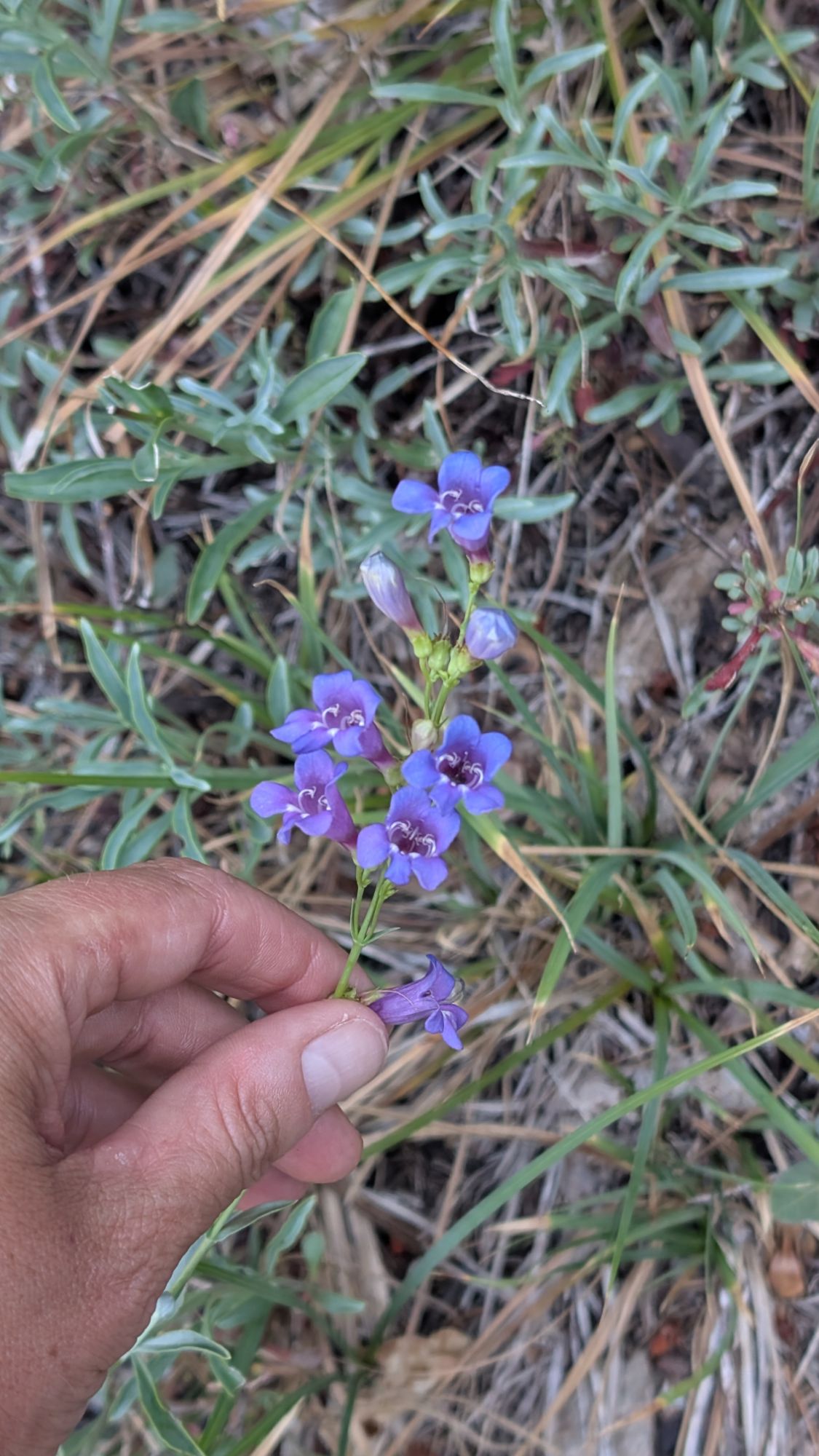
I pass a garter snake just before I make a left onto the Deer Creek Trail at 8:45 am. The climb has nice switchbacks and it only takes about 30 minutes to climb the 500 feet. I even find some beautiful purple penstemon but then scurry away from some questionable insects.

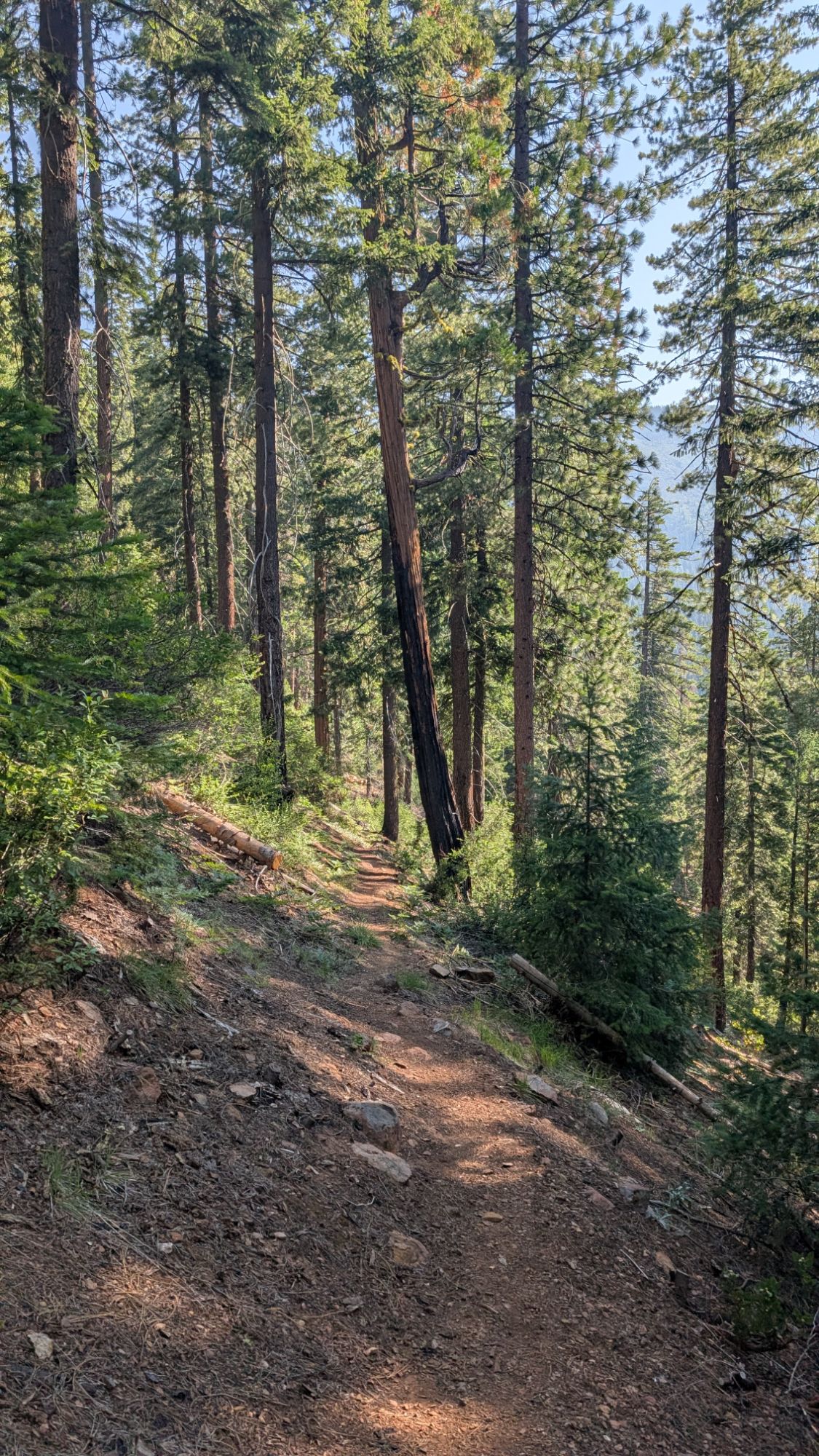
I follow a contour through a forest of douglas fir, western white pine and black oak. Tall grasses rattle at my elbow, ready to disperse their seed. I take a break just past a little creeklet to see if I need to get water. But a check of the map reveals that there’s plenty of water ahead. I eat a granola bar and sip my cold mocha. Northern Flicker, Red-breasted Nuthatch, Stellar’s Jay and American Robin all have a few morning words of wisdom for me. I don’t hike too much farther before I arrive at Willow Creek to find a friendly shirtless dude filtering water and cooking breakfast. His freshly brewed coffee smells good! Just down the trail I pass Willow Creek camp and there’s another young person there who doesn’t respond to my hello. Past the camp, there’s an old Deer Creek Trail sign where the Willow Creek Trail should be, but I don’t see any trace of it. I had thought about taking this trail out of the Caribou Basin but maybe its good that I didn’t.


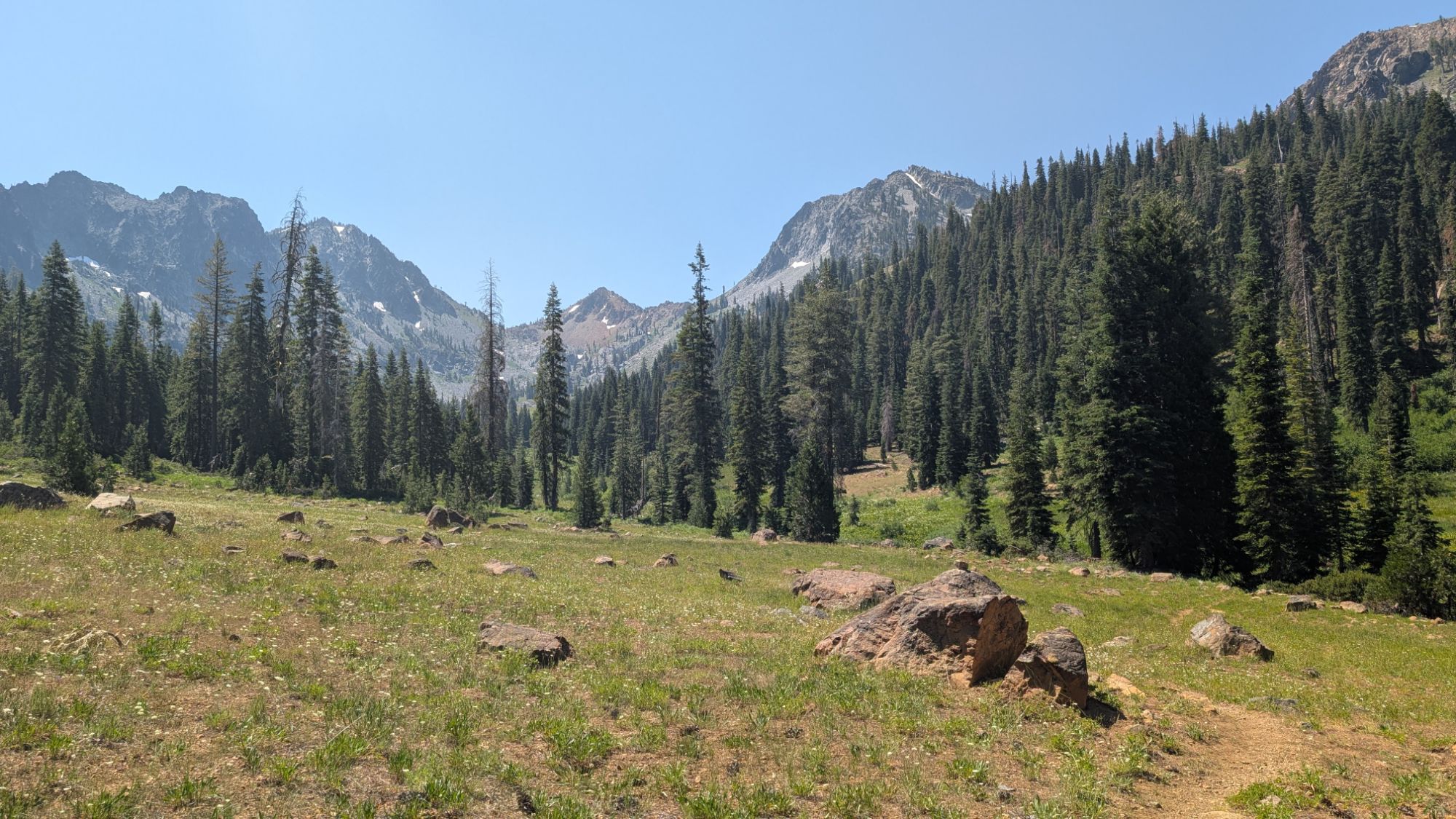
I hike out of the forest into the meadow and meet an older guy covered in thick white sunscreen. We chat about our hiking plans and he informs me about a couple hikers ahead of me.

On Deer Creek Trail looking back to the Stuart Fork drainage.
I soon catch up to an older woman who is just finishing a break. We chat a bit before she hoists a big pack. I’m super impressed because I wouldn’t be able to do it. I pass her friend a half mile later and chat with her too. About 11:30 am, just past the junction to Black and Bear Basins, I find a break rock in the shade. I chug down electrolyte and gather more water from a tributary to Deer Creek.
On the upper Deer Creek Trail looking towards the 4 Lakes Loop and Siligo Peak.
I cross Deer Creek for the last time and meander through the boggy and sometimes unidentifiable trail.
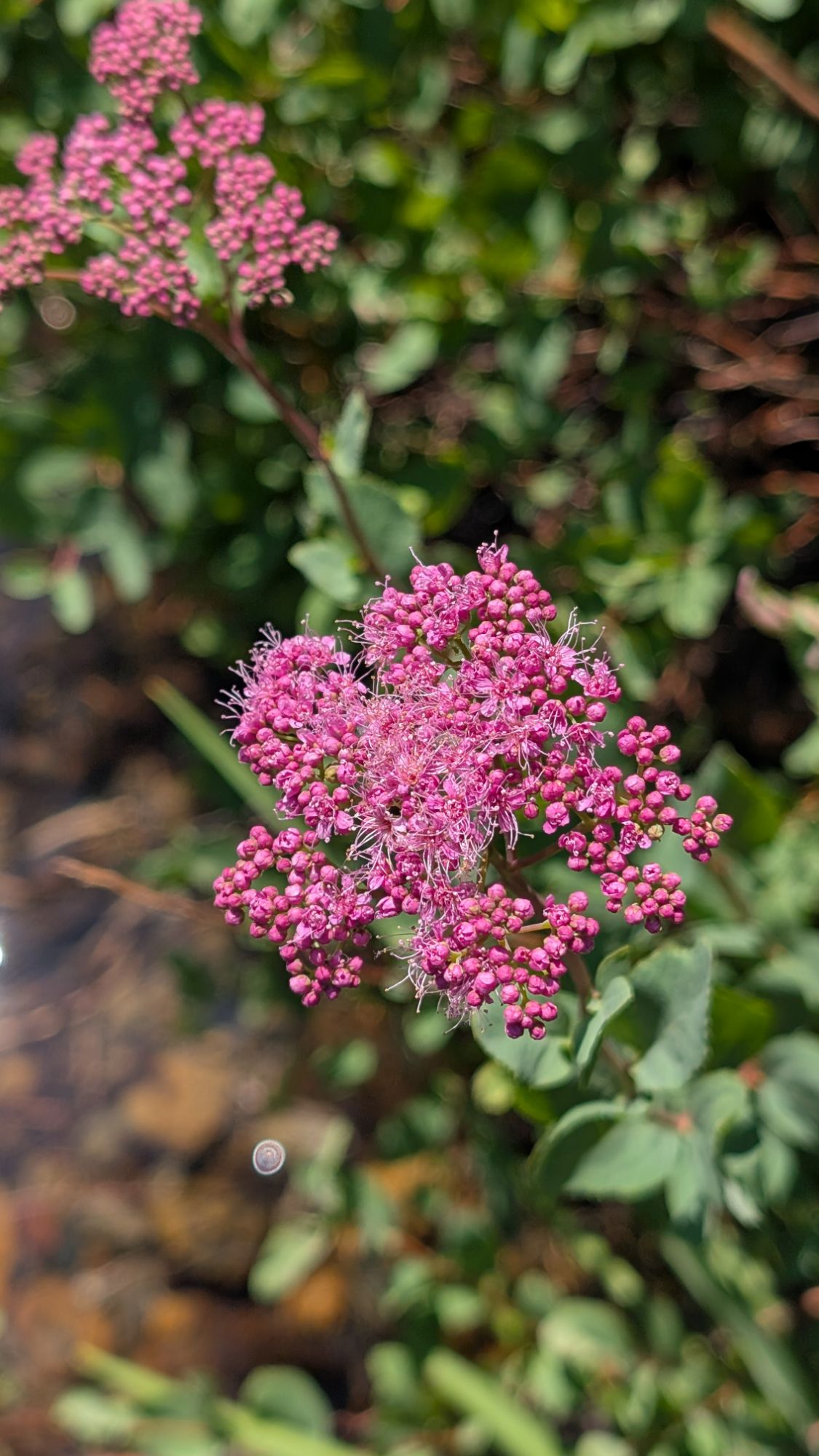
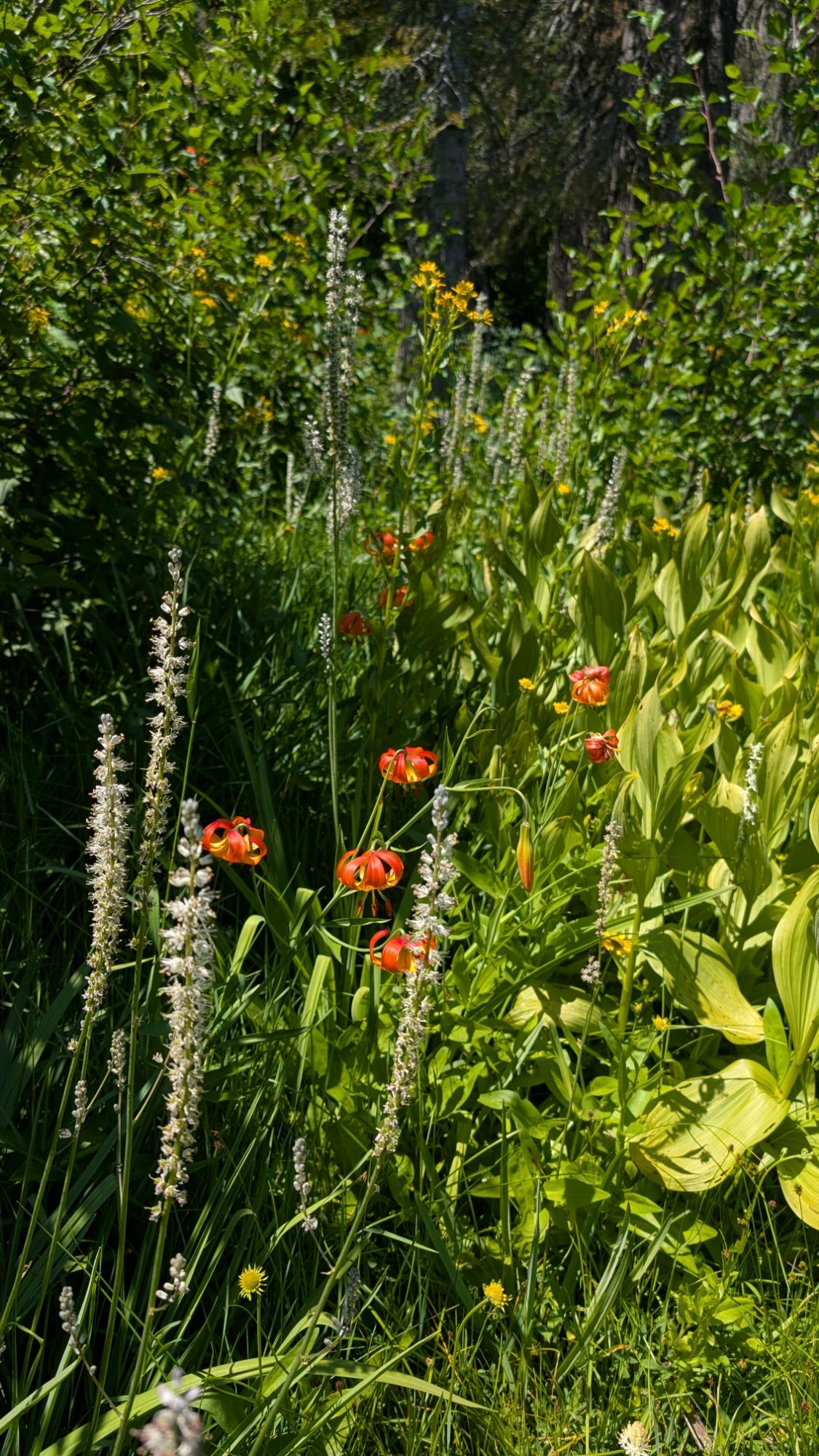
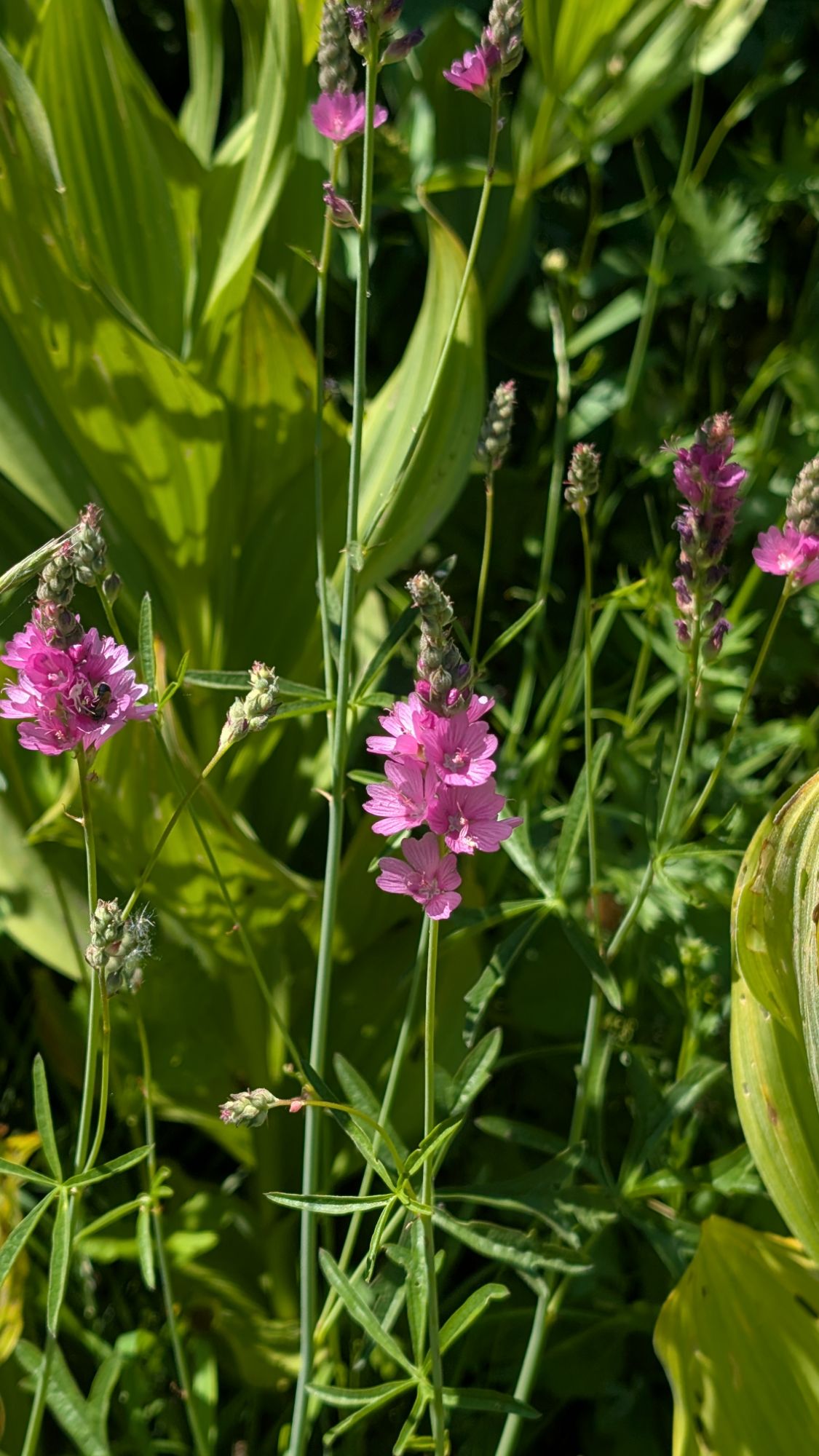
Meadowsweet, Aletris or Rush lily?, Leopard Lily, Corn Lily, Checker-mallow all proliferate alongside the wet, boggy trail.
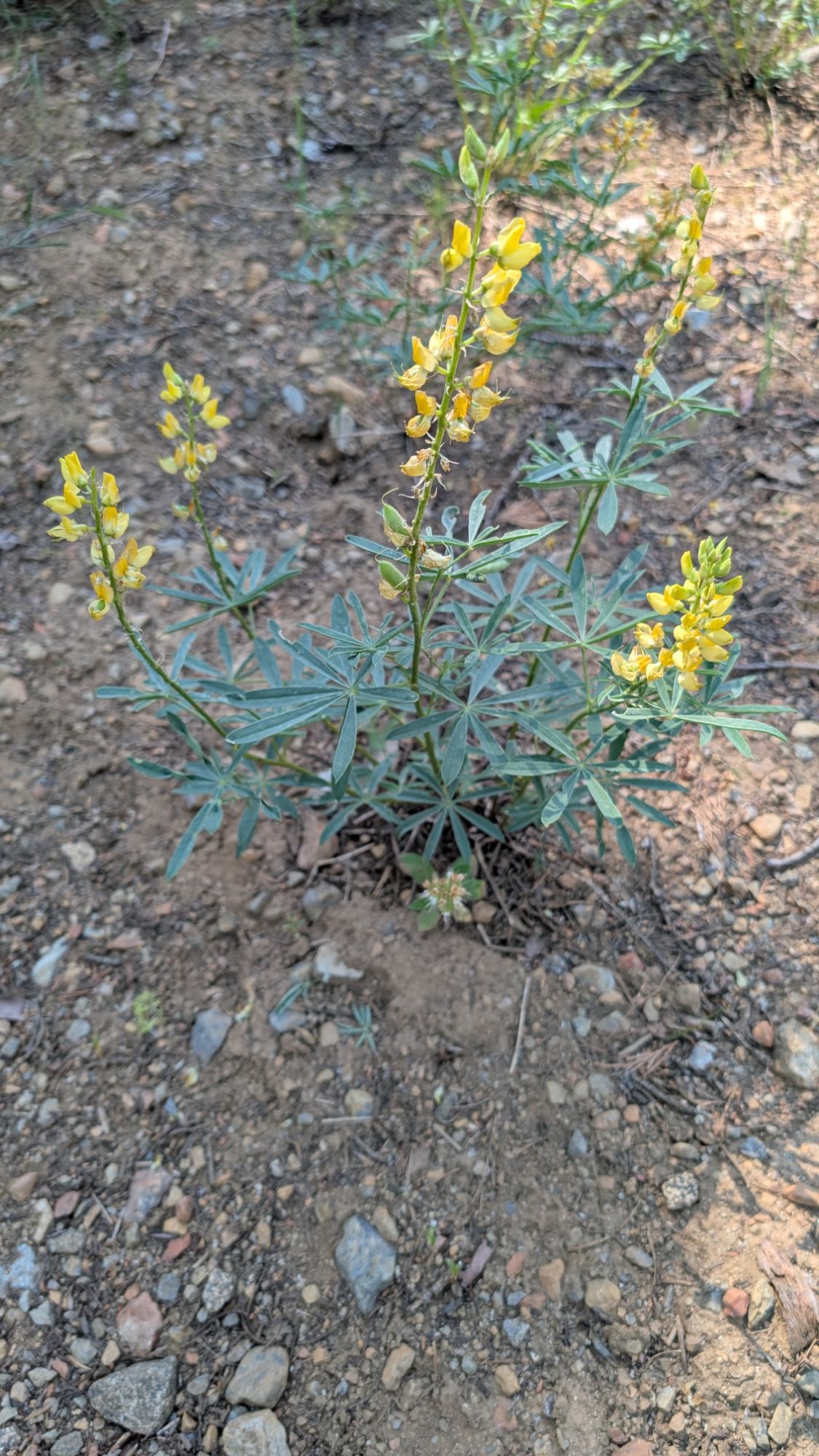
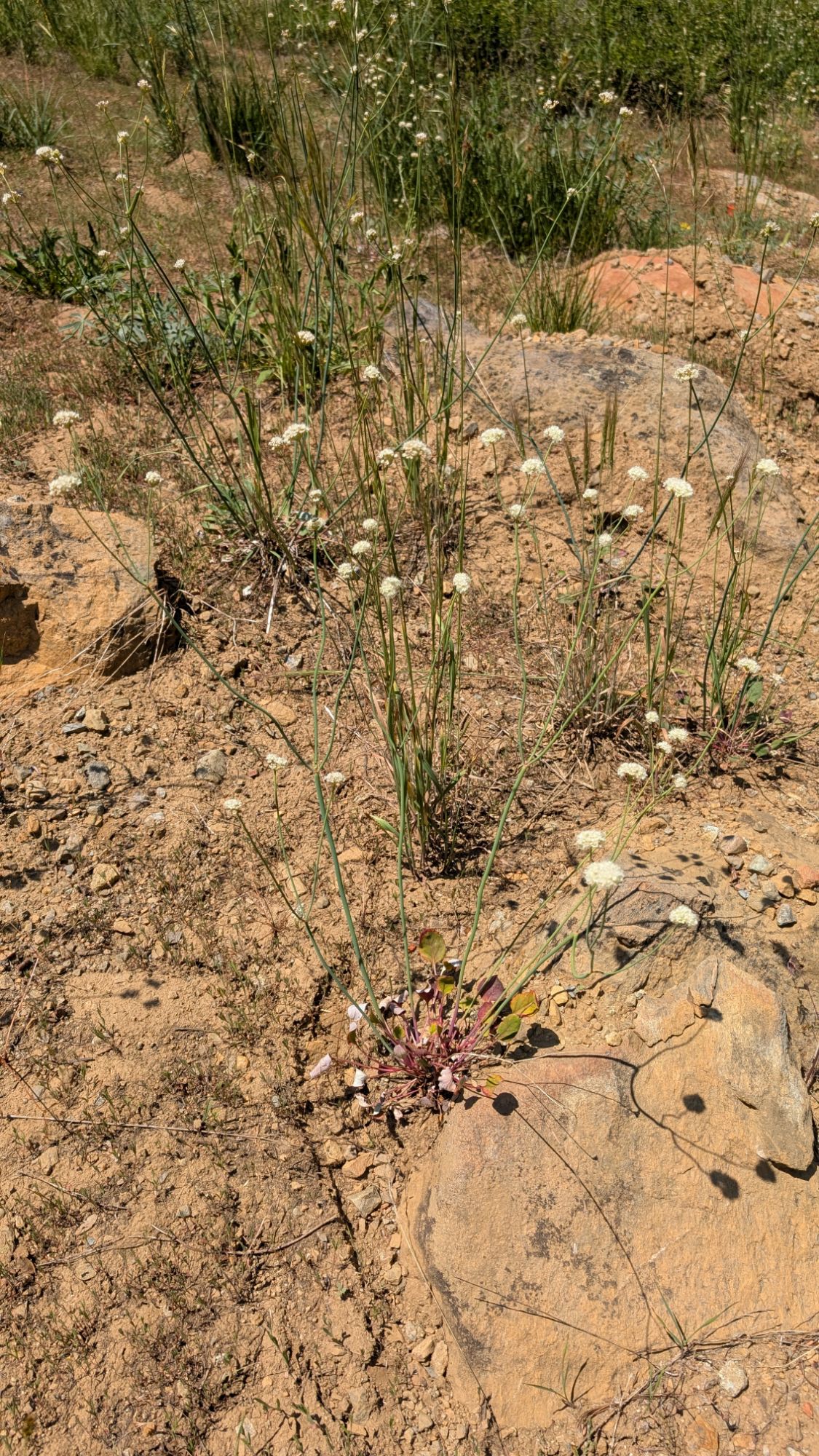
Naked-stem Buckwheat, buttercup, Lupin, Cow parsnip.


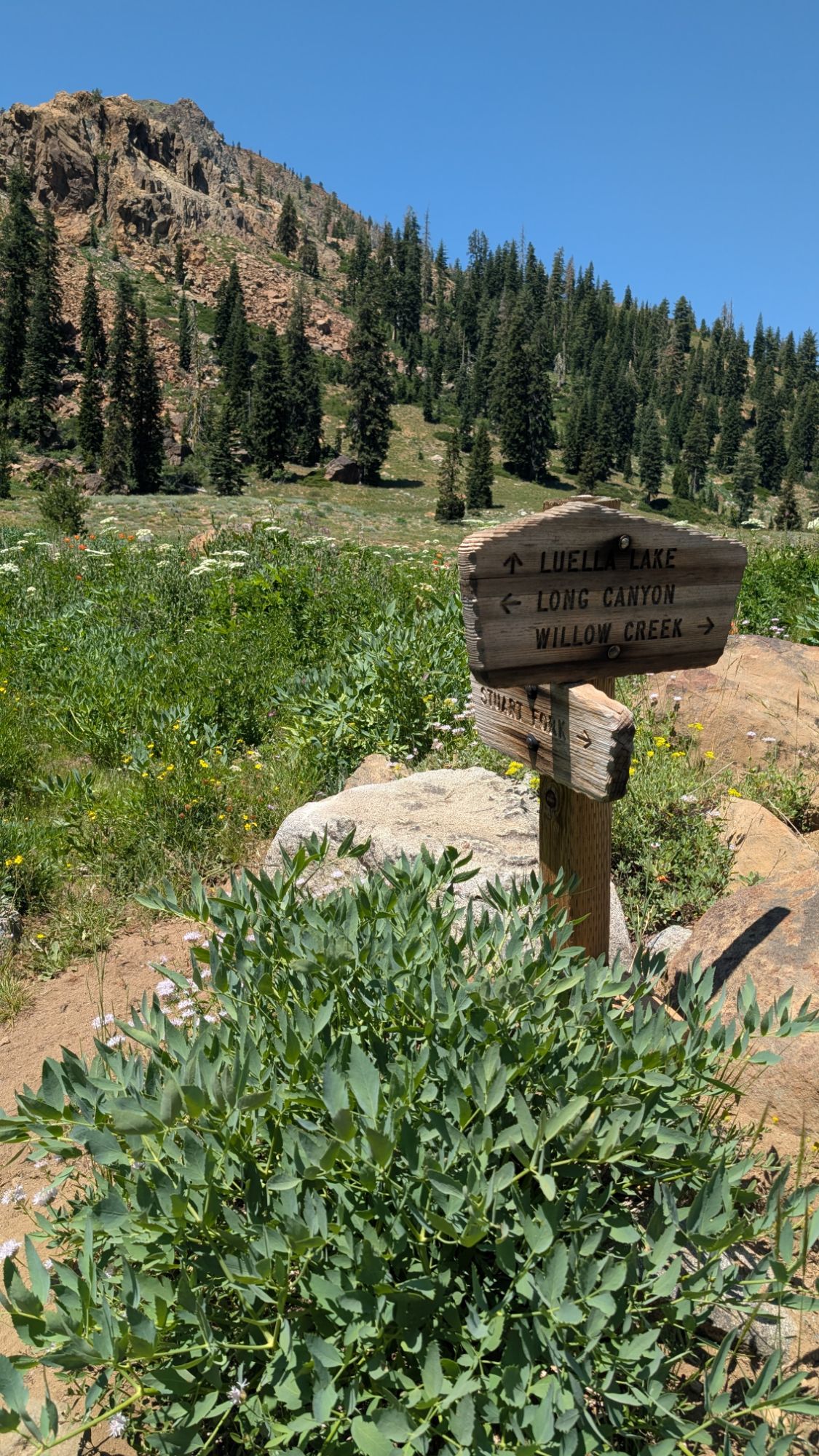
I emerge from the flowers and busy insects and reach a wall of granite about 12:30 pm. At the trail junction I take a sharp right turn and skirt another boggy area.

I hear a unique bird and don’t believe the Merlin app when it tells me that it’s a Spotted Sandpiper. I keep following the call and record it again with the same answer. Then I finally see it and watch it wag its tail feathers over and over. I have it in my head that sandpipers are shorebirds so I’m thoroughly confused. (My post-hike research has revealed that spotted sandpipers have been seen in the Trinity Alps in the vicinity of the Long Canyon.) I try to sneak up on it to get a picture but it flies off deep into the thick blades of the bog.
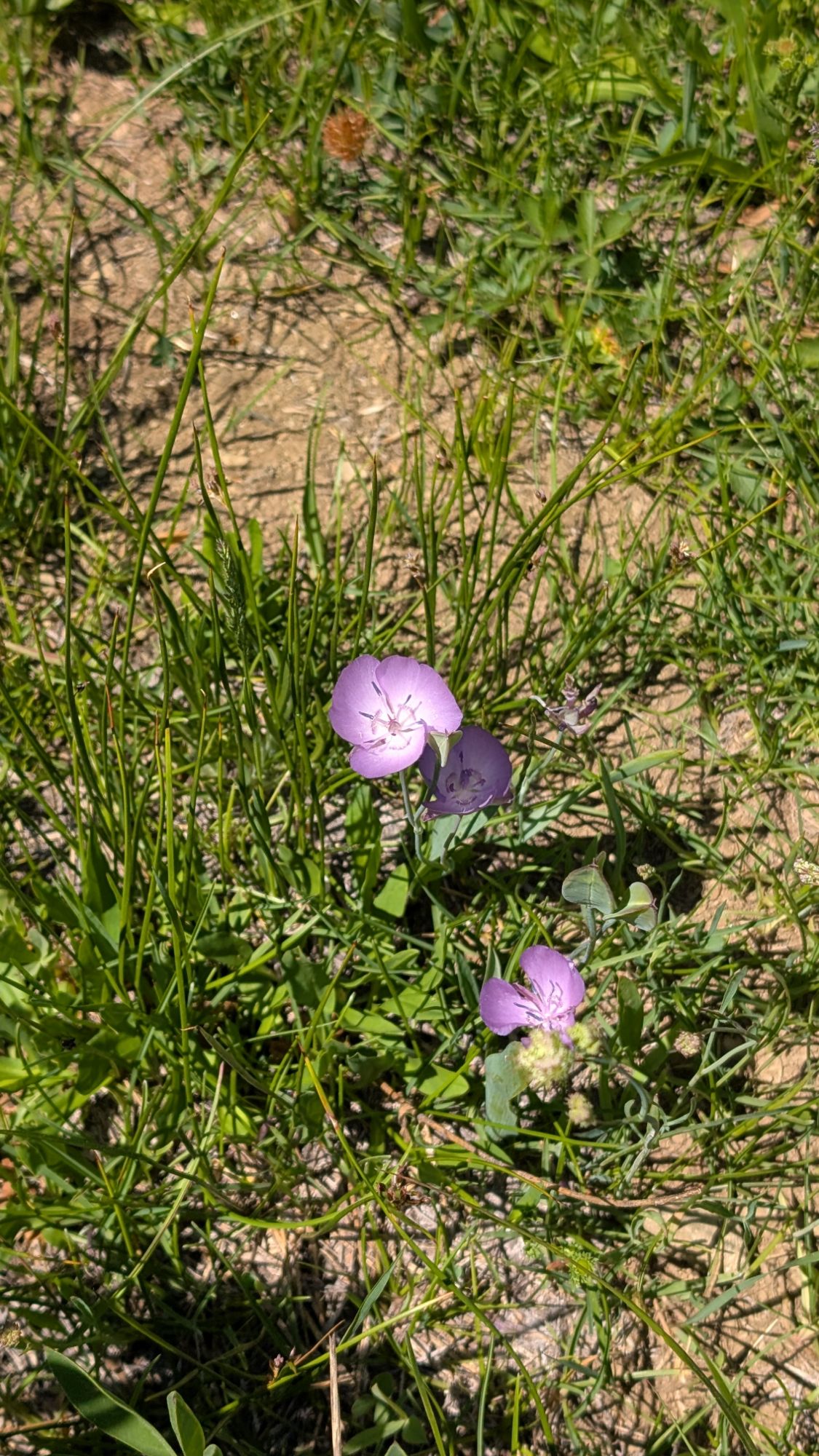
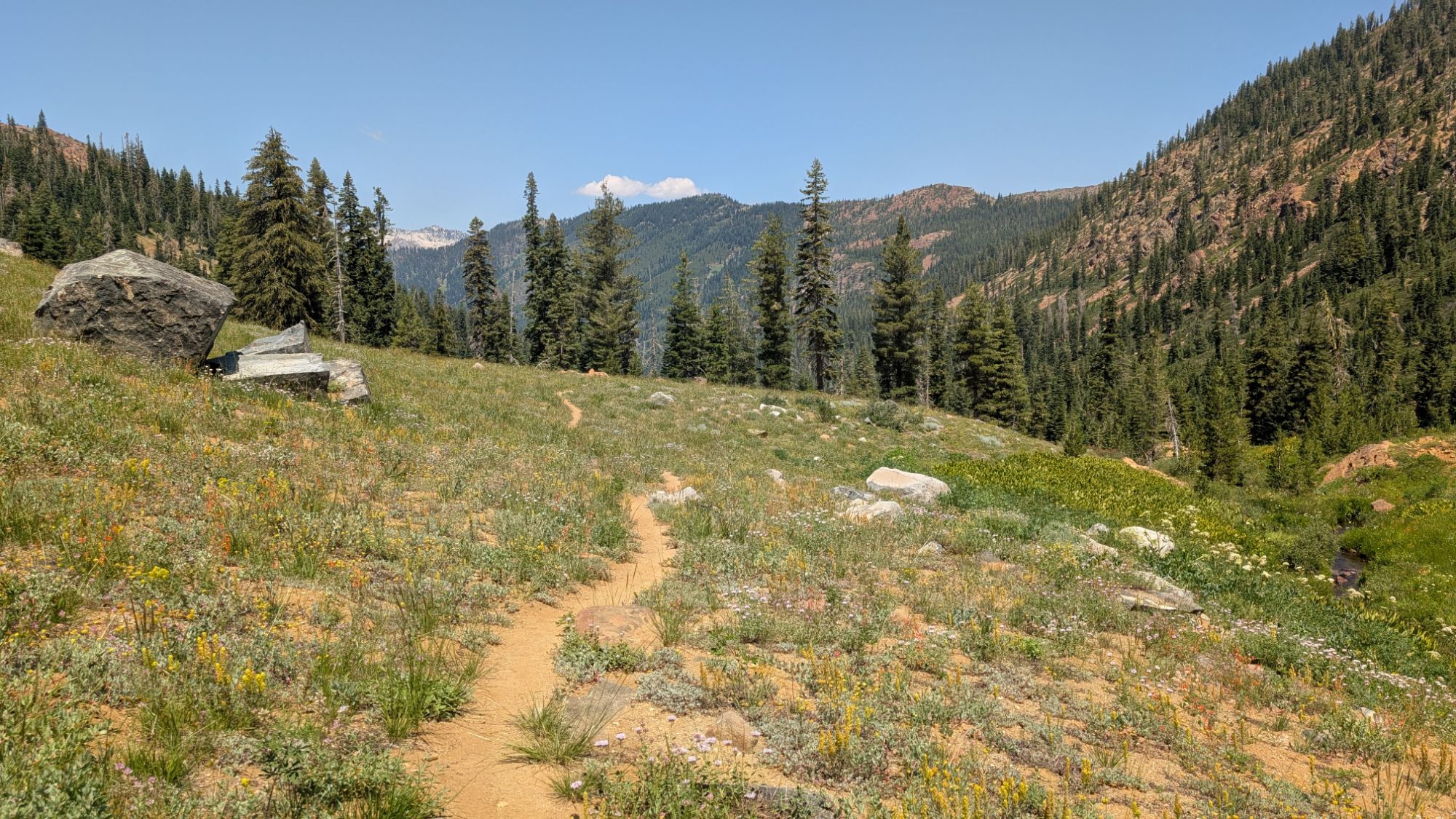
I pass Mariposa Lilies as I start to switchback up the barren hillside. The trail is fairly exposed and the sweat breaks free from my eyebrows and streams into my eyes. I try to wipe away the sweat but the sting is persistent and painful. I occasionally pass through the shade of fir trees and gratefully take short standing breaks in the relative coolness. I duck under Holodiscus ocean-spray whose white, delicate blossoms are in stark contrast to this environment.
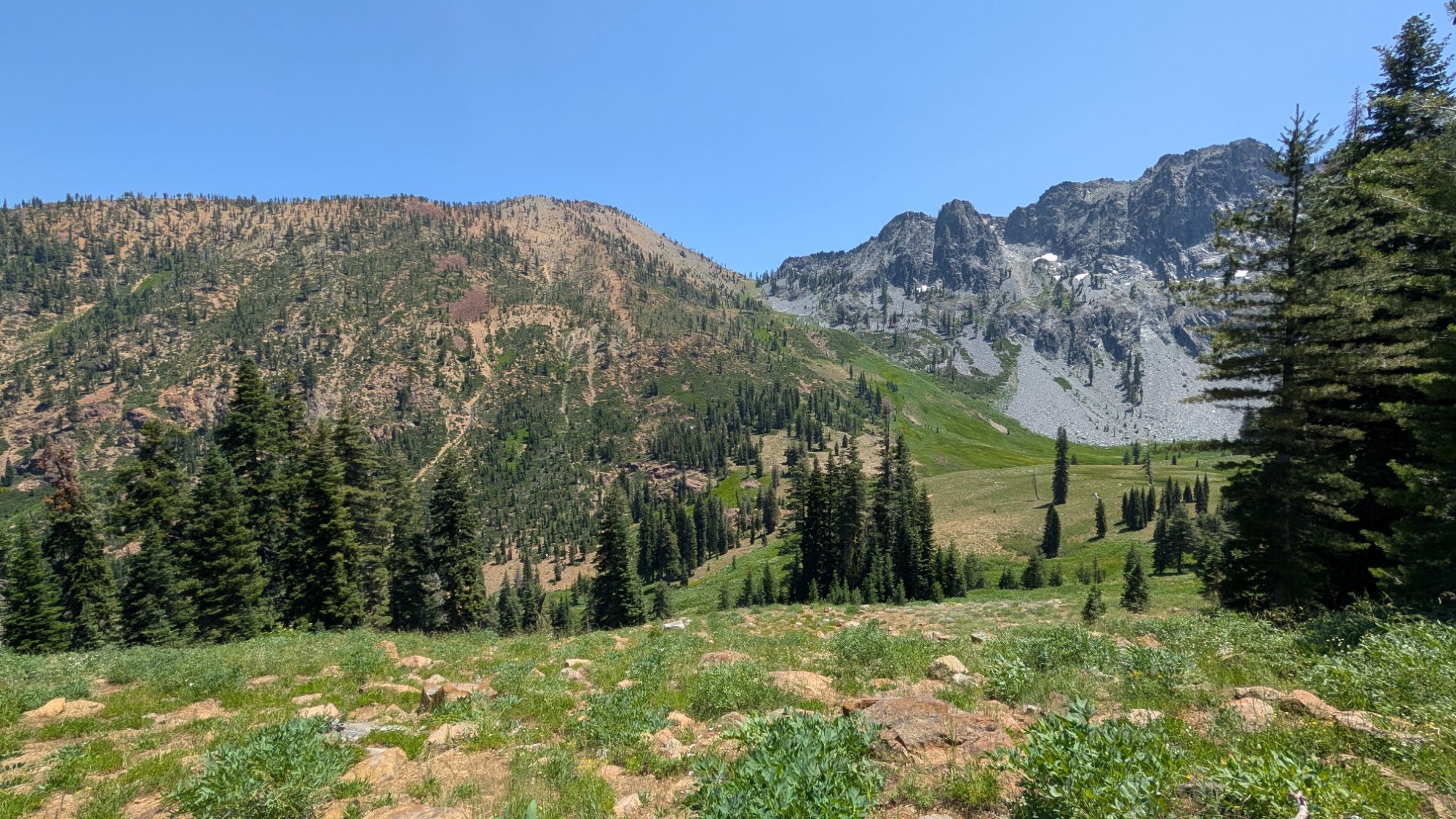
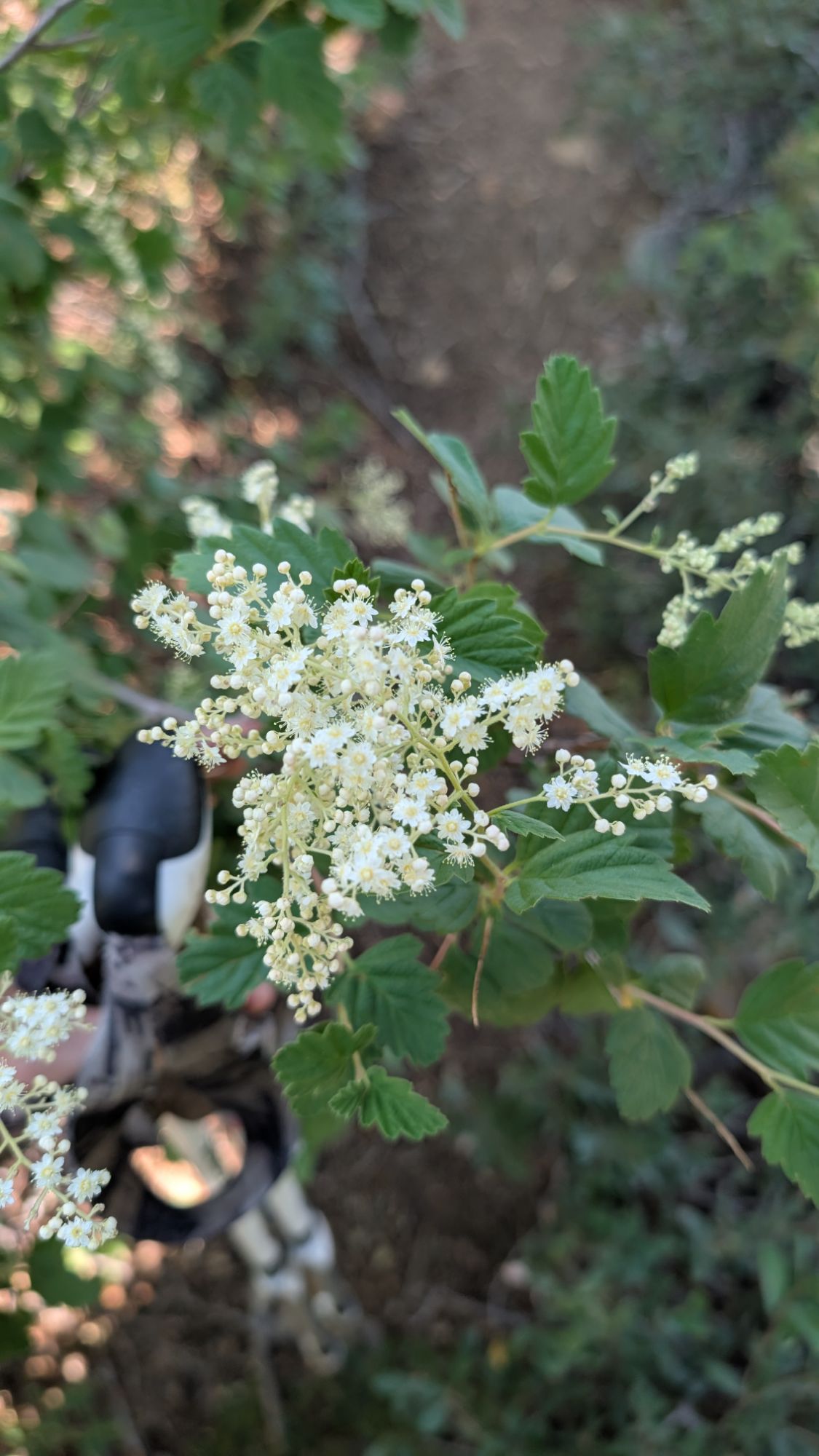
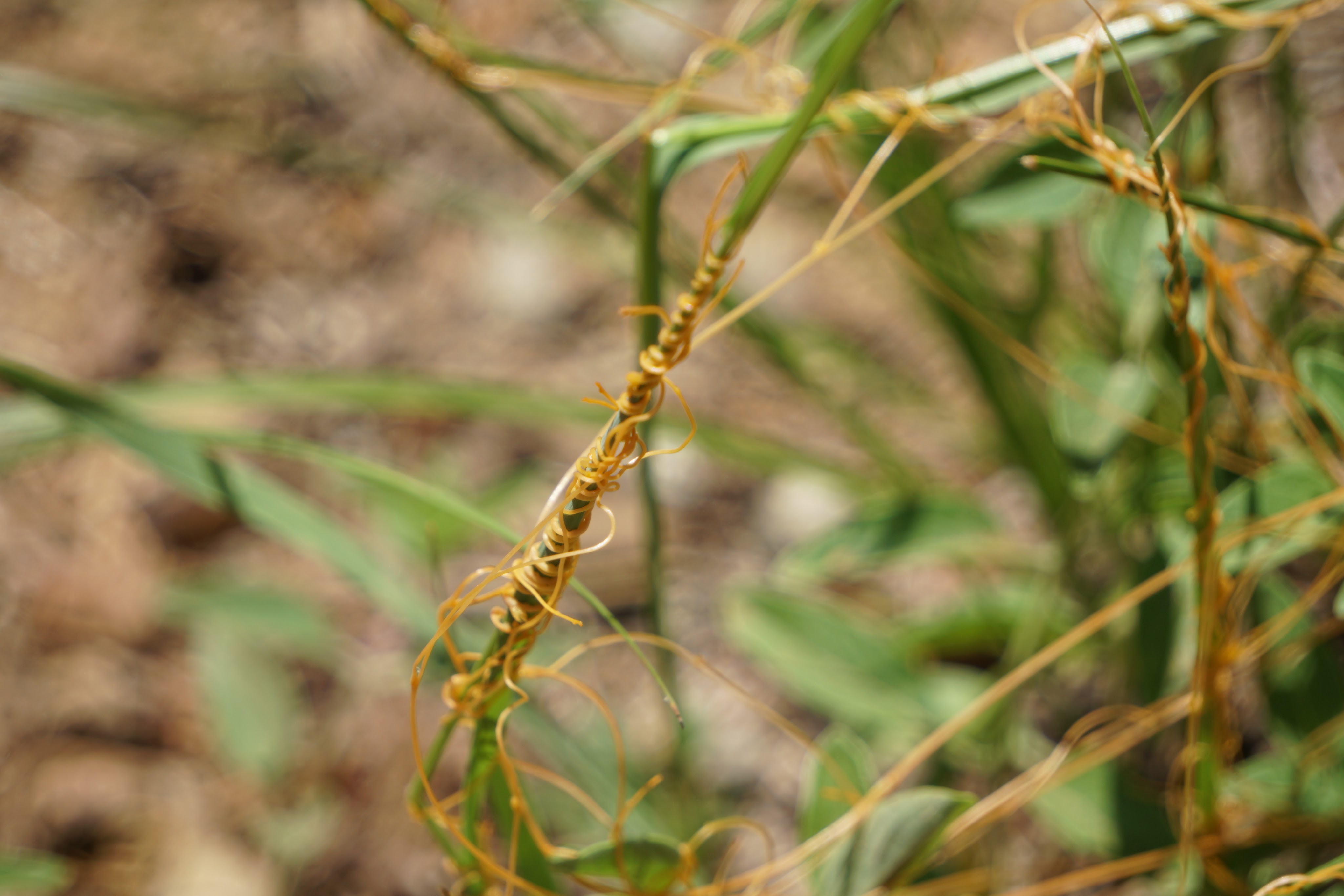
I try to guess how many more switchbacks there will be while also appreciating that there are switchbacks. The orange of chaparral dodder catches my eye, whose parasitic vines are busy wrapping around another plant. The dodder doesn’t have enough chlorophyll to really photosynthesize for its food so it attaches to its host via haustoria. A haustorium is a root-like structure that penetrates the host’s tissue to gather water and nutrients. Brutal!
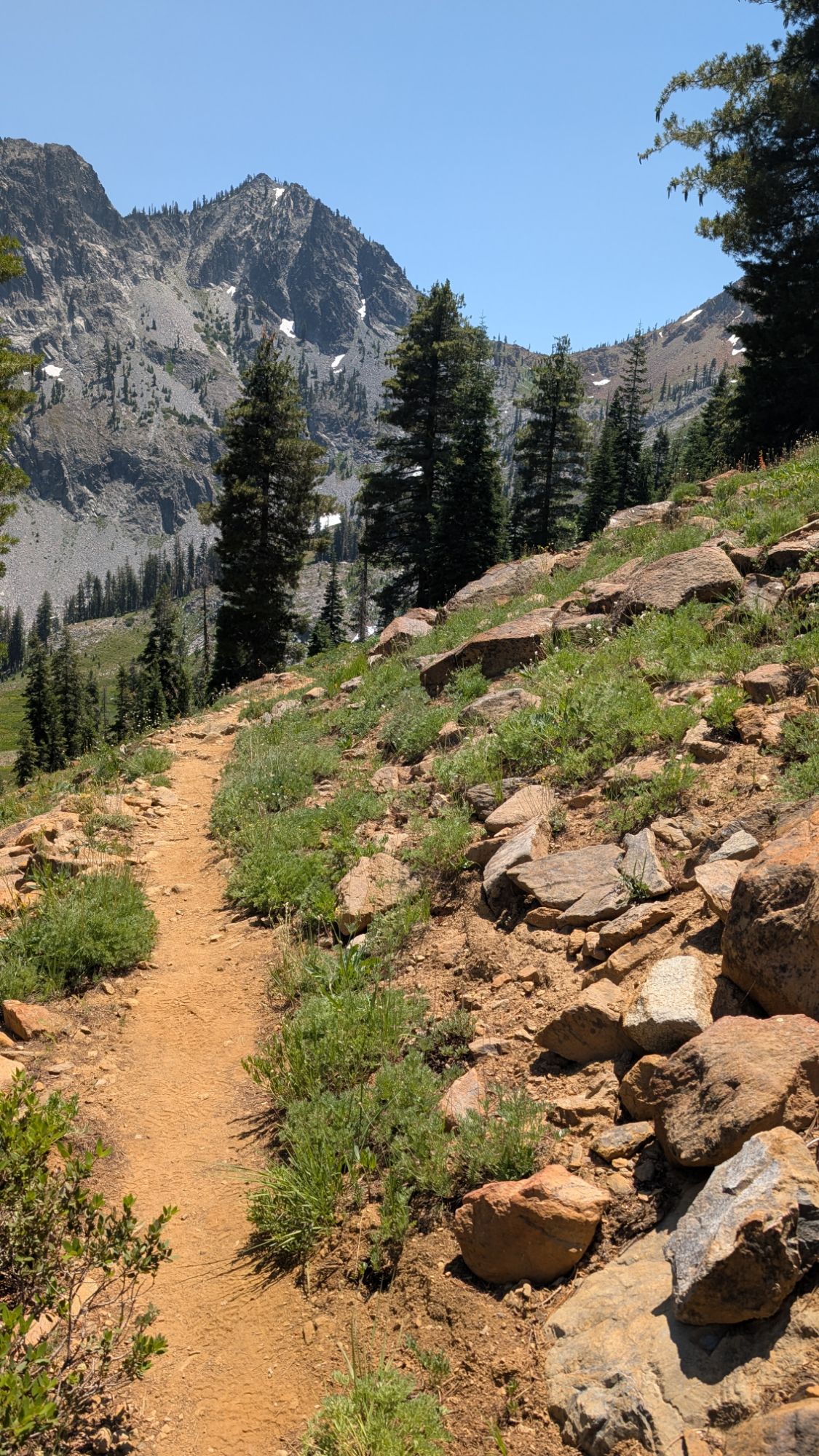
As I approach the top of the climb, the fascinating geology of the Trinity Alps really emerges. The craggy granitic peaks stand in stark contrast to the rounded, weathered peridotite. Peridotite is unique because it is the most abundant mineral in the Earth’s mantle. It’d be easy to think that what you’re seeing is granite intruded into metamorphic rock, but peridotite is an igneous rock. Peridotite is ultramafic, which means that it is made up of dark (green and black) minerals like olivine and pyroxenes. Peridiotite is also unstable at the Earth’s surface due to its minerals like olivine. Olivine contains iron and when it’s exposed to air and water, it oxidizes, turning the reddish color before me. While granite (↑silica, ↑aluminum) and peridotite (↑iron, ↑magnesium) are both igneous, their differing mineral compositions are why they look nothing alike.

I arrive at Luella Lake at about 1:30 pm and my daydreams of throwing out my mat for a horizonal break under a nice, shady tree are dashed. Even the boulders are not big enough to hide under and the heat radiating from them is intense. I do need a break so I pull out my sit pad, snacks, electrolyte water and golite umbrella. At least I can make my own shade as I reluctantly sit down on a flat but warm rock next to a small cowboy camp spot. Maybe it’s the heat, but I’m not very impressed with this lake. I start wondering about the whole loop.

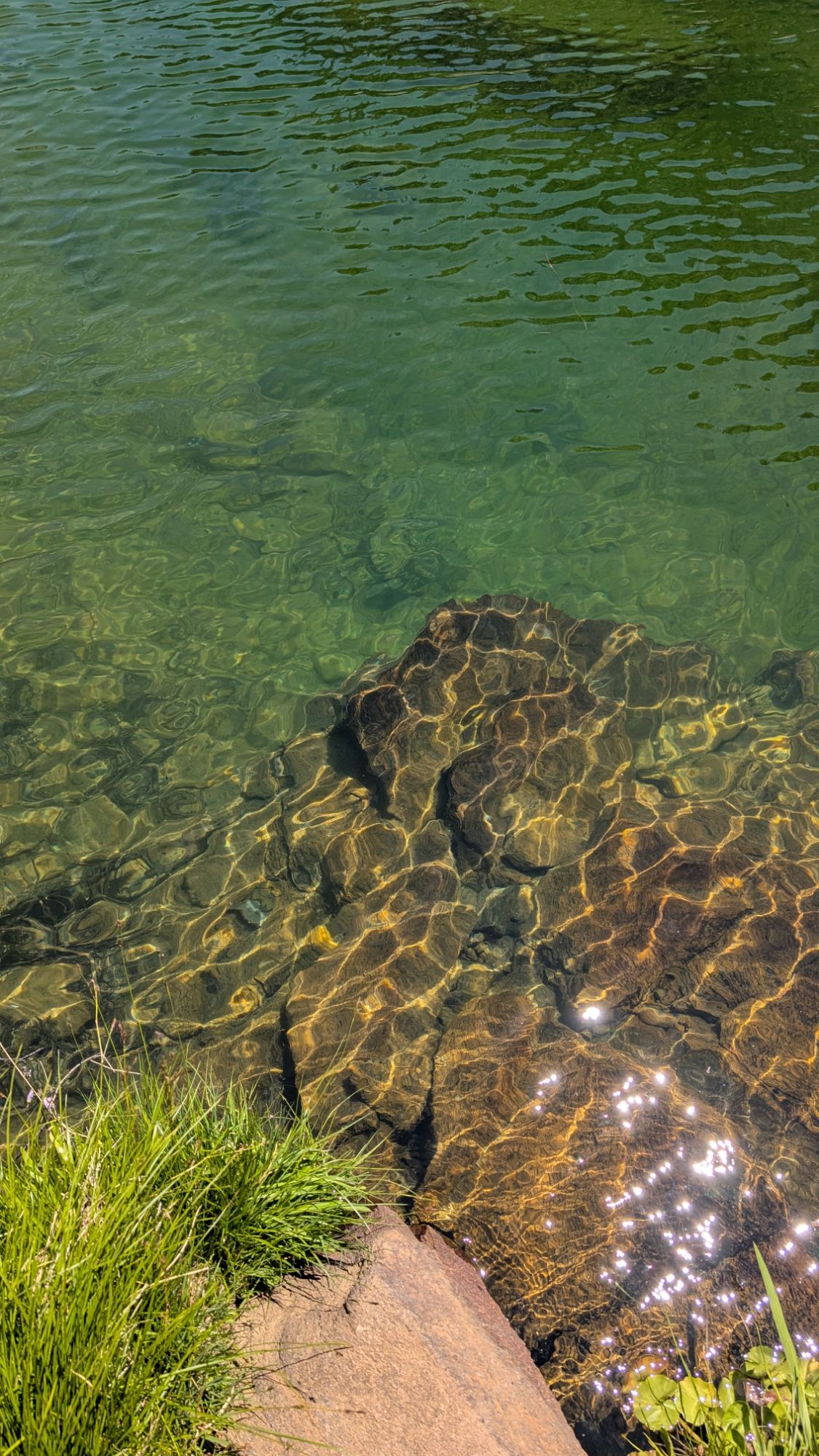
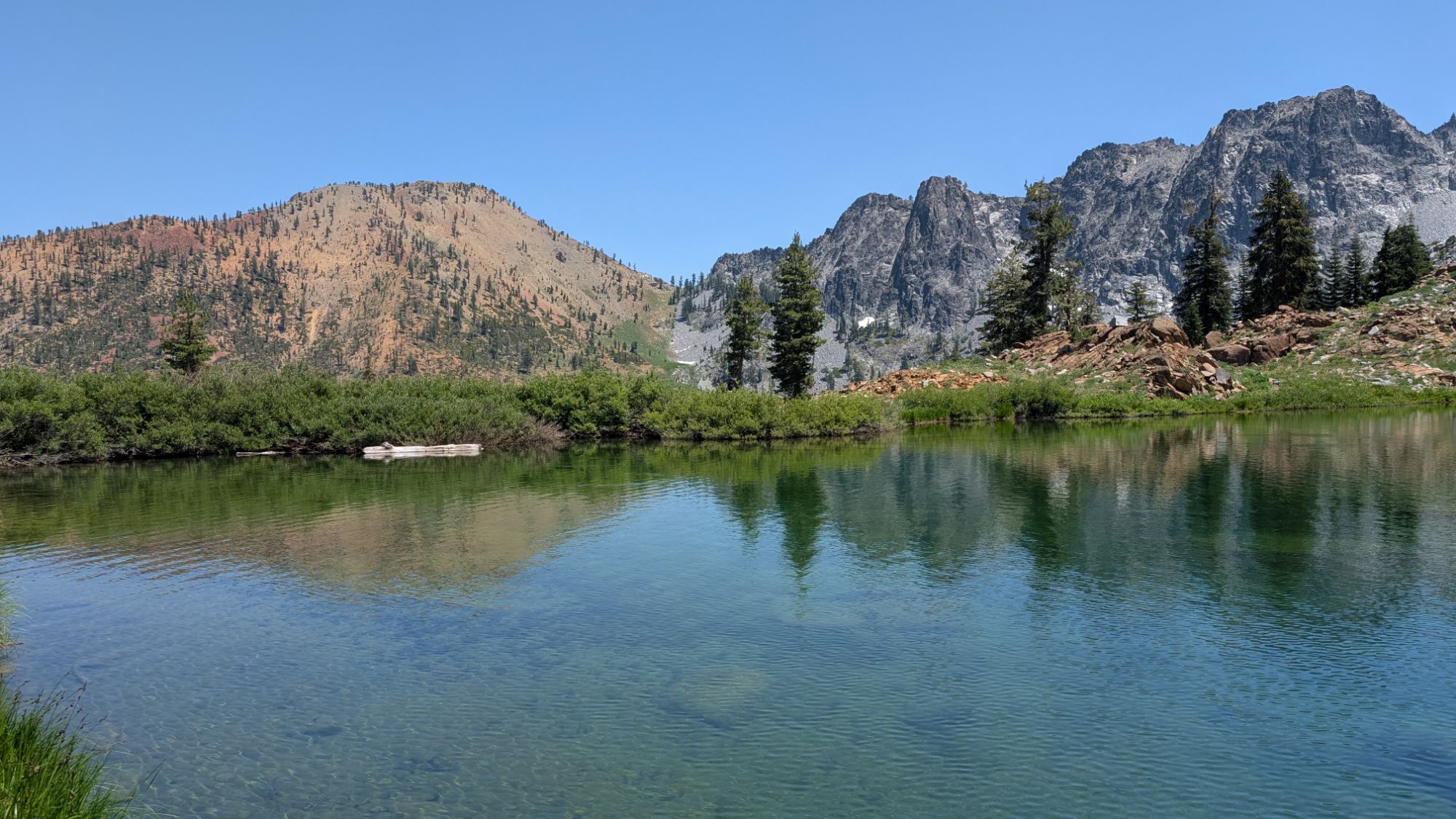
I finally dig out my sunglasses to beat back the glaring sun reflecting off the red peridotite. Within 20 minutes, I resume my climb as I depart Luella Lake on switchbacks.


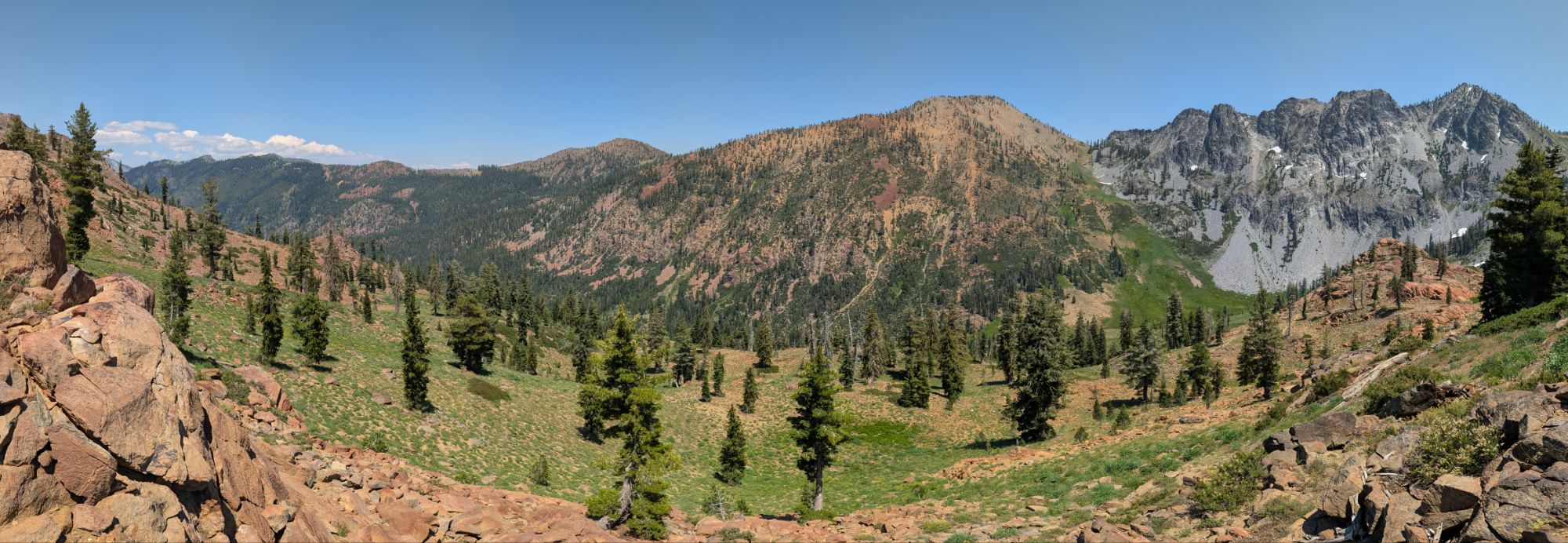
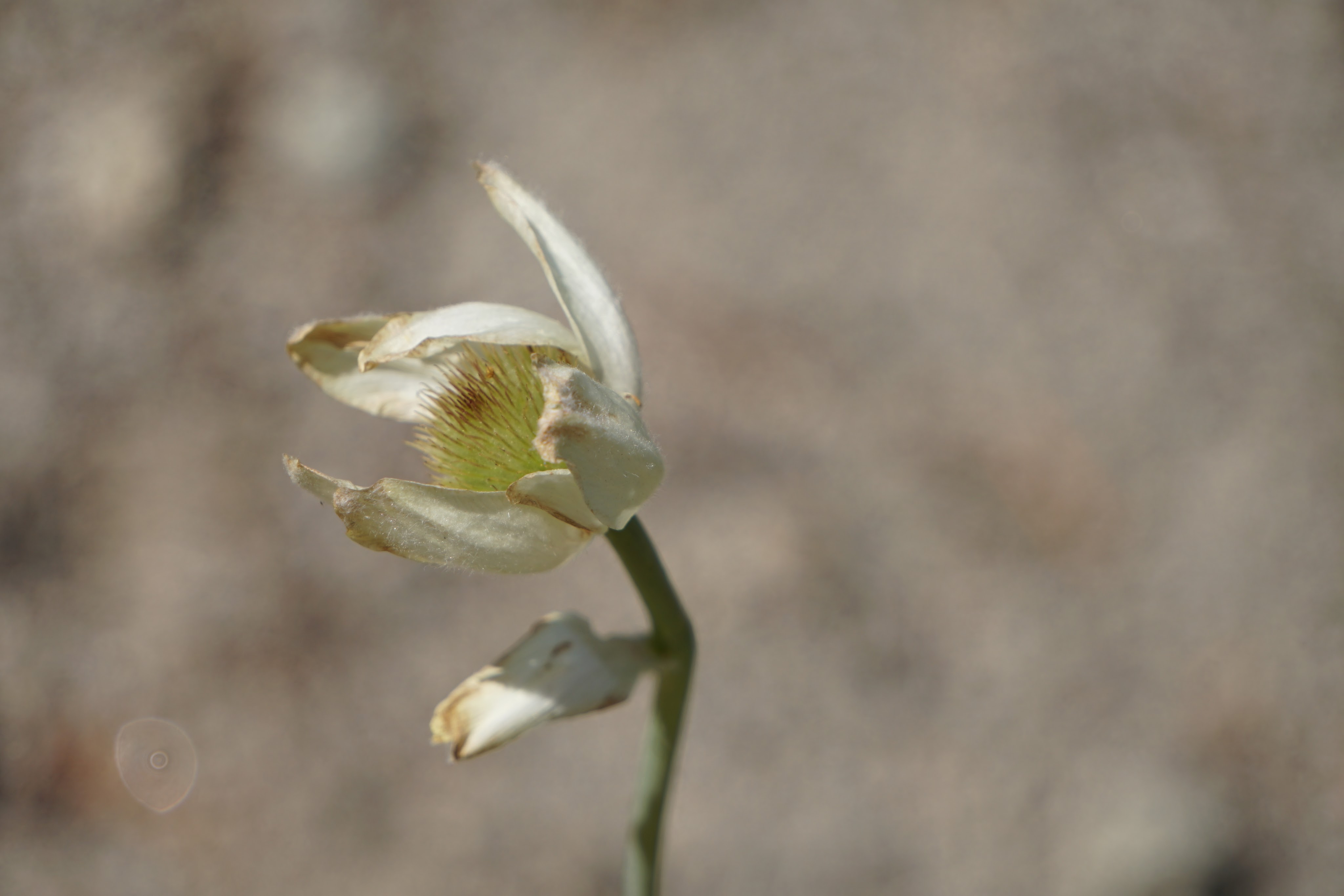
I pass Purple Asters and the very cool and aptly named One-seeded Pussypaws as I climb. The views of Deer Creek Valley and Luella Lake grow better with every switchback! Wow! I even find some Western Pasque Flower near the summit.

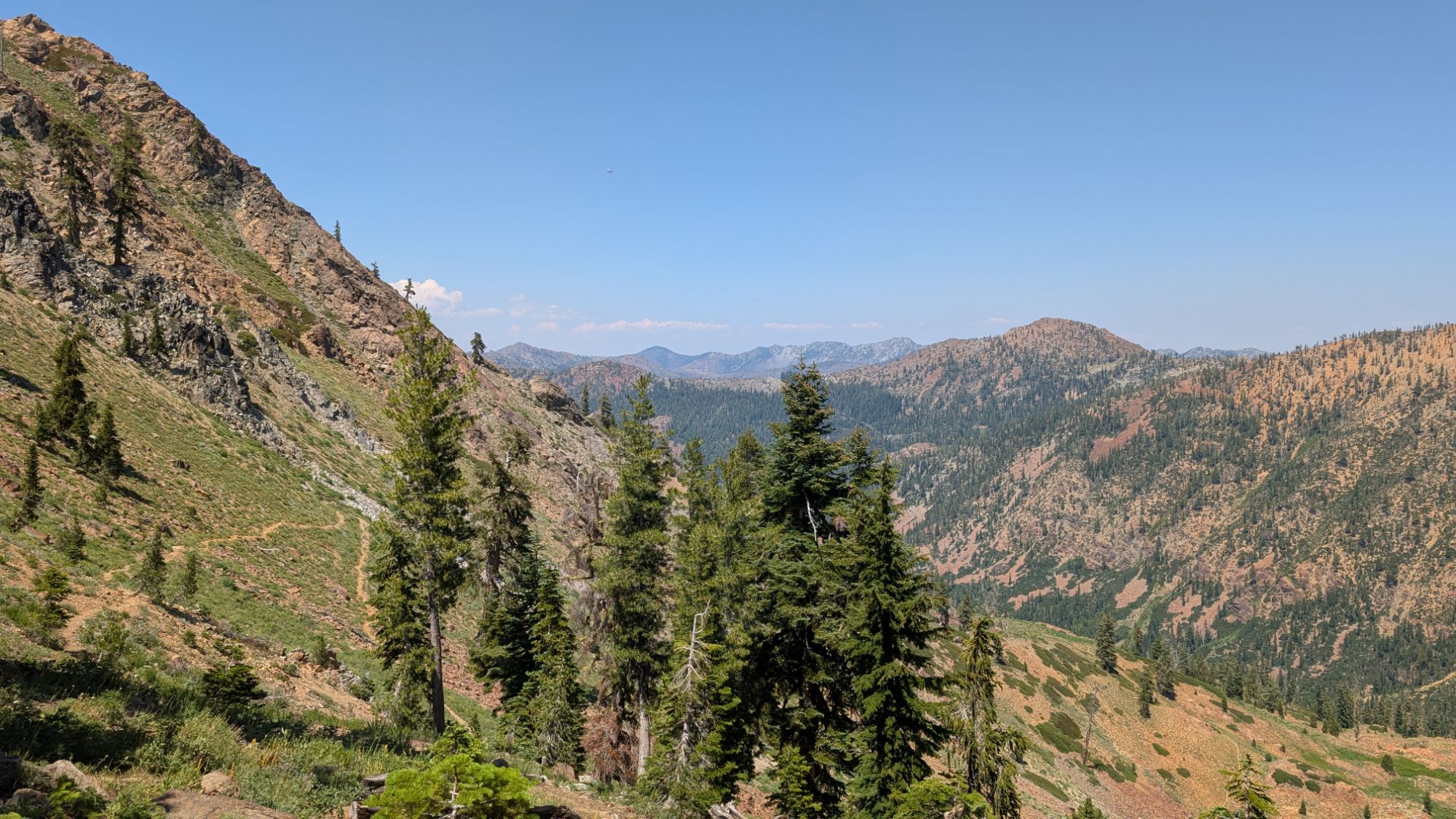
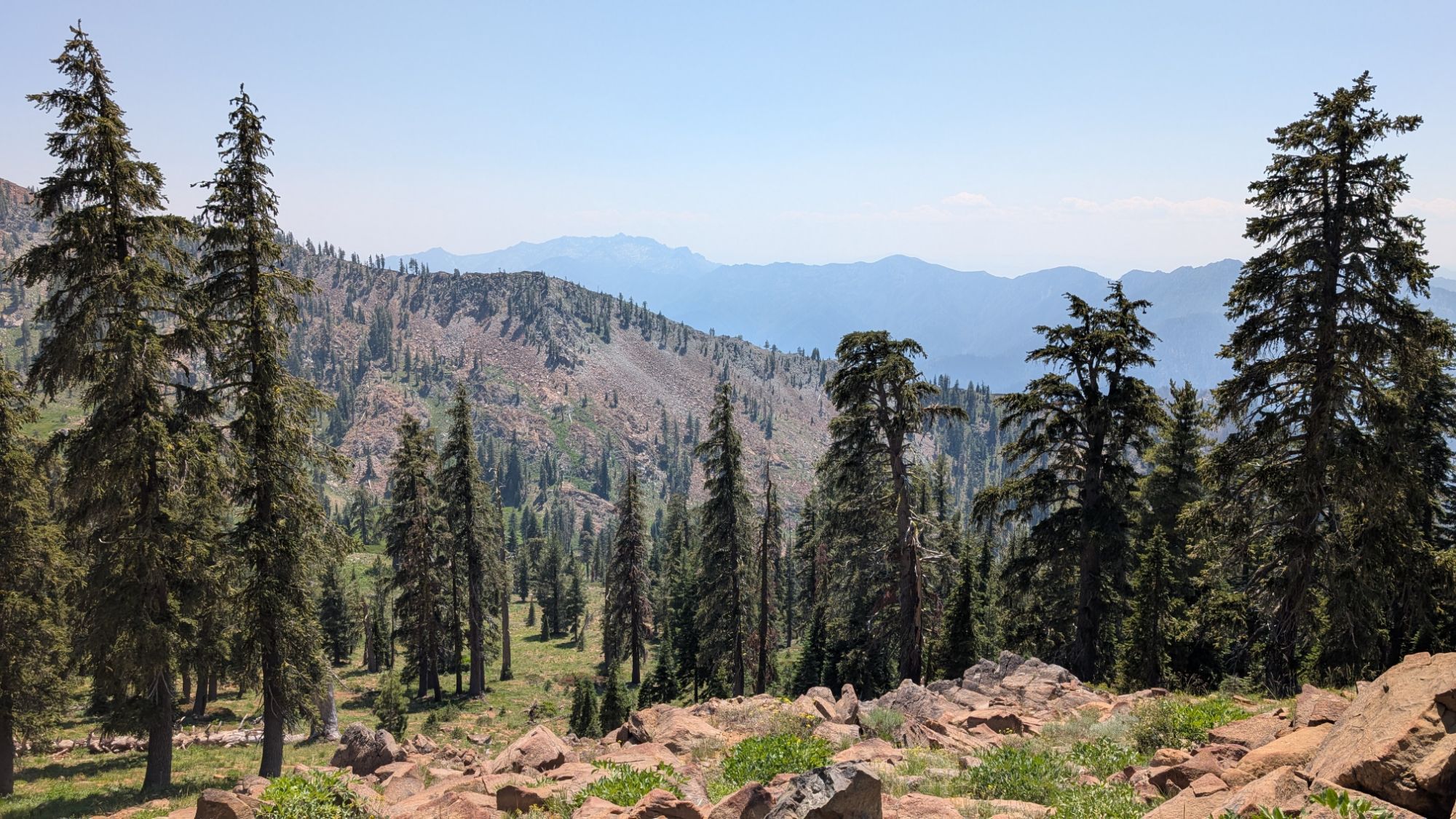
About 40 minutes after leaving Luella Lake, I feel the pull of wind as I crest the no-name pass between Luella and Diamond Lakes. I hold my arms out and relish in the cool breeze. I look down at the switchbacks that head through the trees. Are least there’s more shade on this side!
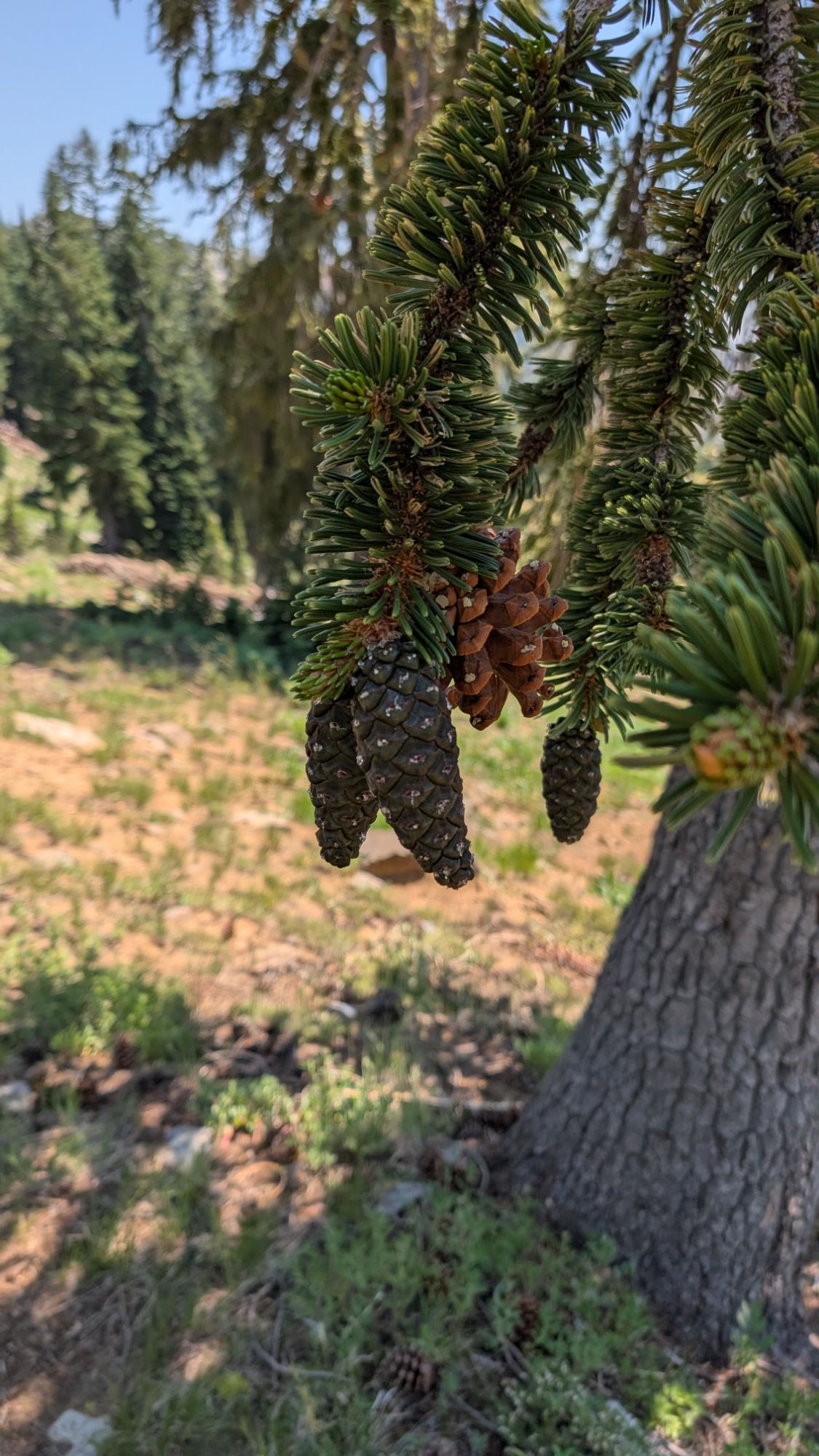
I start the descent and actually hit my head on some pine cones hanging over the path. I turn back and I’m happy to see that a Foxtail Pine has made her presence known. Pinus balfouriana or Foxtail Pine is a special one since it’s endemic to California. It’s range is quite limited so it’s fairly rare to see this subalpine beauty.
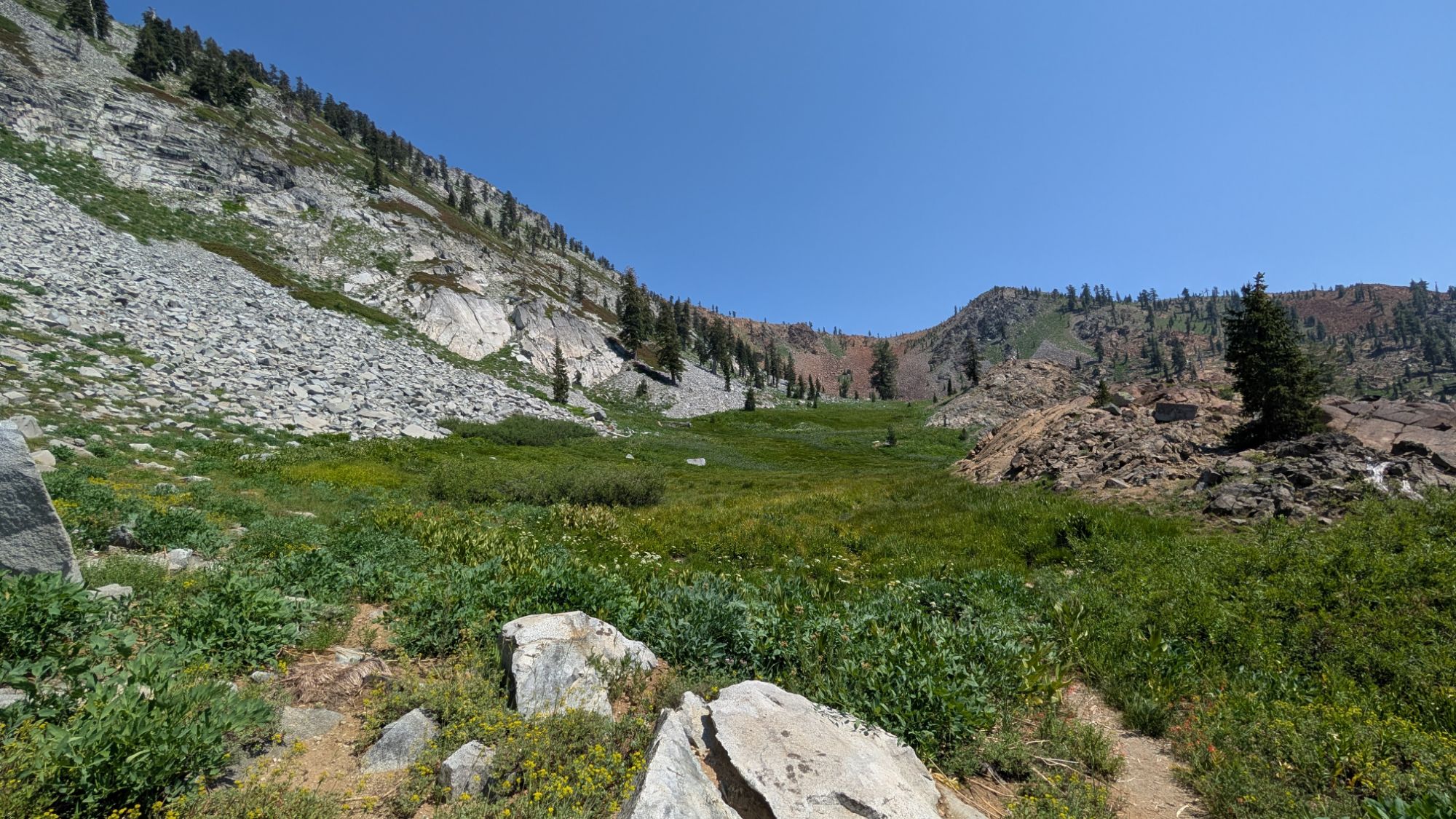

At nearly 3 pm I bottom out at a boggy area. I take a short standing break in the shade, eat a snack and chug down more water. I can hear water flowing nearby and I collect some perfectly cold water coming out of the hillside. Is the trail up here on the rocks or down in the bog? A little exploration quickly gets me back to the faint trail tread. Diamond Lake appears on the horizon and I take a short trail past a campsite to the lake’s edge. Oh, wouldn’t it be lovely to spend the night here?! But alas, it’s time to push and do some more climbing. Even though some smokey haze has moved in, all the wildflowers create a spectacular view as I climb and look back at Diamond Lake.

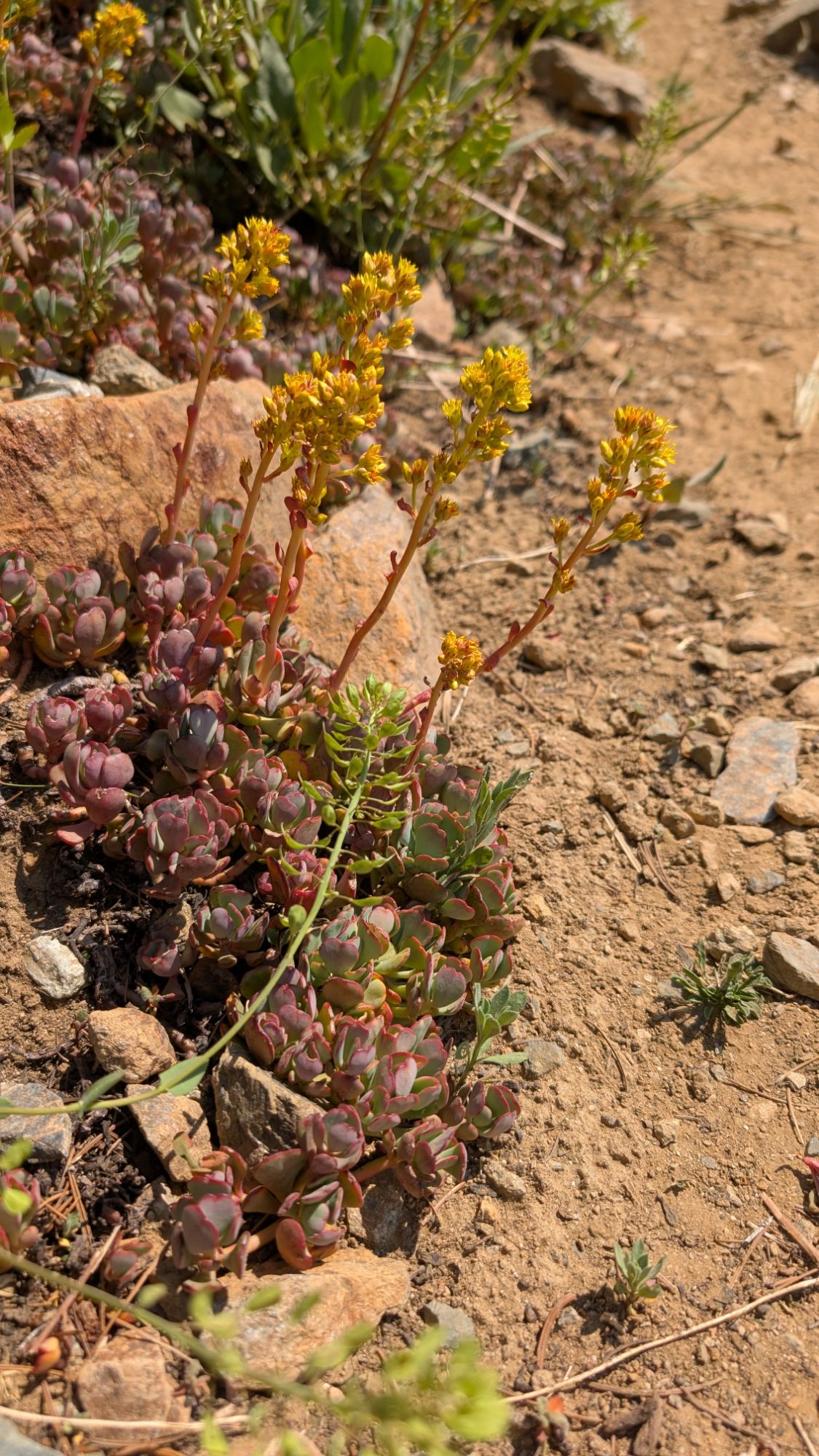
Sedum, Phlox.

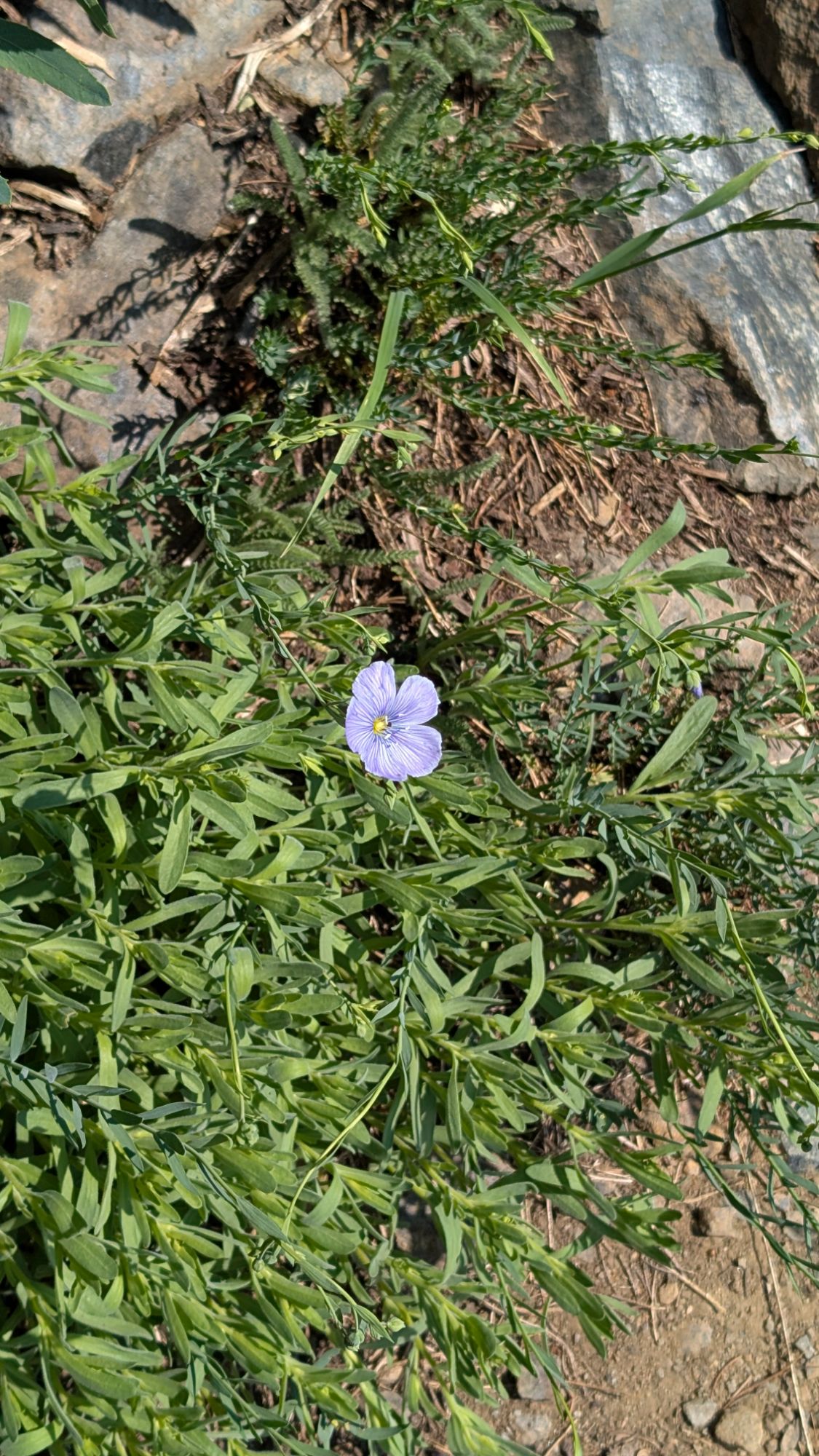
Flax, Yarrow and Lemmon’s Holly Fern.

Giant red Indian paintbrush, Skyrocket.

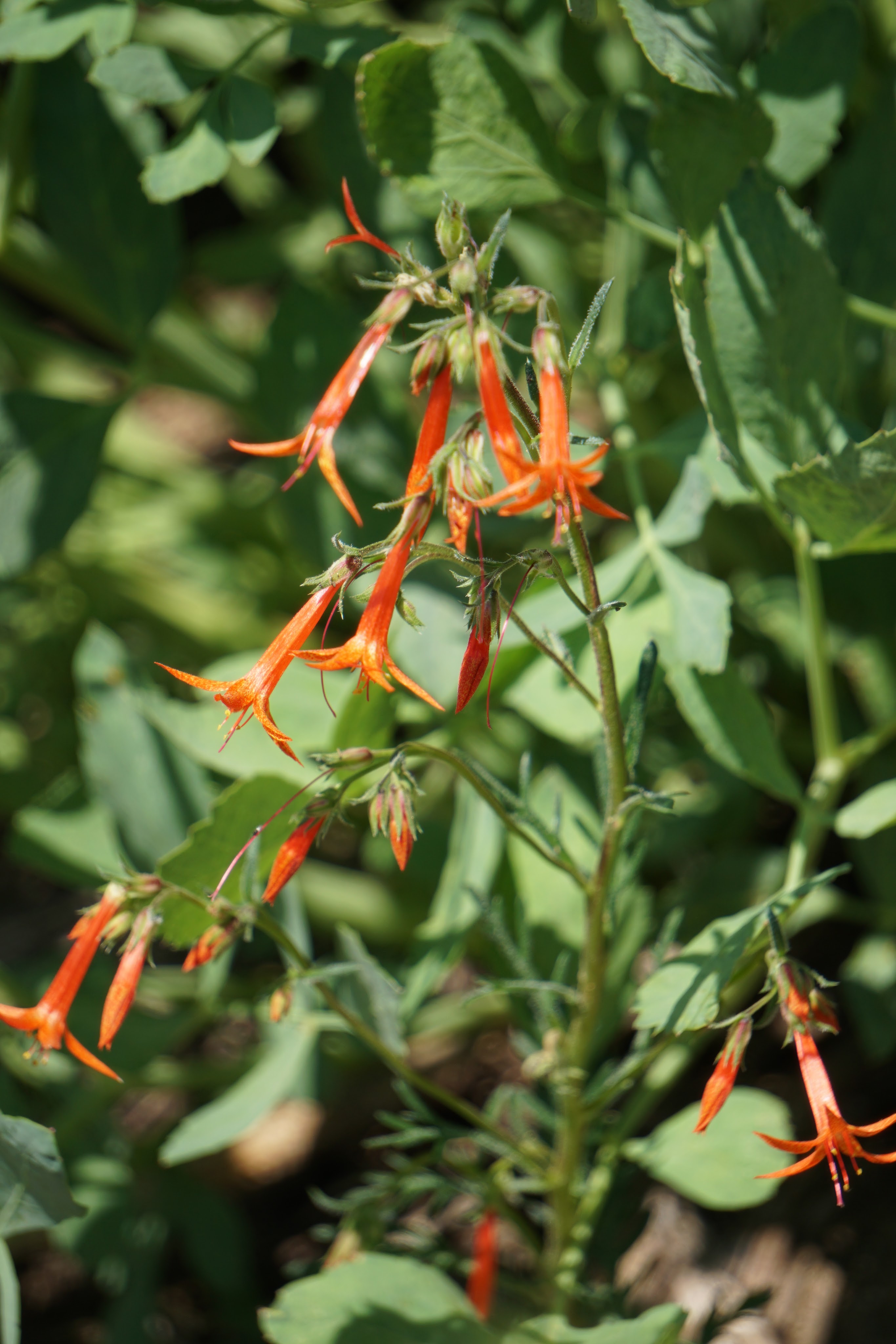
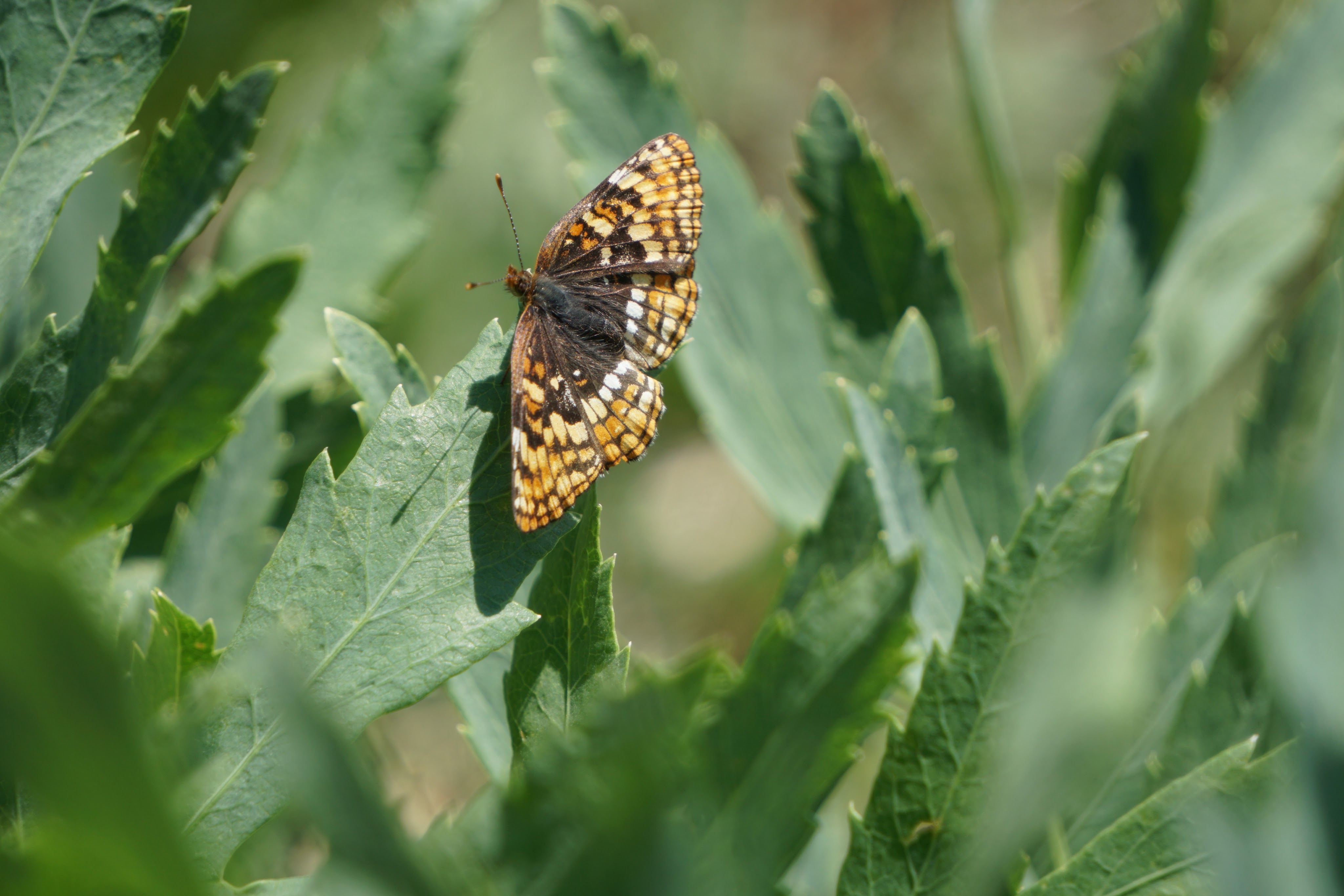
Gabb’s checkerspot butterfly, Mountain pennyroyal with pollen-laden bumblebee.
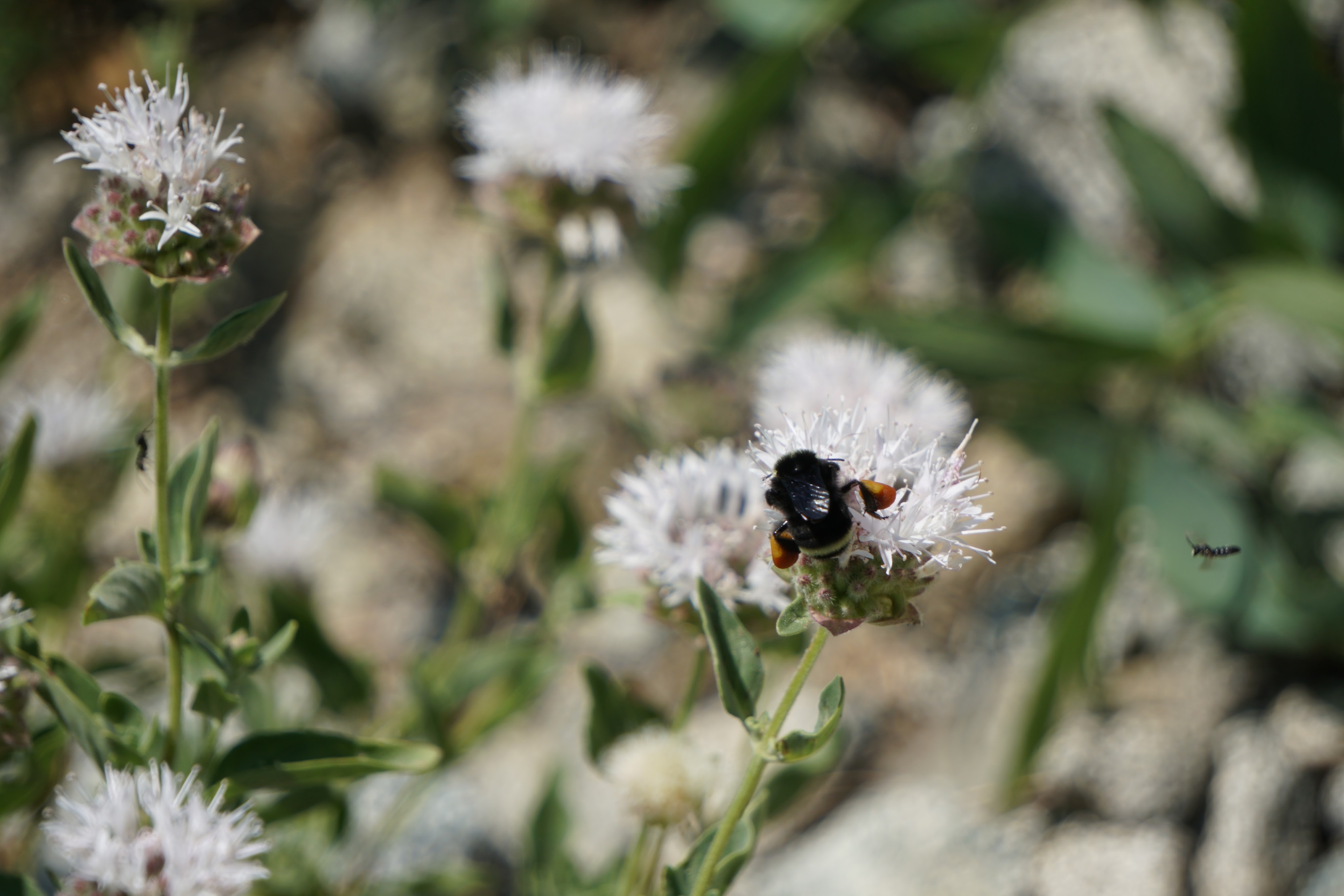
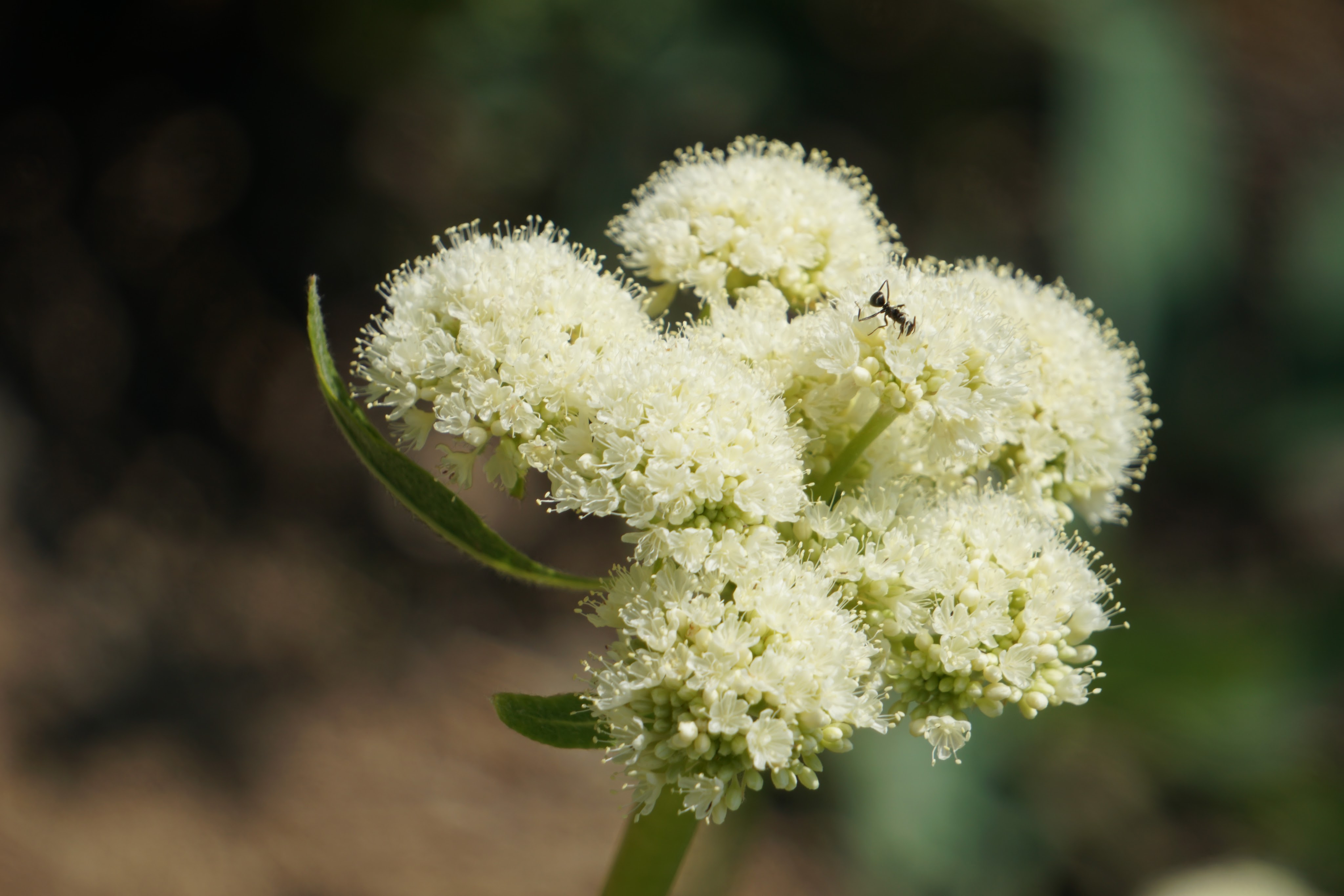
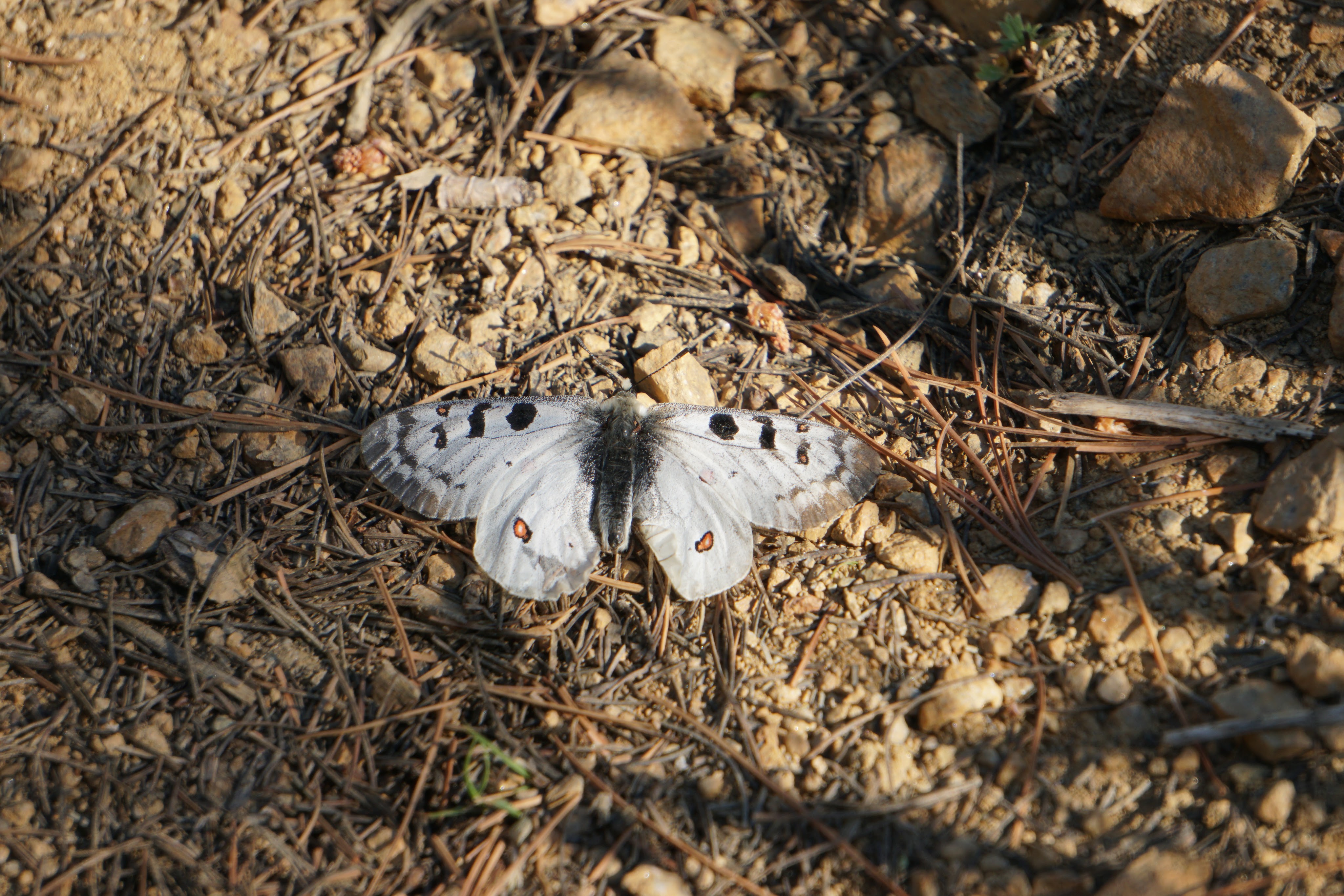
Buckwheat with ant, Rocky Mountain Apollo.
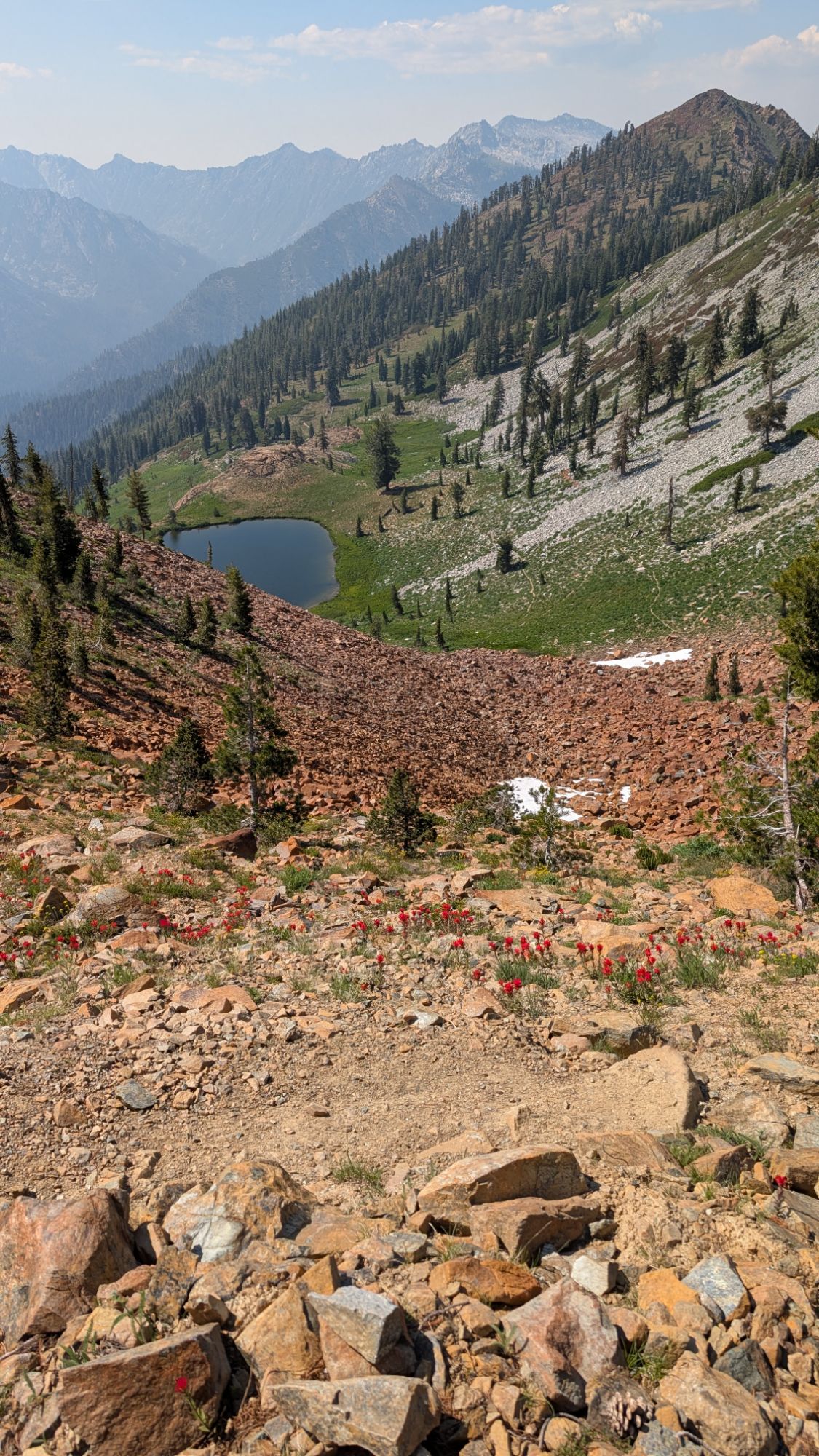
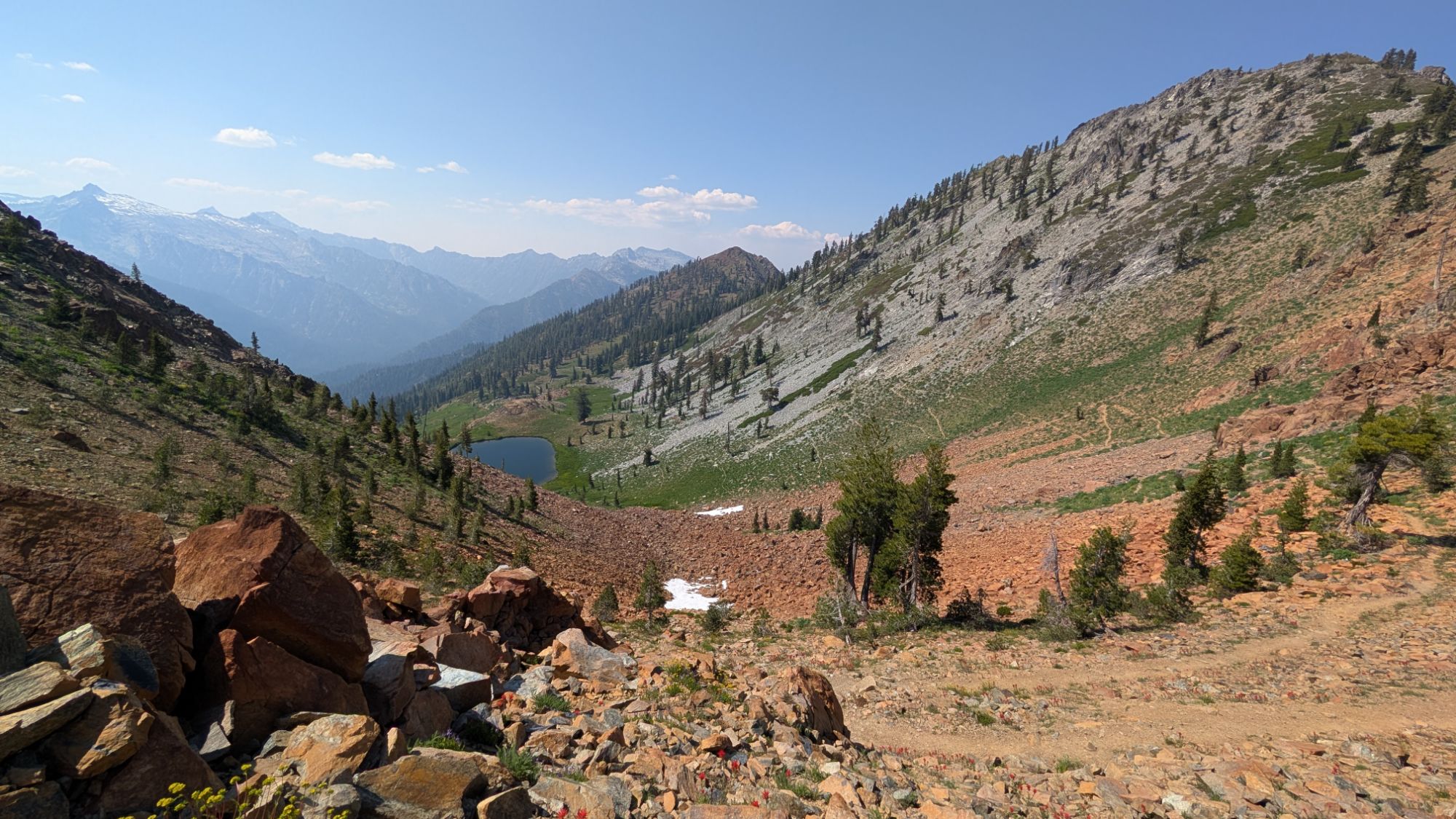
My stinging sweat drips into my eyes again. The climb takes about 45 minutes and I arrive at the top of the pass about 4 pm. Taking pictures of flowers all the way up helped slow me and reduce the intensity of the afternoon heat. It only takes a few minutes of wonderfully flat trail for Summit Lake to come into view.

By 4:15 pm I am at the junction with the trail that goes to Siligo Peak and the lookout above Deer Lake. I pause to contemplate hiking up to Siligo Peak (8,169 ft). Dang, it’s only about 500 feet but it’s starting to be later and I still want to hike maybe another 4-5 miles. And the elevation gain and loss today is no joke and I can feel that I’m getting a bit tired. I stand at the top of the trail that descends to Deer Lake and I can see two people climbing towards me. I reluctantly forgo Siligo Peak and start down the trail. I chat with the hikers briefly and figure out that they were the two at Emerald Lake playing frisbee. They are headed to Summit Lake for the night and will attempt to exit via the Willow Creek Trail which I saw no sign of today. It’s funny because they saw me push through all the brush towards Sapphire Lake but hadn’t noticed that I turned around and camped in the trees.

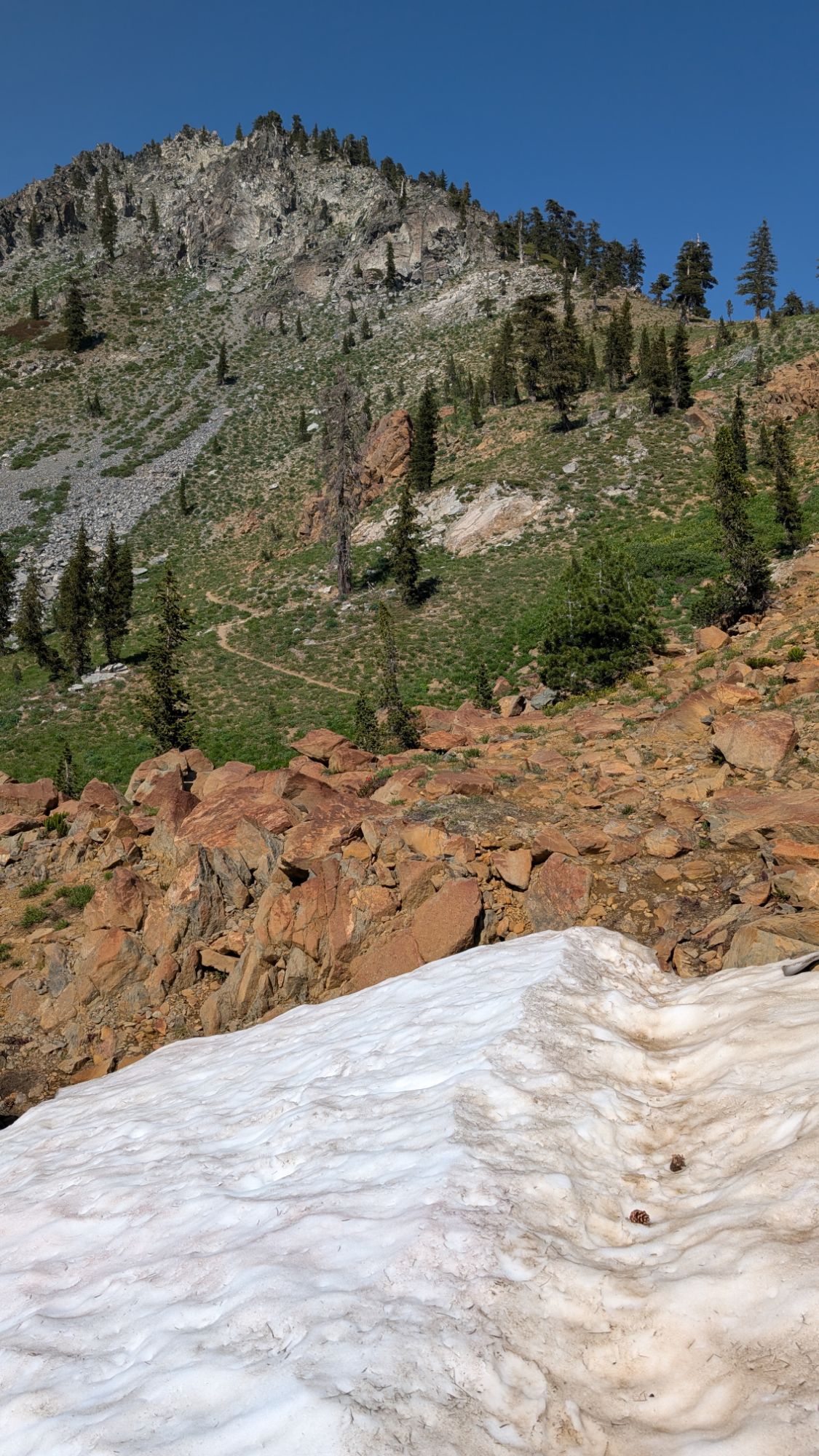
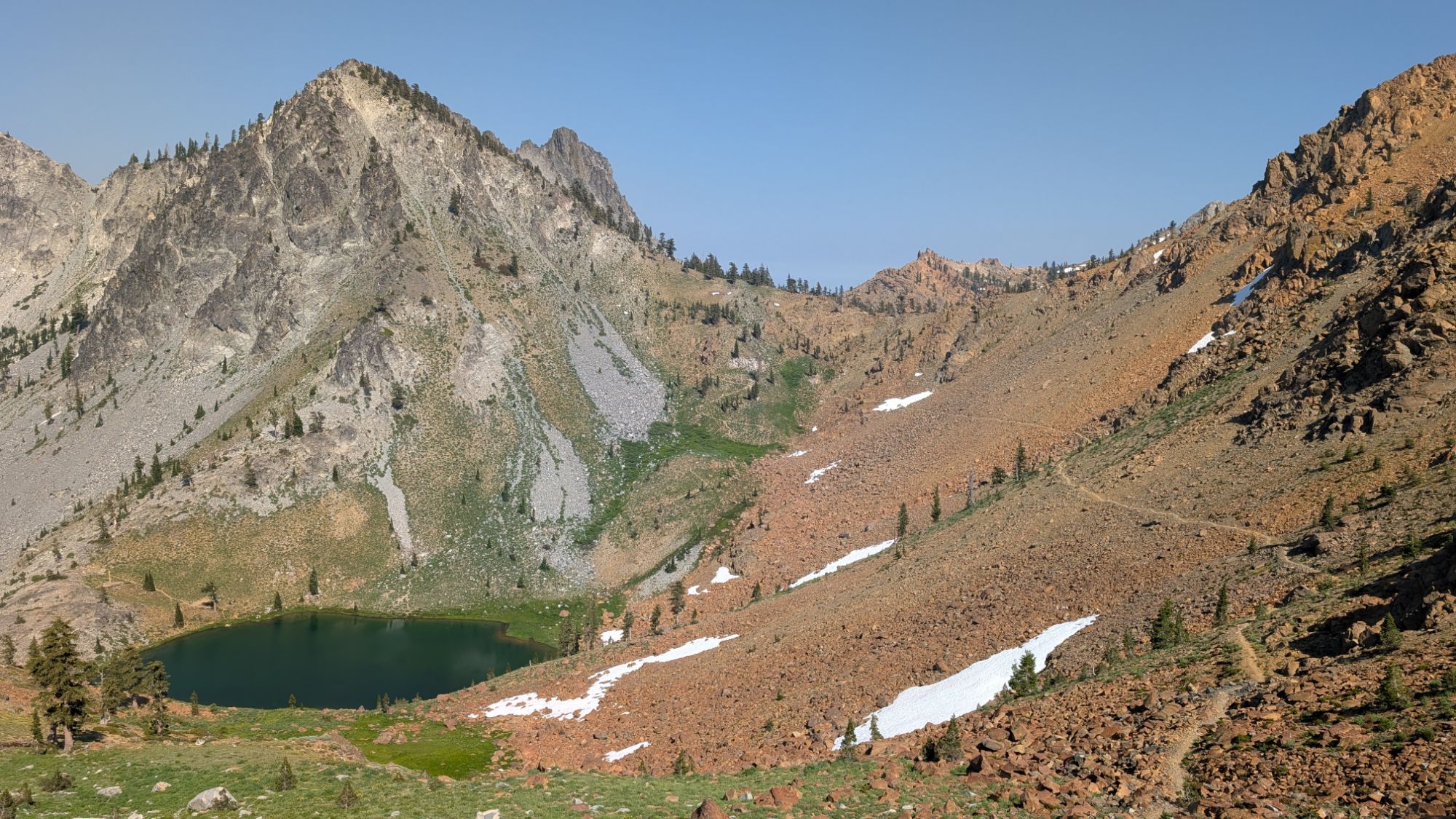
I switchback down before hitting a contour that circles above Deer Lake. Just before the junction with the trail that descends from Deer Creek Pass, I hit a short patch of compact snow. I just miss saying hello to a hiker descending to Deer Lake.
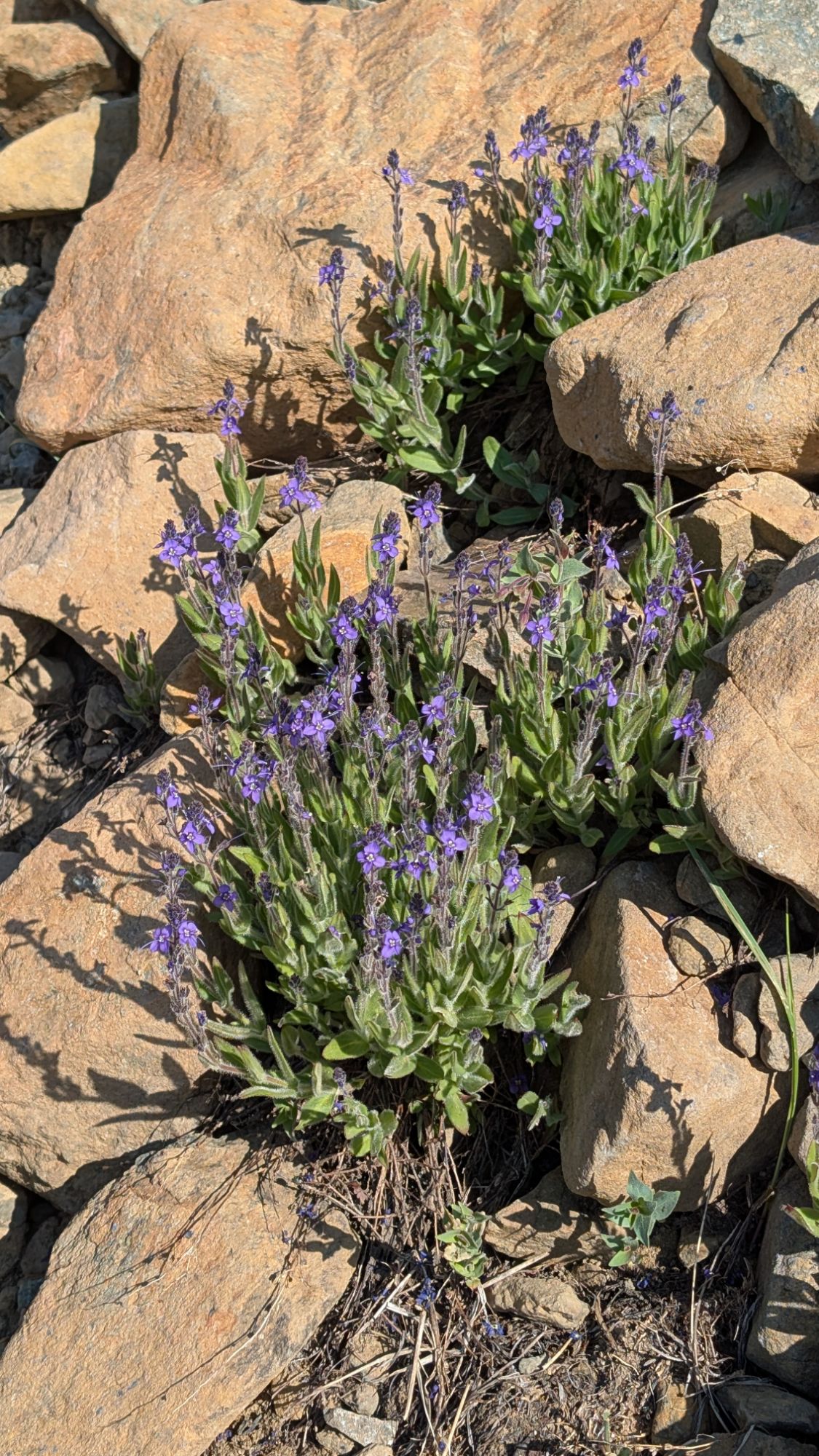

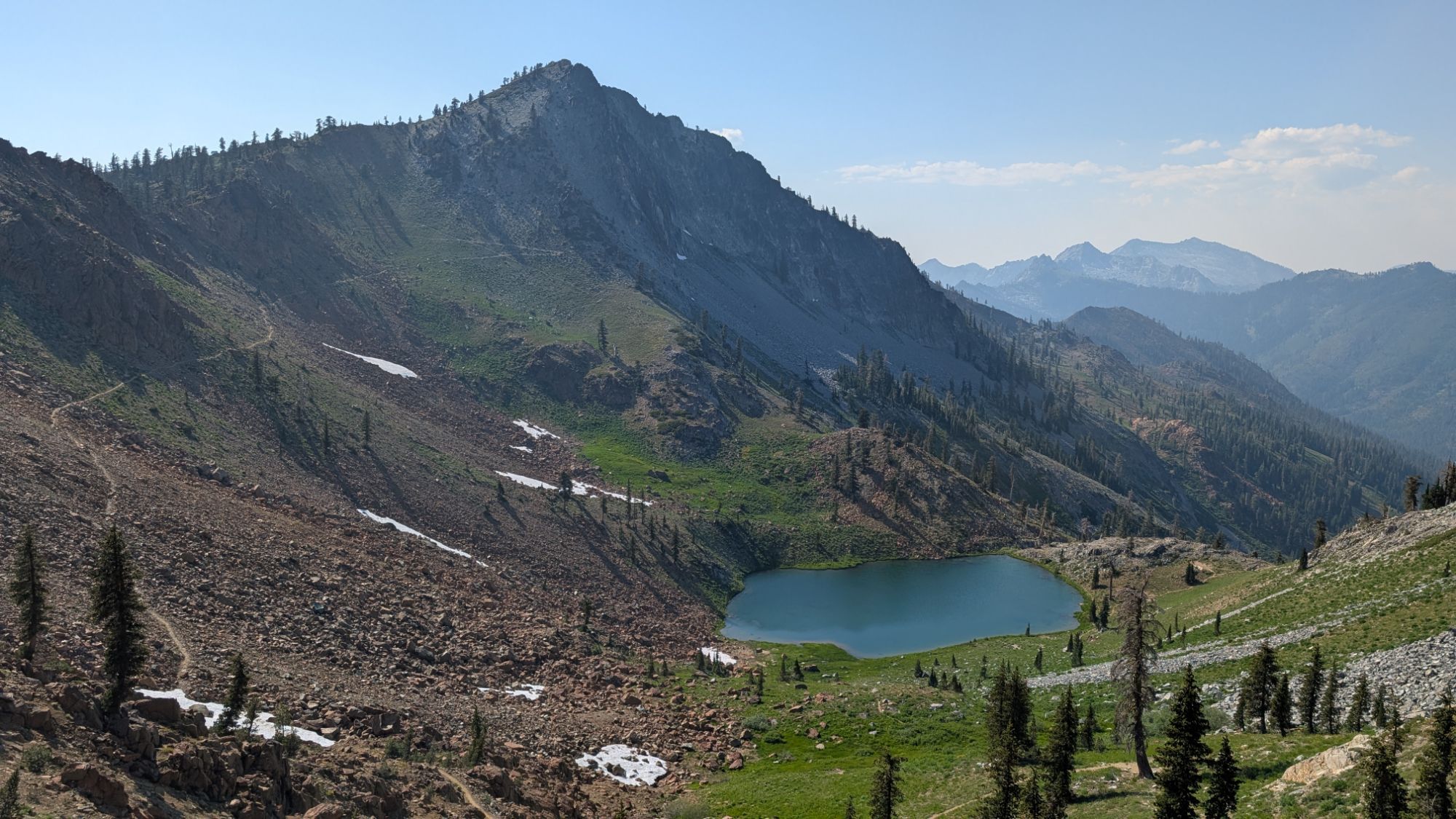

I pass some purple Alpine Speedwell as I top out at Deer Creek Pass at 5 pm. I descend a few switchbacks of the Stoney Ridge Trail until I can find a rock in the shade for a break.
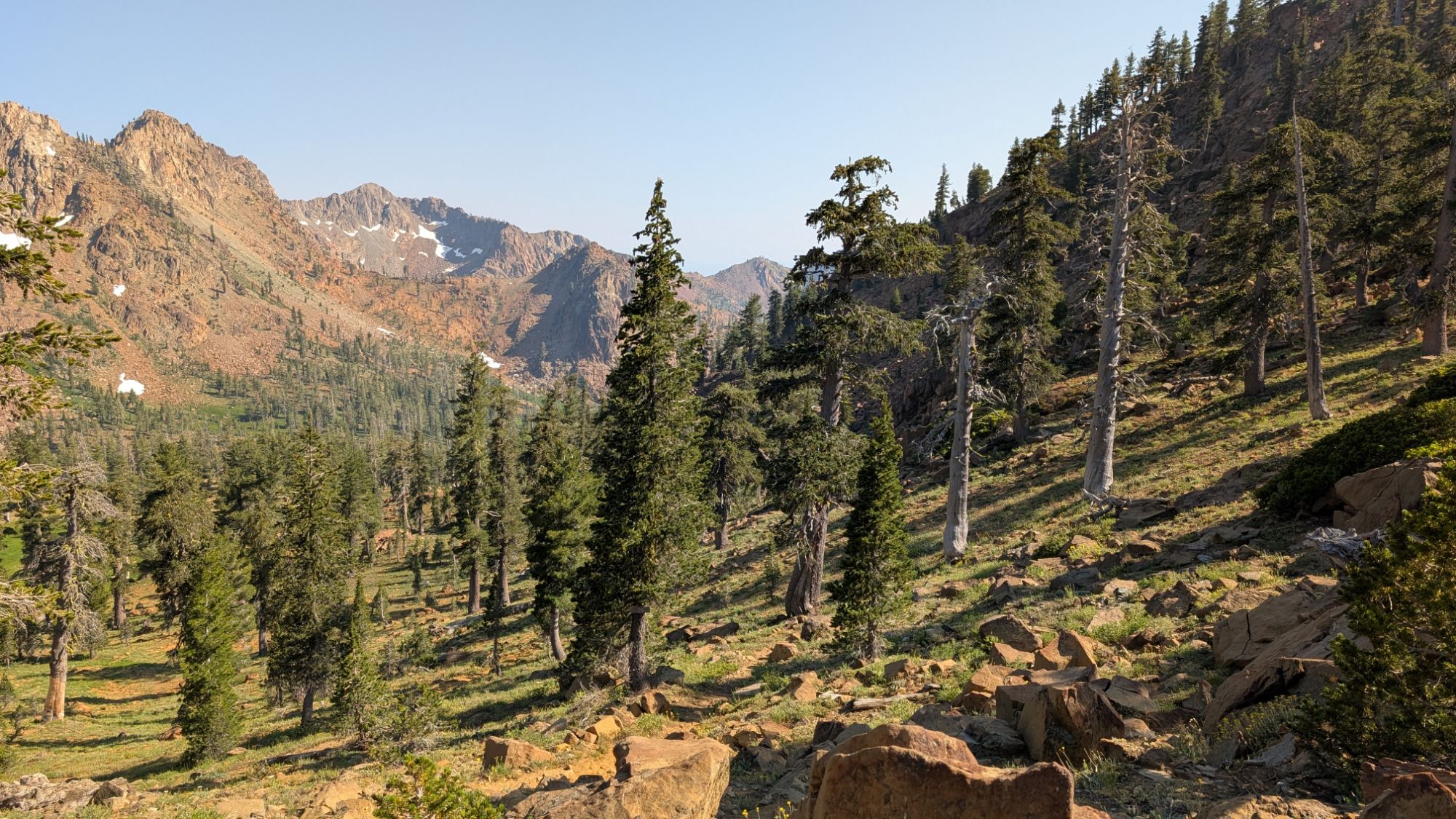
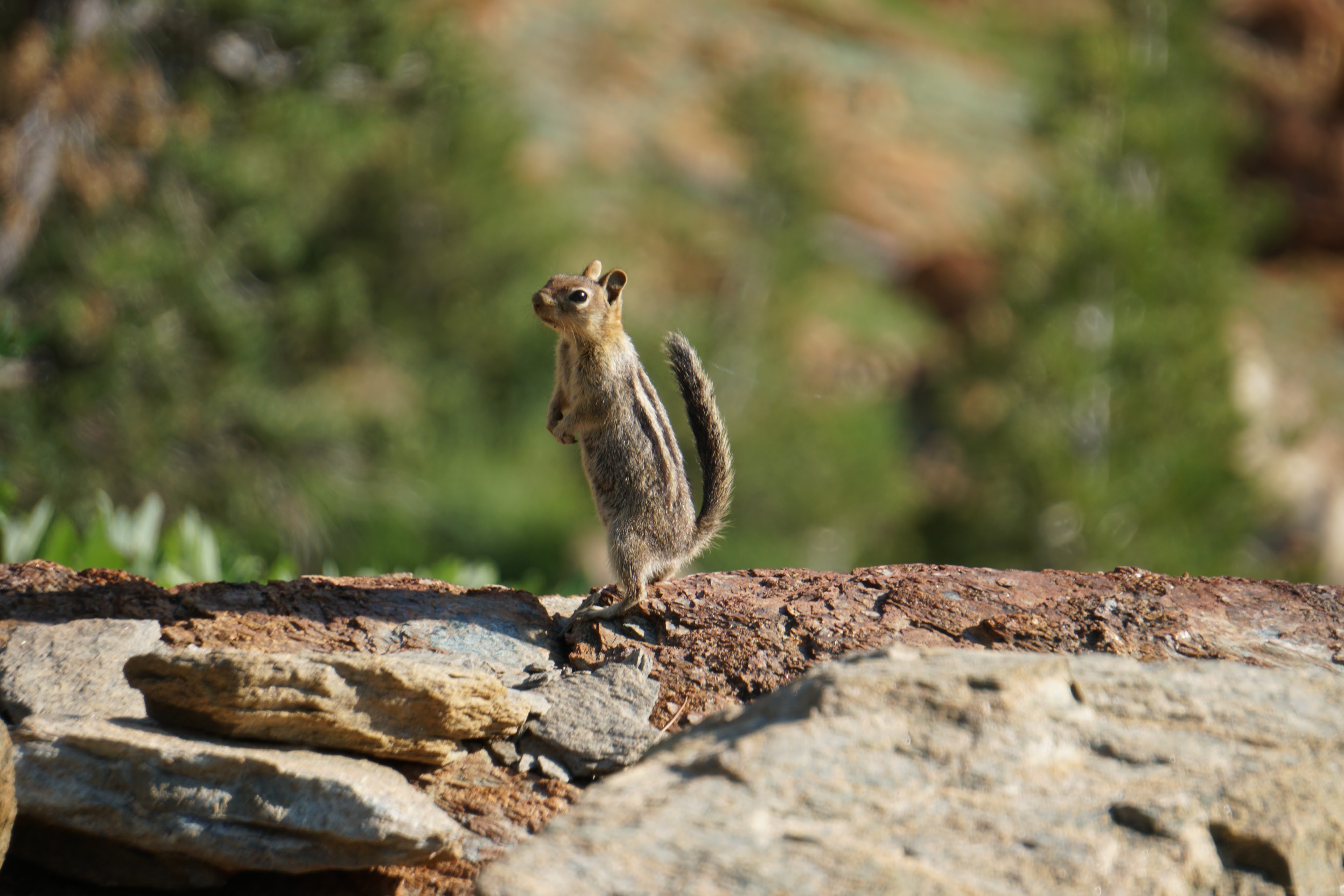
I continue down the dusty trail which has evidence of old horse tracks and poop. The ground squirrels have been running away from me all day but finally, this golden-mantled friend is more than willing to pose and put on a show. “Thanks for saying hi but I definitely don’t have any snacks for you!”

I descend into Siligo Meadows and stop at 5:40 pm to collect some wonderful spring water. I know I have another climb ahead of me but I decide to fill up all my bottles. I use my small quick dry cloth and wipe all the dust and sweat from arms, legs and face. I drape the cold cloth around my neck as I collect water. I start hiking again by 6 pm and climb up above the fascinating Lower Siligo Meadow. There’s something very interesting going on here!
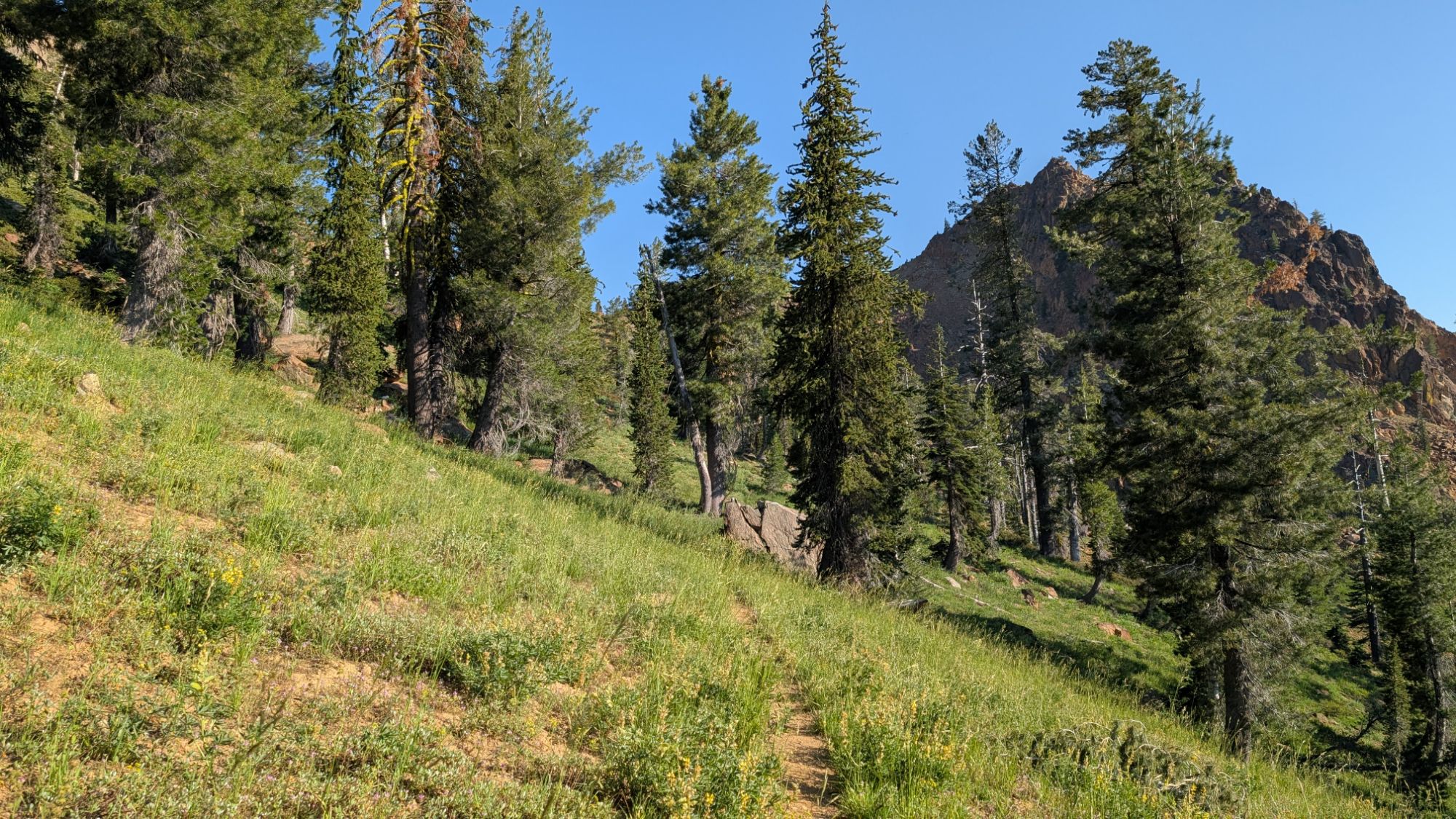
These unique pools of water are a type of wetland called Fens. Fens are created by the input of mineral-rich ground and surface water which aids in the formation of peat. Although fens can be found in low lying marshes, they are typically found at the headwaters of streams.

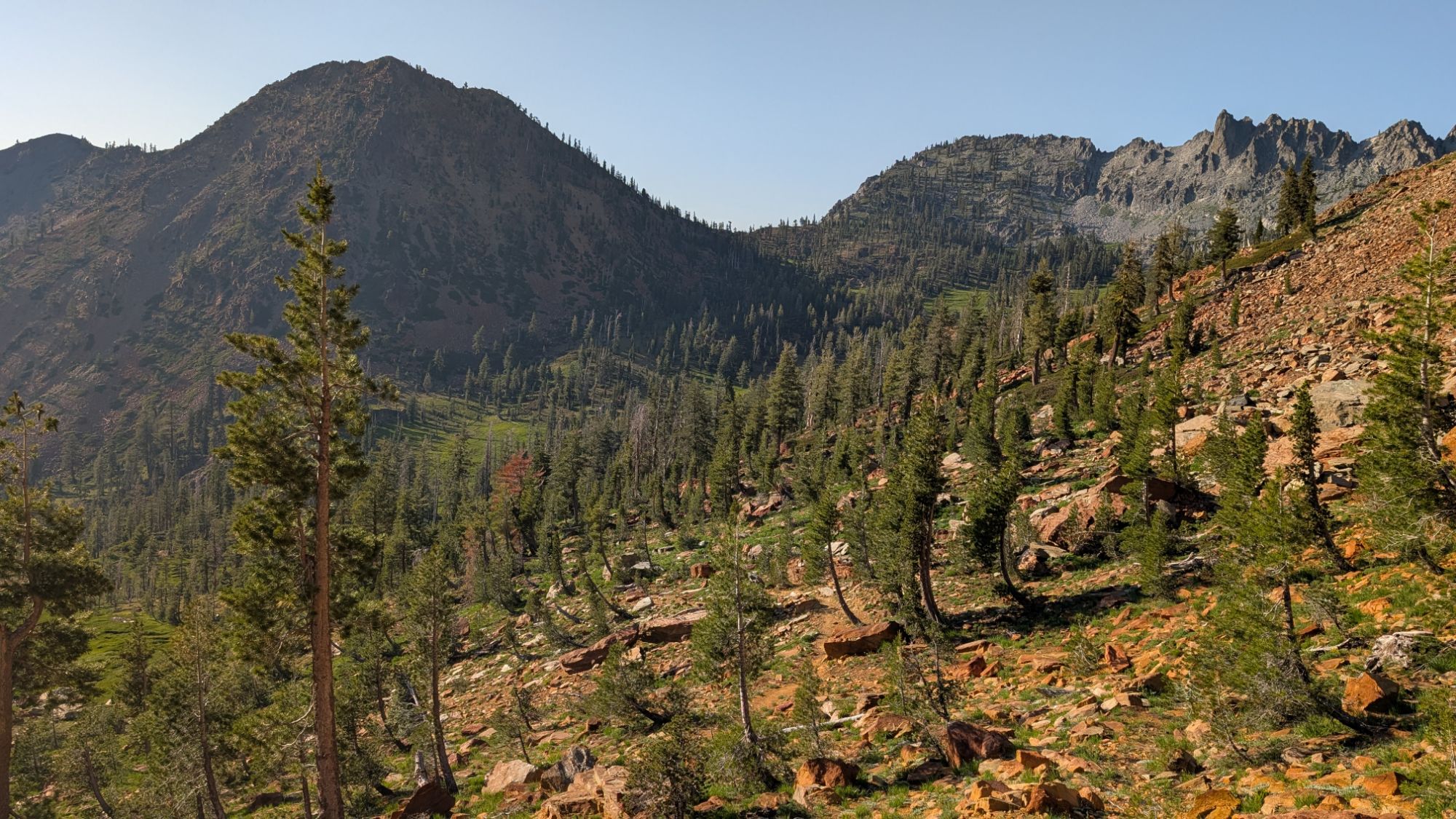
The below picture has further evidence of a high water table in the greater Siligo Meadows. Do you see it? I’m guessing that there is soil creep which causes the trees to look bent at their bases. The slow downhill movement of the soil moves the trunks of the trees while their tops try to remain upright. And the low point straight ahead is Deer Creek Pass that I crossed just 1 hour and 20 minutes ago.
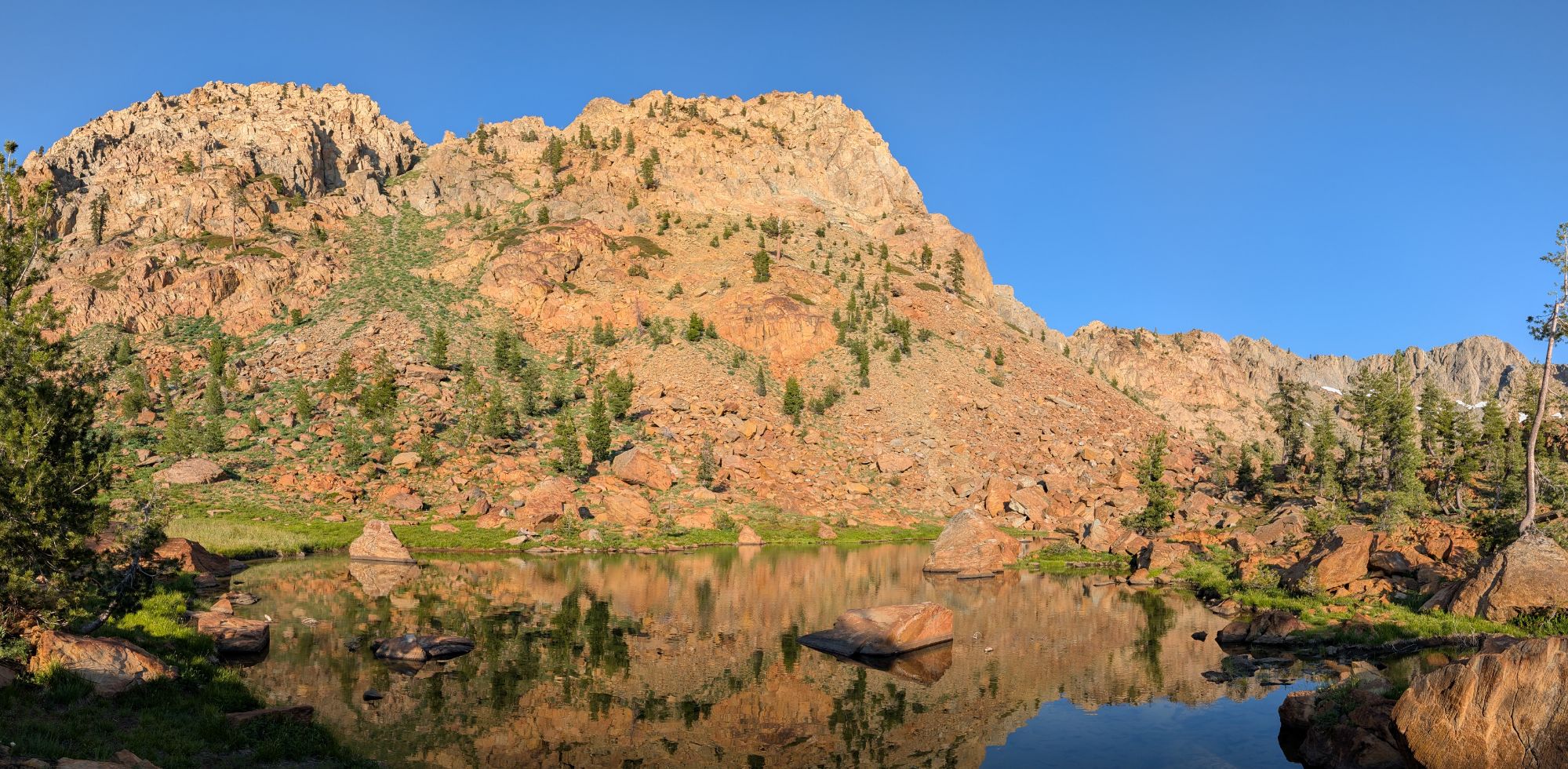
I cross Little Stonewall Pass at about 6:30 pm and I’m on the lookout for a spot to camp. I descend several switchbacks to find a slightly wet area that has dried up a bit. I don’t hear any audible water. I see a little lake and head off trail to investigate. I find a spot to put my tent and that’s good enough. At just over 18 miles, I’m ready to call it a day. I walk to the lake’s edge and think I see the scurry of a small rodent. Sure hope that’s not going to be a problem tonight!
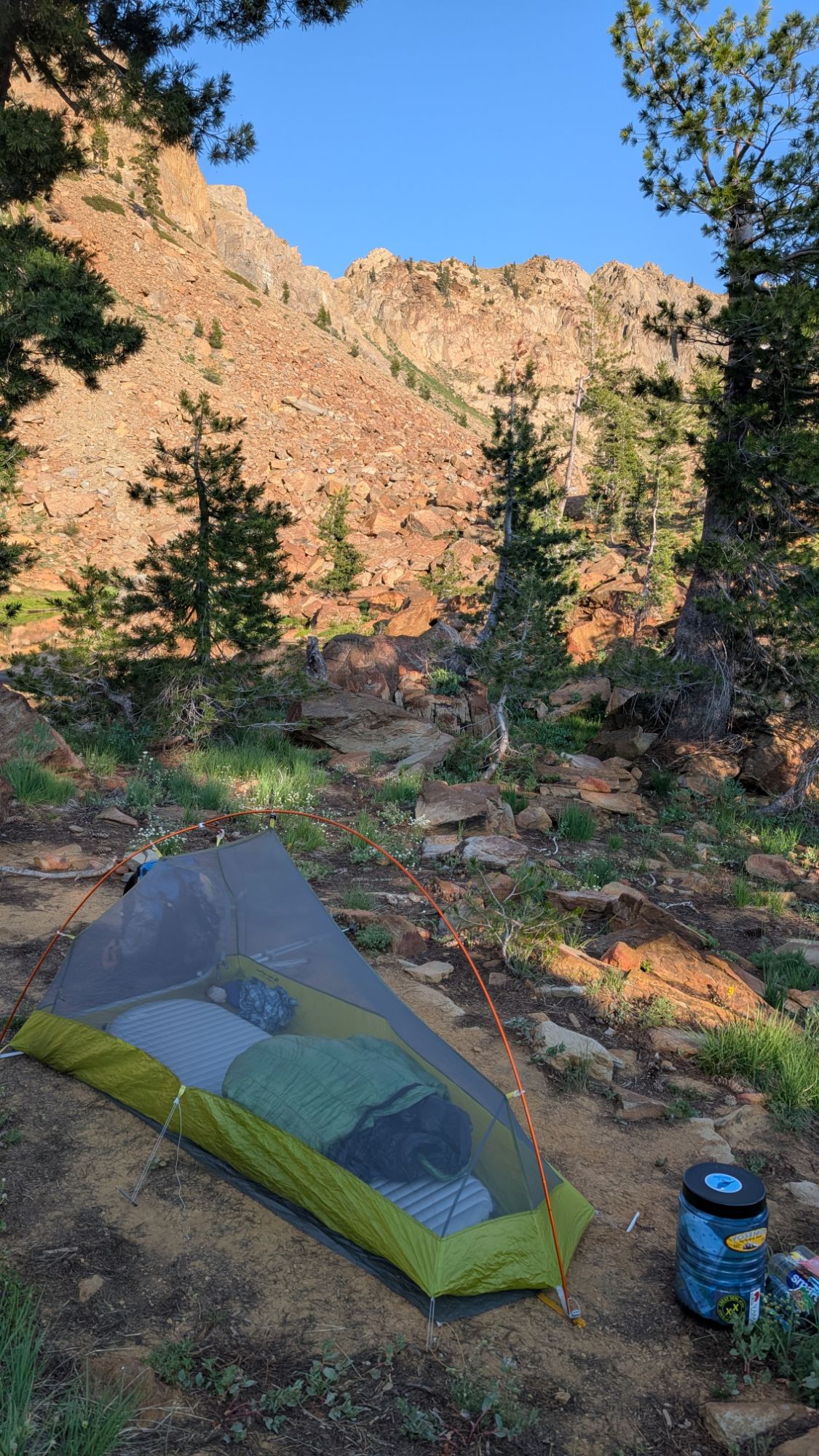
By 7 pm I have camp set up and I sit on a rock as I eat dinner. I hear a bird call that I don’t know. The Merlin app tells me that it’s a Townsend’s Solitaire. I can only see this small bird in silhouette in a distant tree but it produces the same note in a rhythmic and repeated call. As I sit here, I can tell that there is a nearby lake off to my right. I know I should go and investigate but I’ve walked enough today.
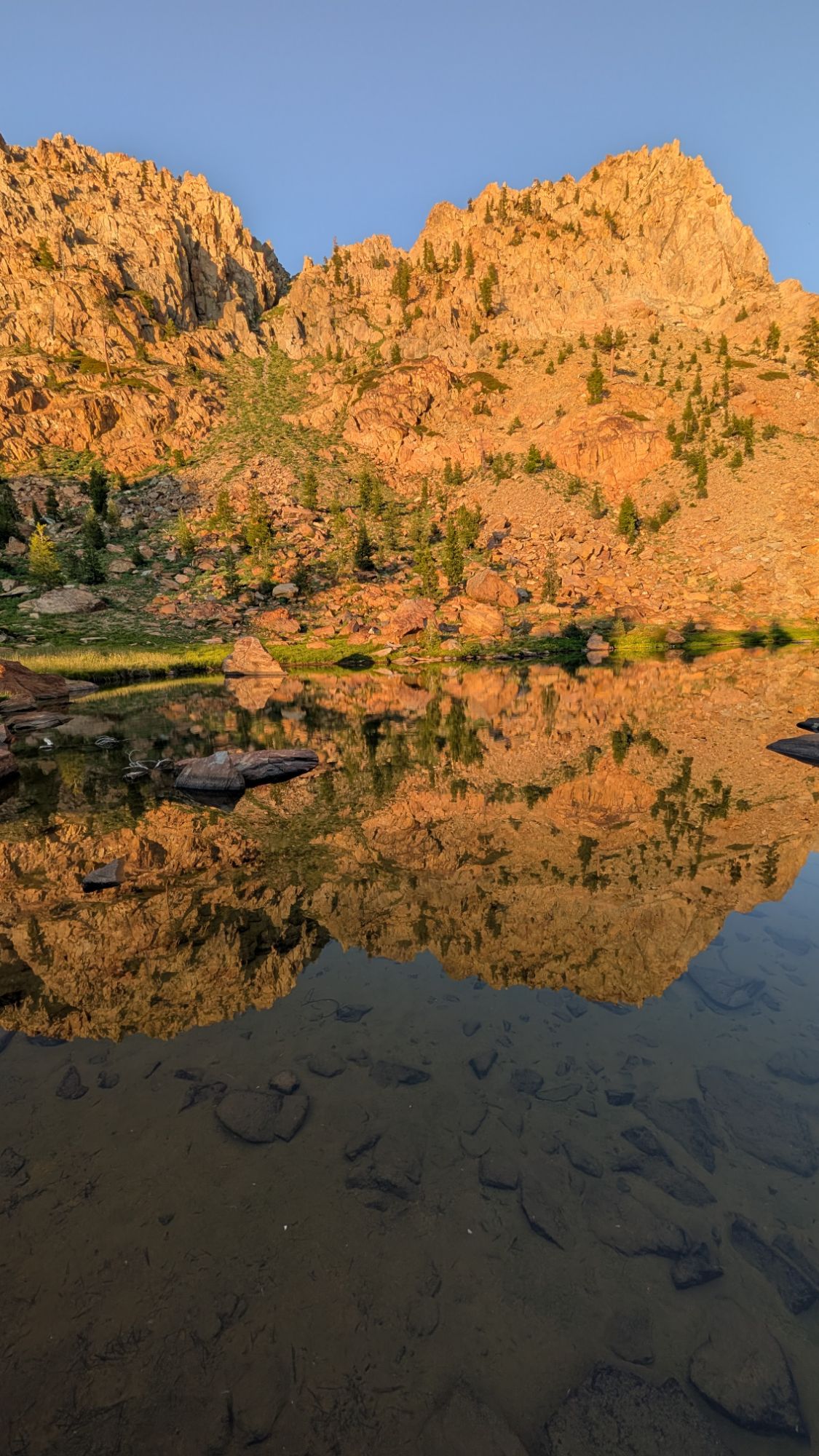

The sun starts to set and the peridotite glows bright. I return to the edge of what I’m calling Little Echo Lake and feel the radiance. I crawl into my tent early, just about 8 pm. I change into my base layers and I’m surprised by my dirty feet. I haven’t seen them this dirty since my PCT days. Ironically, it’s a welcome sight. Even at 7,300 ft. it’s warm out and I put only my feet into my quilt and lay the rest to the side.



 Journey Return
One thought on “Trinity Alps Day 2: Stuart Fork, Deer Creek Trail, Four Lakes Loop, Siligo Meadows, Little Stonewall Pass”
Comments are closed.