
BLOG:
Tuesday, May 13: It Only Takes 4 Flights In 24 Hours To Get To Cusco, Peru
Wednesday, May 14: Cusco Land – San Blas
Thursday, May 15: Cusco – San Blas Walking Tour + Trail Prep
Friday, May 16: Salkantay Day 1: Sweaty Humantay Lake, Chilled Lateral Moraine Lunch And A Pachamama Offering Ceremony
Saturday, May 17: Salkantay Day 2: Sunny Incachiriaska Pass And The Long Descent Of Pampacahuana Canyon
Sunday, May 18: Salkantay Inca Day 3: Paucarcancha Ruins, Jungle Flower Parade, Joining The Inca Trail At Huayllabamba And Llulluchapampa Camp
Monday, May 19: Inca Trail Day 4: Salud To Warmiwañusca Pass, Yo-Yo Through Runquraqay, Sayaqmarca, And Phuyupatamarca Cloud Camp
Tuesday, May 20: Inca Trail Day 5: Descent To Wiñaywayna Lunch And A Grand Entrance At Intipunku Sun Gate To Machupicchu
Wednesday, May 21: Machupicchu Day 6: Circuit 3 Royalty Route, Cloudy Climb to Huaynapicchu and Urubamba Train Ride
37.63 total miles (60.56km)
13,340′ ascent (4066m)
17,736′ descent (5406m)
Thursday, May 22: Cusco Zero
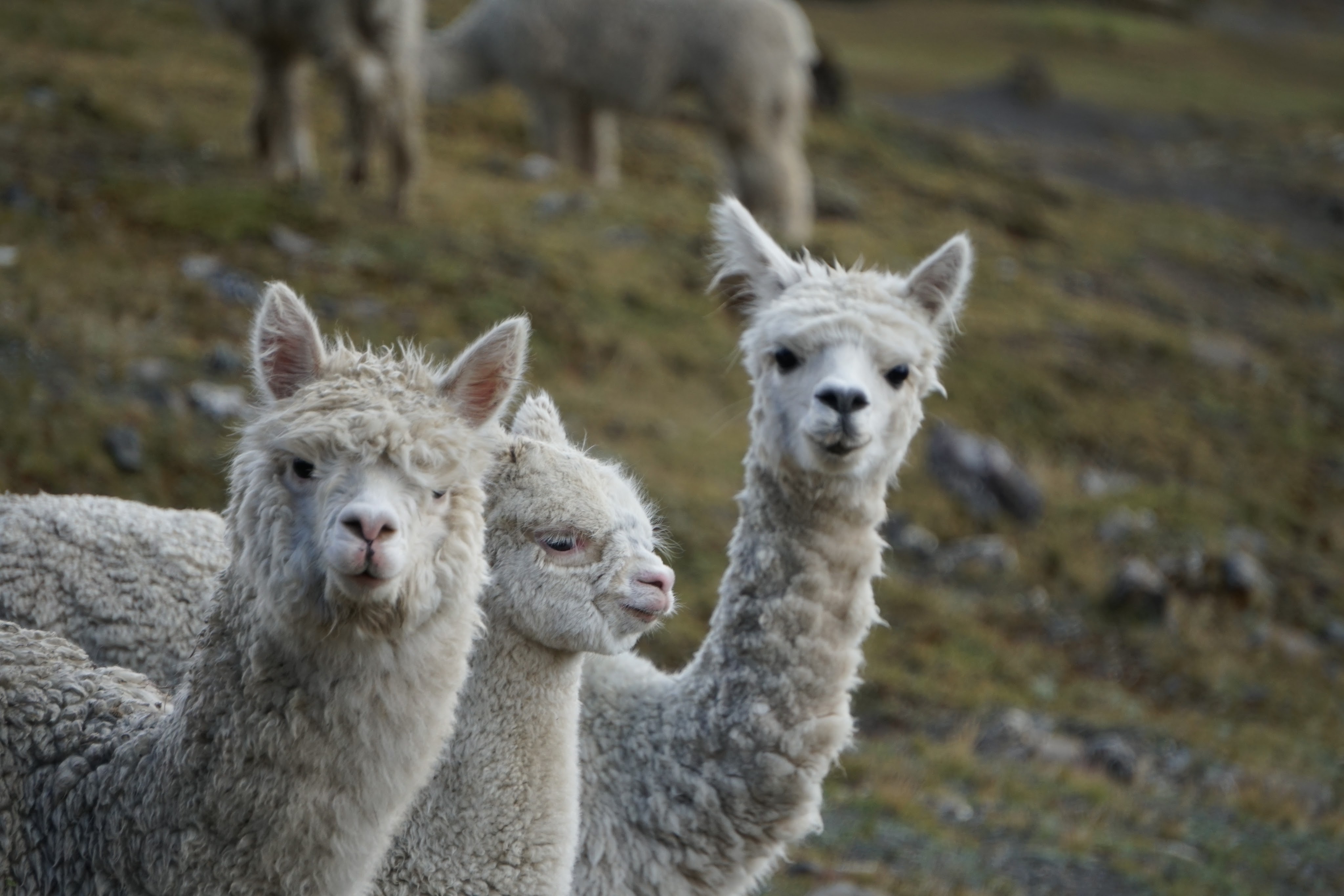
Friday, May 23: Ausangate Day 1: Upis Qocha, Roaming Alpaca Herds, Chirping Viscacha And Pucacocha Camp
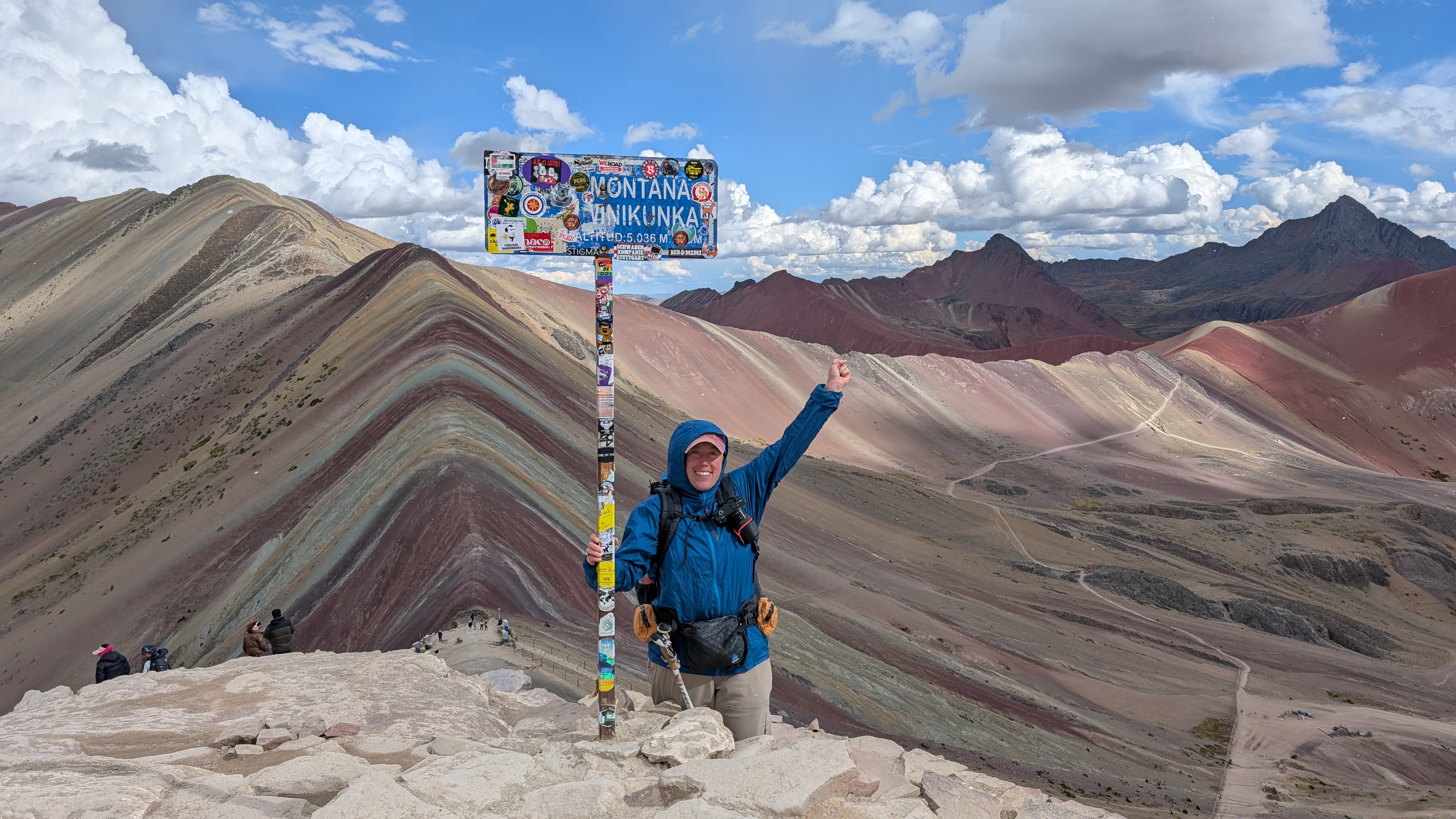
Saturday, May 24: Ausangate Day 2: Apacheta And Warmisaya Passes, Windy Rainbow Mountain And A Hail Storm
Sunday, May 25: Ausangate Day 3: Back Across Warmisaya Pass, Alcatauri Gorge Descent, Palomani Pass to Adobe Residence
*blogs in progress*
Peru Gear List and Review
Salkantay and Inca Trails to Machupicchu Pictures
Ausangate + Rainbow Mountain Trek
Salkantay is the highest peak (6271m, 20,574ft) in the Cordillera Vilcabamba. It is the 38th-highest peak in the Andes and 12th-highest peak in Peru. The name Salkantay comes from the Quechua word sallqa meaning wild, uncivilized, savage or invincible. Machupicchu lies directly to the North of Salkantay. During the rainy season when the Southern Cross reaches its highest point in the sky, it aligns with the Salkantay summit when viewed from Machupicchu’s main sundial. The Incas associated this alignment with rain and fertility and considered Salkantay to be one of the principal deities controlling weather and fertility in the region West of Cusco.
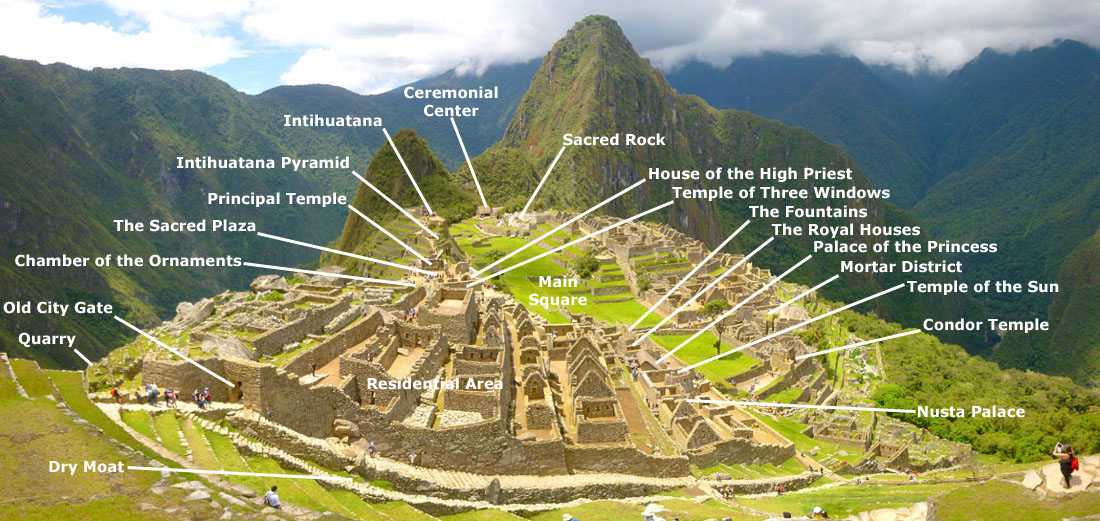
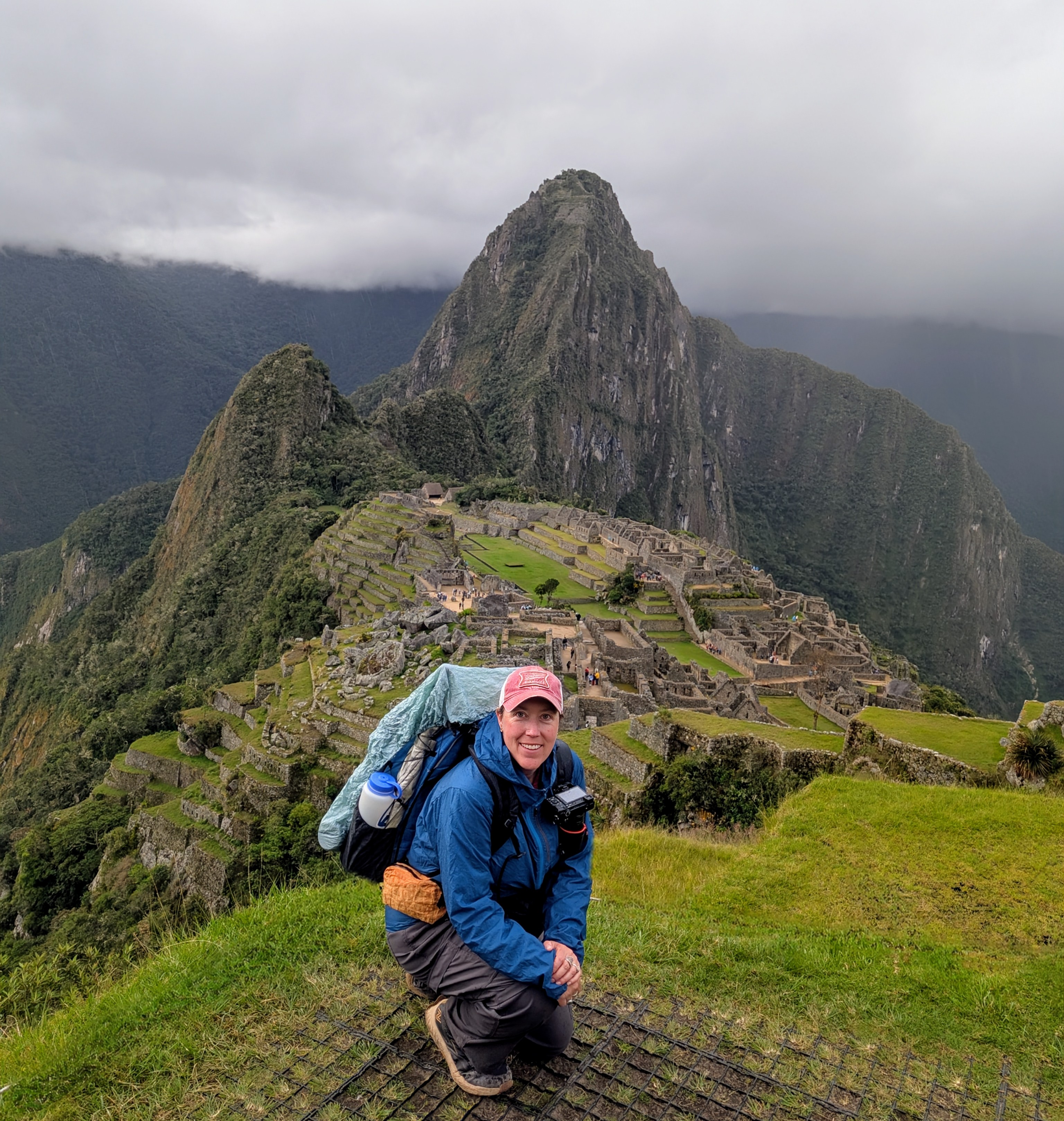
Machupicchu (7,972 ft.) is a 15th-century Inca citadel located 50 miles (80km) Northwest of Cusco. It is located between two mountains, Machupicchu and Huaynapicchu. In the Quechua language, machu means old or old person and pikchu means summit or peak. So Machupicchu is commonly referred to as “old peak.” It is believed that the construction of Machupicchu was ordered by Pachacutec (1438-1472) as a royal retreat and estate. It was used for at least 80 years before being either abandoned or its inhabitants dying from the introduction of smallpox. During its use, as many as 750 people lived there as support staff.
Salkantay & Inca Trail Trek to Machupicchu + Huaynapicchu
37.63 miles, 60.56 km
13,340′ ascent (4066m)
17,736′ descent (5406m)
- Day 1: Cusco – Soraypampa – Ichupata 5.85 miles
5.85 miles – 3,248′ ascent – 1,145′ descent - Day 2: Ichupata – Incachiriasca pass – Paucarcancha
11.65 miles – 1,633′ ascent – 6,036′ descent - Day 3: Paucarcancha – Huayllabamba – Llulluchapampa
~3.5 miles – 2,701′ ascent – 618′ descent - Day 4: Llulluchapampa – Abra Warmiwañusca Dead Woman’s Pass – Phuyupatamarca
6.82 miles – 3,398′ ascent – 3,868′ descent - Day 5: Phuyupatamarca – Wiñay Wayna – Sun Gate – Machupicchu – Aguas Calientes
7.41 miles – 1,114′ ascent – 4,879′ descent - Day 6: Aguas Calientes – Machupicchu – Cusco
2.4 miles – 1,246′ ascent – 1,190′ descent
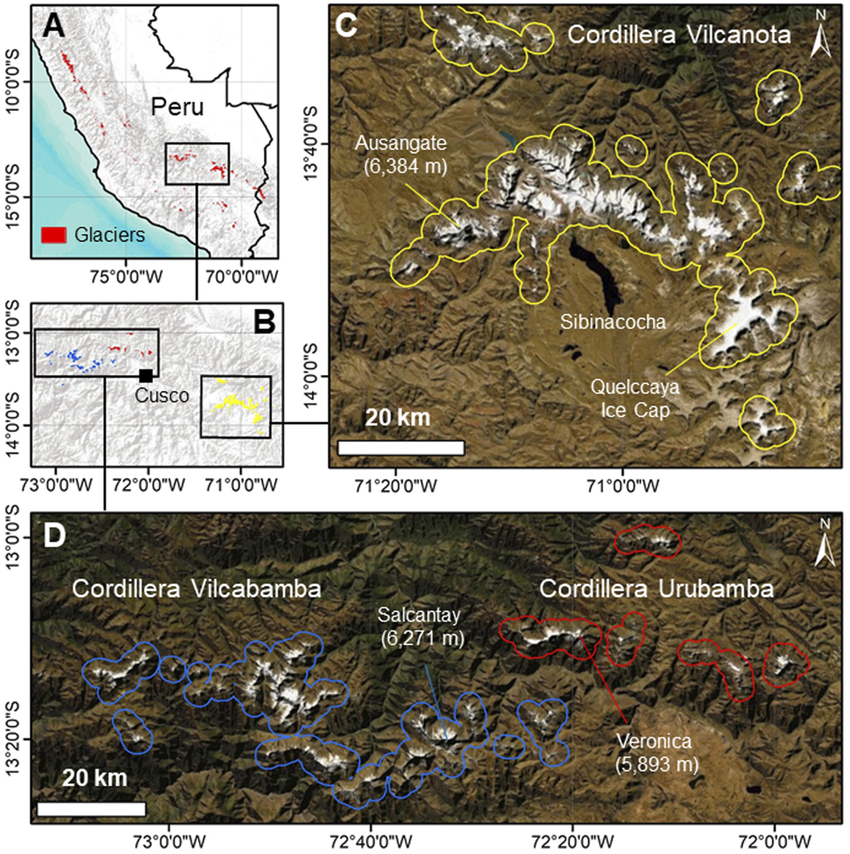
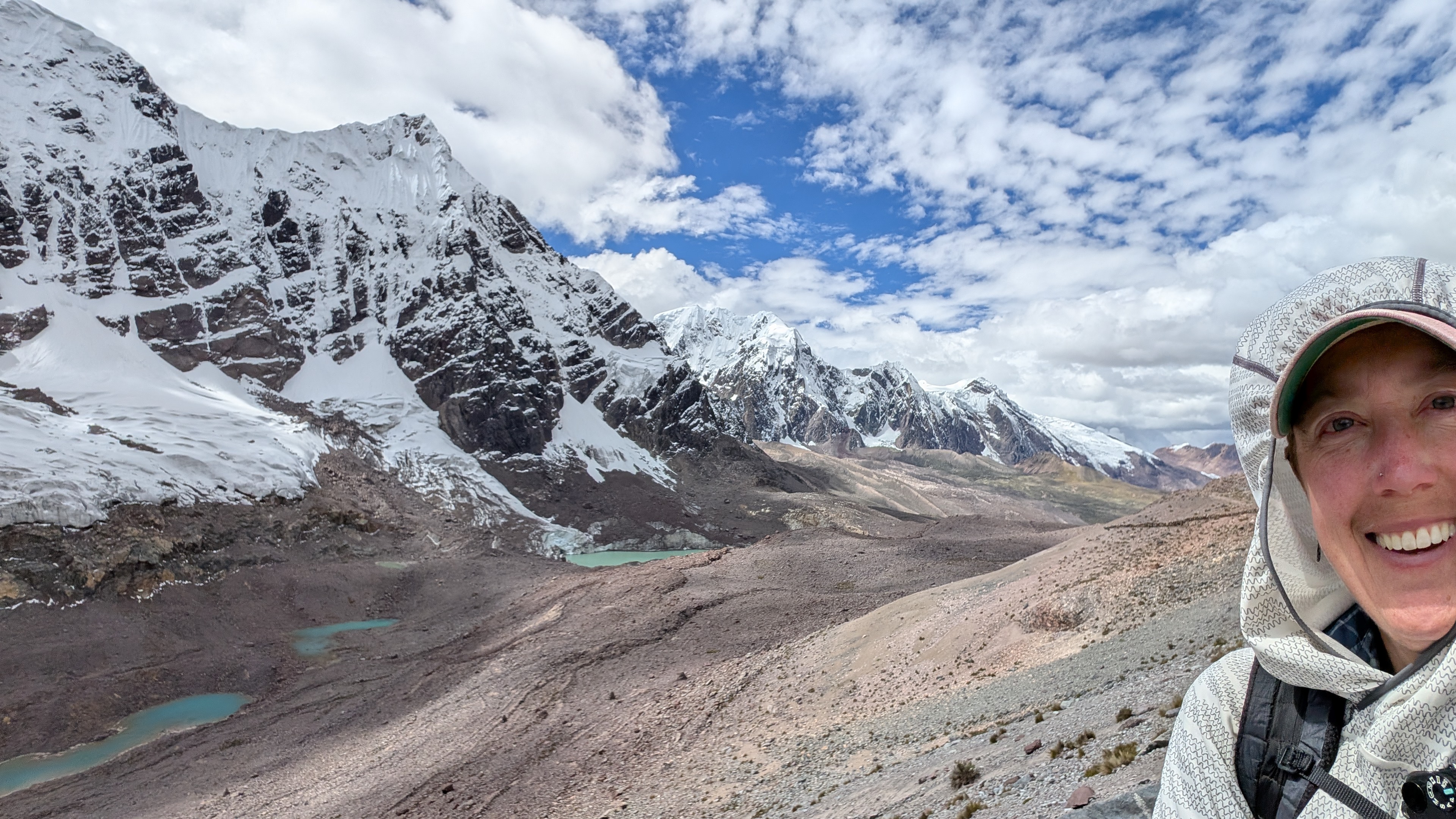
Apu Ausangate (6384m, 20,945ft) is a mountain in the Cordillera Vilcanota of the Peruvian Andes. Ausangate, lying about 100 km Southeast of Cusco, is the 24th-highest peak in the Andes and the 5th-highest peak in Peru. The region is predominantly inhabited by alpaca and llama herding communities.
A traditional Inca story is that Salkantay and Ausangate were brothers living in the Cusco valley. A severe drought forced the brothers to leave and look for ways to sustain life. Salkantay left for the Northwest and found the jungle and Veronica’s forbidden love. Ausangate went Southeast to the highlands and discovered an abundance of Andean meat, corn and potatoes.
Vinicunca or Rainbow Mountain (5036m, 16,522 ft.) is a short side trip from Apu Ausangate. Vinicuna comes from the Quechua language where wini translates to rumi meaning stone. This refers to to the small, black and rounded stones that are characteristic of the region. Kunka translates to neck, referring to the narrow mountain pass that traverses the valley.
Its seven distinct colors are due to different mineral compositions.
pink – clay, mud and sand
white – silica, sandstone, calcium carbonate
red – claystone
green – phyllites, clays rich in ferromagnesian
brown and purple – limonites and marls
earthy brown – magnesium conglomerate
mustard yellow – sulfurous sandstone
Ausangate & Rainbow Mountain Trek
38.63 miles, 62.17 km
- Day 1: Cusco – Tinqui – Upis – Pucacocha
7.48 miles, 1,860′ ascent, 1,243′ descent - Day 2: Pucacocha – Abra Apachita – Abra Warmisaya – Vinicunca – Surine Cocha
8.18 miles, 3,103′ ascent, 2,480′ descent - Day 3: Surine Cocha – Abra Warmisaya – Surapampa – Abra Palomani – community house
8.81 miles, 2,414′ ascent, 3,001′ descent - Day 4: community house – Pampacancha – Abra Khampa – Otorongo Camp
- Day 5: Otorongo Camp – 7 lakes – Pacchanta – Cusco

 Journey Return